When Words Won't Come: Sound Healing, Grief, and the Voice You Forgot You Had
There is a kind of grief that has no name and no clear event attached to it.
It is not the grief that comes from a funeral. It is the grief that comes from a career you left behind that was never really yours. From a relationship that ended before you understood what you were even mourning. From a version of yourself you performed for thirty years until perimenopause removed the last of your capacity to keep performing, and you stood there not knowing who was left when the performance stopped.
That grief does not respond to talk therapy the way the textbooks say it should, because the feelings that live inside it do not always have words — and for women with alexithymia, they may never have words, no matter how long you sit with a therapist trying to find them.
In Episode 14 of The Nervous System Eats First Podcast, I sat down with Celeste Barbier — professional vocalist, certified sound healer, ordained officiant, and sacred spaceholder based in Southern California — and what she shared about the relationship between sound, grief, and the nervous system is something I want every woman in my practice to hear.
🎧Watch or listen to the full episode here →
Sound as Medicine — What the Research Says
I want to ground this clinically before we go anywhere else, because I know some of you came in with a skeptical eyebrow raised and I want to meet you there.
There is a 2020 meta-analysis in Health Psychology Review that synthesized 47 studies involving 2,747 participants and examined the effect of music therapy interventions on stress-related outcomes — both physiological and psychological. What it found was a medium-to-large overall effect on stress reduction, and it found this across both clinical and mental healthcare settings, which means the evidence is not confined to any single population or context. (DOI: 10.1080/17437199.2020.1846580)
Medium to large. That is not a marginal finding. That is the kind of effect size that would make a pharmaceutical company very happy if it belonged to a pill.
And this is what Celeste has been doing her entire life — long before she had the clinical language for it, long before there were 47 studies to cite. She sang to her father in the ICU at sixteen years old and watched his vitals stabilize in real time. She watched his heart rate come down and his breath slow as she sang, and she filed that away as a fact her body understood even though no one had taught her the mechanism behind it.
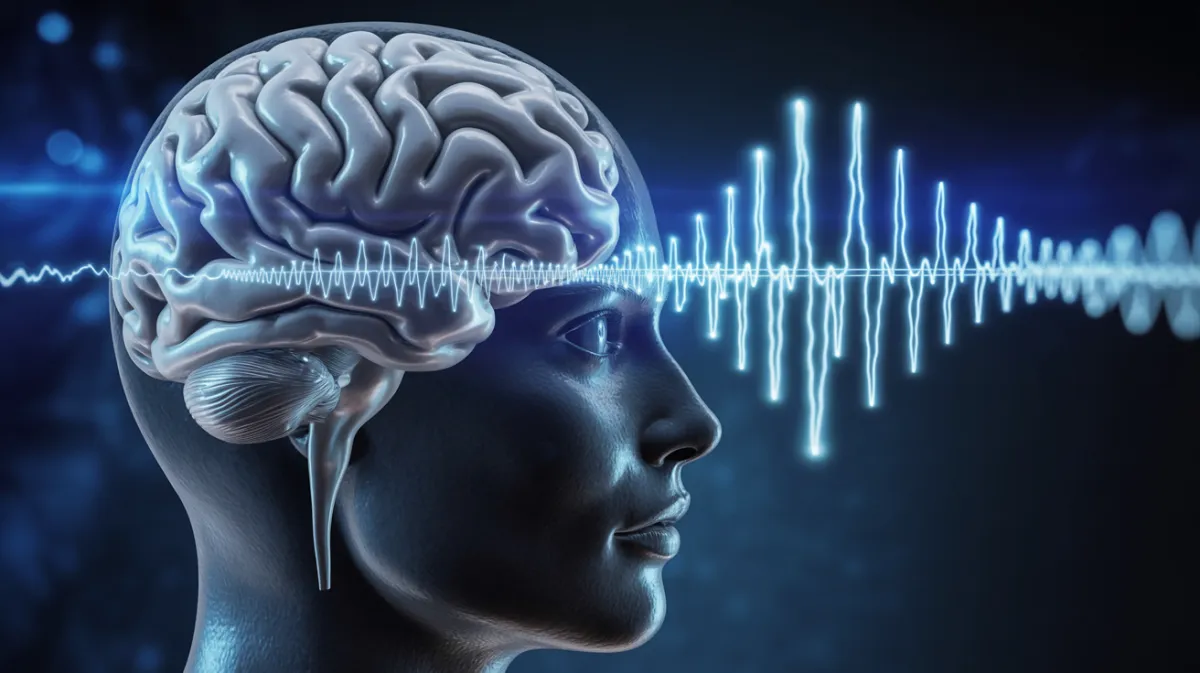
The mechanism, as we understand it now, is this: sound — specifically structured, rhythmic, low-frequency sound — activates the vagal pathways that run the parasympathetic nervous system, the same pathways that Polyvagal Theory describes as the ventral vagal system, the system that governs our capacity for safety, social engagement, and rest. When your nervous system is stuck in sympathetic overdrive — the wired-and-tired, the hypervigilant, the can't-come-down — sound gives it a biological way back that does not require a thought, a word, or a decision. It works below the level of language.
For women whose nervous systems have been running on high alert for decades, for autistic women who have been masking through every professional and social interaction, for women in perimenopause whose estrogen-mediated stress buffering is thinning — this is not a supplement. It is a clinical tool.

Grief That Has No Words
One of the things Celeste said in our conversation that I have been turning over since we recorded is this — language is confining. When you are in emotional flux, she said, your feelings do not fit neatly into the little boxes that words create. And when you try to force them in, what comes out is not poetry. It is usually not even what you actually meant.
For women with alexithymia — the condition I have talked about on this podcast before and that I navigate in my own life — this is not a theoretical problem. It is the clinical reality of every difficult moment. The feeling is there, absolutely present, registering in the body as a tightness or a weight or a heat or a hollow, and the word for it simply does not arrive. And when therapy keeps asking you to name it, to put it in the box, to label it so we can work with it, and you genuinely cannot, the shame that follows is its own wound on top of the original one.
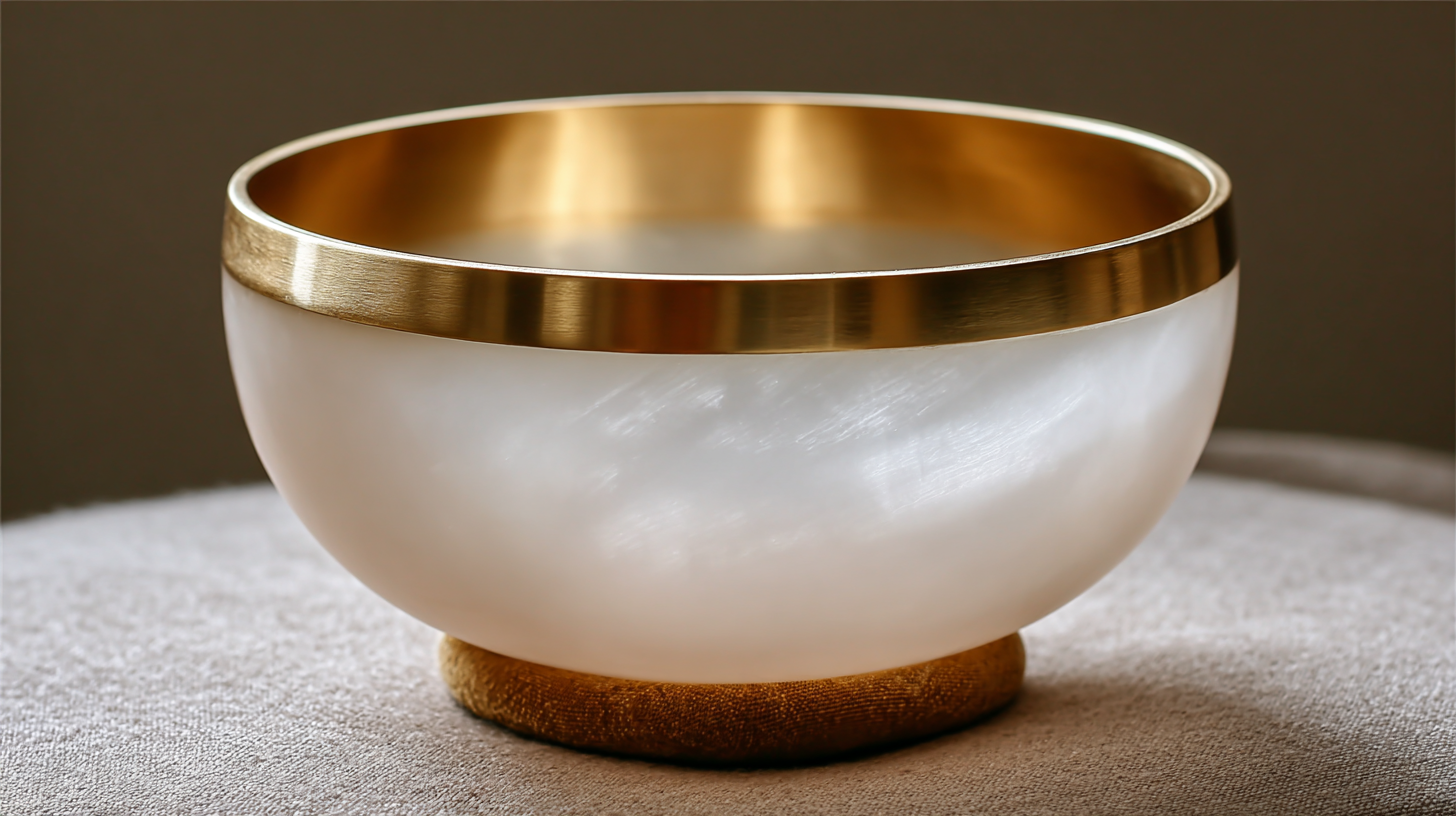
What Celeste described is a way of working with grief and emotional dysregulation that bypasses the language requirement entirely. Sound — whether it is her voice, a crystal bowl, a toning drum, a chime — creates coherence in the body without needing the body to explain itself first. The nervous system responds to the frequency before the mind has had a chance to judge whether the feeling is valid or expressible or appropriate for this particular room.
For neurodivergent women carrying grief that has no clear name and no clear event, this is not an alternative to clinical care. It is a doorway that clinical care has not always been able to open.
Humming Counts. That Is the Whole Point.
I want to make sure the practical piece lands clearly, because I know some of you are reading this and thinking you would need to be a vocalist or have a crystal bowl or know what a solfeggio frequency is before any of this is available to you.
You do not.
Celeste said something in our conversation that I have been repeating to patients since — humming counts. That is her exact instruction for where to start. Not a formal sound bath. Not a trained practice. Just the hum you make when you are doing the dishes or sitting in traffic or lying in bed at 3am wondering why your brain will not stop.
The mechanism is simple and the anatomy is real — your vagus nerve, which runs the parasympathetic branch of your autonomic nervous system and governs your capacity to downregulate from stress, passes through your larynx. When you hum, when you vocalize, when you produce any sustained sound through your throat, you are directly stimulating vagal pathways in a way that activates the rest-and-digest system. You do not have to know any of this for it to work. Your nervous system is not waiting for you to understand the mechanism. It responds to the vibration regardless.
Celeste extended this further in our conversation — singing in the car, belting in the shower, finding any private space where your voice can move without being monitored or judged, is all sound healing. The acoustics of a public women's bathroom, she said with complete sincerity, are genuinely underrated.
For the woman who has spent her entire life monitoring her own voice — speaking more quietly, softening her tone, making herself smaller and less audible because she learned early that being too much was dangerous — the instruction to hum is not a small thing. It is a reclamation.
Mini-Death Rituals and the Grief of Who You Used to Be
This is the piece of our conversation that I think will land hardest for the women navigating perimenopause as a late-diagnosed autistic woman — and I say that as someone who is in that exact experience.
Celeste talked about building what she calls mini-death rituals — ceremonies for closing the chapters of an identity that no longer fits, for grieving who you had to be in order to survive without getting stuck in the grief of it, for marking the transition with intention so the nervous system can actually complete the arc rather than staying suspended between who you were and who you are becoming.
She described her own version of this — being born Sarah, becoming Celeste in college in a moment she cannot fully explain, spending decades as Celeste while Sarah went unacknowledged and unmourned, and then at forty years old, in a meditation, having Sarah show up — the two-year-old who was taken by CPS, with a teenager's mouth full of truths she had been waiting to deliver.
That is not a metaphor. That is what happens when the body carries grief that the mind has not processed. The disowned parts do not disappear. They wait. And they show up, eventually, at the least convenient moments — or at the moment we are finally ready, which perimenopause has a way of creating whether we asked for it or not.
The sound ritual for a mini-death, as Celeste described it, does not have to be elaborate. Light a candle. Hold an object that represents what you are releasing. Hum or tone or sing — whatever comes — and let the sound be the carrier of the transition. Let your voice be the bridge between who you were and what is being laid down so something else can grow.
For the autistic woman who performed a version of herself for thirty years and is only now discovering that she did not know she was performing — there is a Sarah in there. She survived so you could get here. She deserves a ritual, not just a diagnosis.
The First Sense and the Last
Celeste shared something in our conversation that I want to carry into every ICU conversation I ever have again, and into every difficult conversation any of us have with someone we are about to lose.
Hearing, she said, is the first sense that develops in utero. And it is the last sense to go as we die. The very first and the very last.
She has sung to people who were told could not hear her, and watched a tear roll down their eye. She has watched a finger twitch in response to the question — do you want me to continue? They can hear you. The hearing goes last.
And so the question she posed to me — and to anyone sitting at a bedside, unsure whether their presence is reaching anyone — was this: are you singing for yourself or are you singing for them? Because if you are singing for them, it does not matter whether they can respond. It matters that you are there and that the sound is reaching them, which it is, even when everything else has gone quiet.
For women in perimenopause who are navigating the grief of parents moving toward the end of their lives, or who are themselves sitting with the end of one version of who they were — that is medicine for both sides of the vigil.
The Nourish or Numb Segment
At the end of every episode, I run a segment called Nourish or Numb. Here is what Celeste said that is worth keeping.
Singing out loud alone — in the car, in the shower, in any space that is just yours — nourishing. Every time. No exceptions. That is your voice finding itself.
Singing to someone who cannot respond — nourishing, as long as you are singing for them. The hearing is the last thing to go. They can hear you.
Avoiding sound when you are overstimulated — it depends. Celeste was clear: if you genuinely cannot handle one more input, honor that. Silence is also a nervous system tool. But if what you need is regulation and you have been avoiding sound because you do not feel like you have permission to make it, that is worth sitting with. Sometimes the avoidance is the numbing.
Using your voice to reclaim something you have been silencing — nourishing. Always.
Connect With Celeste
Celeste's website is celestebarbier.com where you can find her performing schedule and her Resté Sound healing practice. She is also on Instagram at @restesound and @celestebarbierevents. For private bookings and healing sessions, reach out to her directly at [email protected].
Begin Your Own Reset
If this episode surfaced something in your body that you have not had language for — that is your nervous system communicating. Trust it.
And if you want to understand which patterns are keeping you stuck in this transition — which sleep saboteur, which nervous system state, which environmental and hormonal dynamics are running underneath the surface — start with the Sleep Saboteur Quiz. Because sound is one of the most powerful tools in the NRM toolkit, and knowing your pattern tells you exactly which frequency your nervous system is asking for right now.
Take the Sleep Saboteur Quiz →
The Polyvagal framework underneath this work is here: Your Home Is Either Medicine or It Is Making You Sick →
For the interoception piece that pairs with everything Celeste described: The Missing Sense: What Interoception Explains About Why You Feel Everything But Can't Find the Words →
And start here if you are new: What Is Neuroaesthetics? The Gentle Science of How Beauty Heals Your Brain →
Sources
de Witte M et al. Music therapy for stress reduction: a systematic review and meta-analysis. Health Psychology Review. 2020. DOI: 10.1080/17437199.2020.1846580