You've Always Been a Wish: Five Element Medicine, Masking, and the Story That Sets You Free
Updated: April 2026
When Dr. Janice Campbell's mother heard about her autism diagnosis at fifty years old, she said something that I have been thinking about ever since we recorded this episode.
She said: Janice has always been a wish. From the moment she was born, she was a wish.
I want you to sit with that before we go any further. Because that sentence — offered by a mother to her daughter at fifty years old, after five decades of a woman wondering why she never quite fit — is narrative medicine in its most precise and powerful form. It is someone handing you back the original story of yourself. Not the story the world wrote about you. Not the story you constructed to survive inside systems that weren't designed for the way your nervous system works. The true one. The one that was there before the masking started and before the managing started and before the decades of performing belonging accumulated into something that felt like evidence that you were the problem.
That one sentence gave Dr. Janice back a part of herself that fifty years of achievement and competence and professional excellence had not been able to retrieve.
That is what this episode is about.
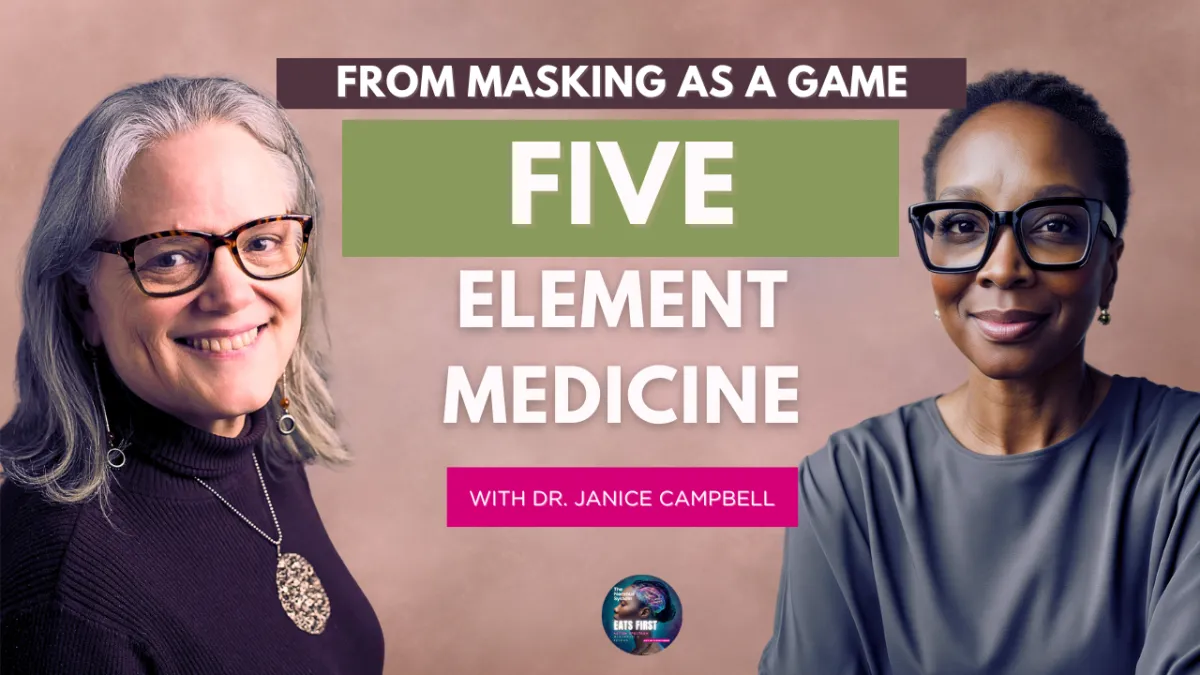
🎧Watch Episode 17 of The Nervous System Eats First here →
Who Dr. Janice Campbell Is
Dr. Janice Campbell is a doctor of acupuncture and Oriental Medicine, a Five Element practitioner, a former theater stage manager of fifteen years, and a late-diagnosed autistic woman who spent decades feeling like — in her own words — a turtle without her shell in the world. She discovered she was autistic while supporting her son through his own diagnosis at eighteen, and that experience of seeing herself clearly for the first time through her son's story became the turning point that reoriented everything, including her practice.
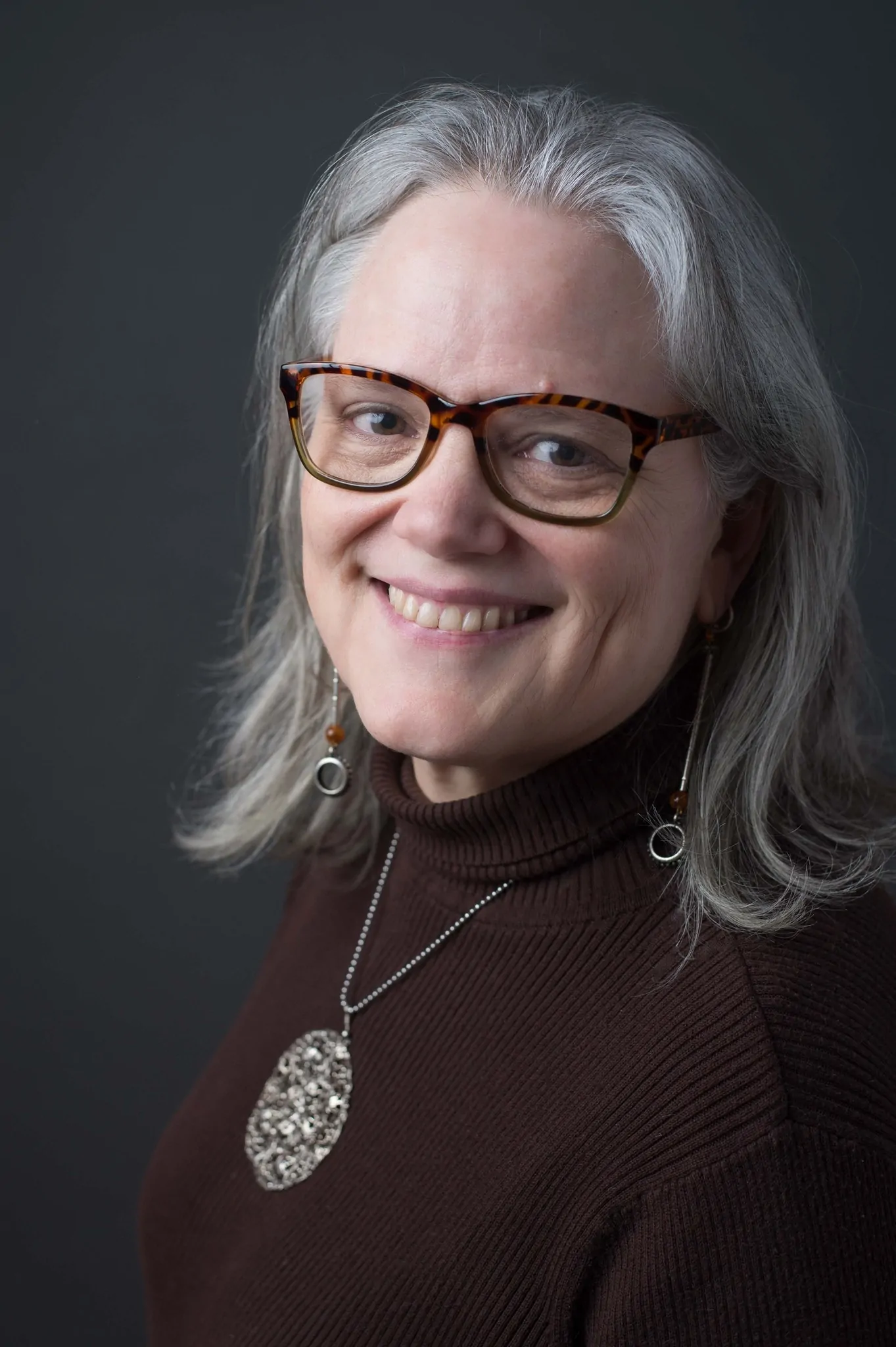
She is the founder of the Octopus Movement, and she brings into her clinical work something that most healing spaces don't have enough of — the understanding that belonging is not a luxury or a personality preference. It is a biological requirement. That chi follows the mind. That you cannot regulate a nervous system that doesn't feel safe, and you cannot feel safe in a body that doesn't feel like home. And for late-diagnosed autistic women who have spent their entire lives performing home in spaces that were never quite built for them, that distinction is everything.
Five Element Medicine — A Map, Not a Metaphor
I want to make sure you understand what Five Element Medicine actually is before we go any further, because it is not abstract theory and it is not mysticism. It is a clinical framework from Traditional Chinese Medicine that maps human beings across five energy archetypes — Wood, Fire, Earth, Metal, and Water — each corresponding to particular organ systems, emotional patterns, nervous system tendencies, and seasonal rhythms.
What Dr. Janice does with this framework is use it as a map for understanding why you feel the way you do. Why certain environments drain you and others restore you. Why your particular flavor of overwhelm shows up where it does and when it does. Why the strategies that work for other people don't work for you, and what that is actually telling you about your elemental constitution rather than your character defects.
For late-diagnosed autistic women in perimenopause, this map is especially useful because it doesn't start from deficit. It doesn't begin with what's wrong with you and work backward toward a diagnosis. It begins with your energy — the particular way your life force moves and gets stuck and needs to be supported — and builds a picture of your healing from there. That is a fundamentally different clinical starting point than most of us have ever been offered.

The Christmas Party Game — Where Your Nervous System Tells the Truth
One of the most memorable moments in my conversation with Dr. Janice was when she walked me through what she calls the Christmas Party Game — a live demonstration of nervous system regulation that shows you, in real time, exactly where your system breaks down under social demand.
The scenario is simple. Imagine you are at a Christmas party. There is noise, there are people, there are conversations happening simultaneously in every direction. You walk in. What happens? Does your body scan immediately for exits? Do you find one person you trust and stay anchored to them for the entire evening, exhausted by the effort of being present to anyone else? Do you leave earlier than you planned and then spend the following day recovering? Do you arrive already braced, the performance already running before you've walked through the door?
For late-diagnosed autistic women, none of those responses are social awkwardness. They are nervous system reality. And the masking that gets layered on top — the performance of ease, the management of visible reactions, the constant translation of your own interior experience into output that other people can receive without discomfort — is one of the most metabolically expensive things a human body can do on a sustained basis. Decades of it accumulates in the body the way debt accumulates in a ledger. The interest compounds. And perimenopause is frequently when the body finally sends the bill, because the hormonal buffer that was helping sustain the performance is no longer available the way it once was.
Dr. Janice maps this through Five Element Medicine and what she illuminates is that the breakdown point — where the nervous system hits its limit in the Christmas party scenario — is elemental. It tells you something specific about which system is under the most pressure and what that system needs to find its way back to equilibrium.
Chi Follows the Mind
The principle Dr. Janice returned to throughout our conversation is one I want every woman reading this to hold onto, because it reframes the entire question of healing for women who have been trying to regulate from the outside in.
Chi follows the mind. Energy goes where attention goes. The body organizes itself around the story it is living inside.
And if the inner narrative — the one running beneath everything, the one built from decades of being told you are too much or not enough or simply wrong in some way that nobody can fully name — if that narrative is one of not belonging, then the body will organize itself around that story whether you have consciously chosen it or not. The nervous system takes its cues from the meaning you are making, not just from the physical environment you are standing in.
This is why scent protocols and sleep routines and sensory adjustments, as important as they are, are never the whole answer. The environment can be perfect and the nervous system can still be running the old story underneath it. Because the old story is the deeper environment. It is the one the chi is following.
What Dr. Janice offers through Five Element Medicine — and what narrative medicine offers more broadly — is a way of changing the story the chi is following. Of giving the nervous system a truer account of who you actually are, so that the energy has somewhere better to go.
Verbal Needles — Language as Clinical Tool
Something Dr. Janice named in our conversation that I have not been able to stop thinking about is the idea of verbal needles. In acupuncture, a needle placed at the right point on the meridian system creates movement — it opens a pathway that has been blocked and allows energy to flow through in a direction that supports healing. Dr. Janice described certain words and phrases as functioning the same way. The right sentence, offered by the right person at the right moment to someone who is ready to receive it, can open something in the nervous system that no protocol and no supplement has been able to reach.
That is exactly what happened when her mother said wish. The pathway opened. Fifty years of a story that had been running on incomplete information — on the absence of a diagnosis, on the accumulated evidence of not fitting, on the performance of belonging that had never quite convinced even herself — and then one word from her mother rewrote the origin. From the moment you were born, you were a wish.
For women who have been in therapy for years, who have done the work, who understand their patterns intellectually but still feel the old story running underneath everything — this is worth sitting with. Sometimes the thing that moves what therapy hasn't been able to move is not another framework or another protocol. Sometimes it is a single sentence from someone who sees you clearly, offered at the moment your nervous system is finally ready to receive it.
That is narrative medicine. And it is available to all of us — in the stories we tell each other and in the stories we finally allow ourselves to believe about ourselves.
"Remember When It Was Easier?" — Your Body Is Talking
Dr. Janice offered a reframe in our conversation that I want to pass directly to you, because it is one of the most compassionate reconsiderations of a perimenopausal experience I have encountered.
When you find yourself thinking — or saying out loud — remember when it was easier? — that is not a sign of decline. That is your nervous system talking. It is signaling that something has shifted, that the resources you once had available are no longer as available, that the masking and the managing and the performing that once felt sustainable now feel like they are costing more than you have to give. And in perimenopause, for late-diagnosed autistic women especially, that signal arrives with an intensity that can feel disproportionate to the moment — the overwhelm that doesn't match the event, the exhaustion that doesn't resolve with rest, the grief that has no clear name attached to it.
Those are all the body saying the same thing. I have been carrying this for a very long time, and I need a different kind of support now.
The Five Element framework gives that signal a home. It gives it a name that isn't failure. And it points toward what the particular system under pressure actually needs — which is a very different conversation than the one most of us have been trained to have with our own bodies.
Designing Your Elder Self
At the close of our conversation, Dr. Janice offered something I want to leave you with because it reoriented how I think about the whole project of healing in midlife.
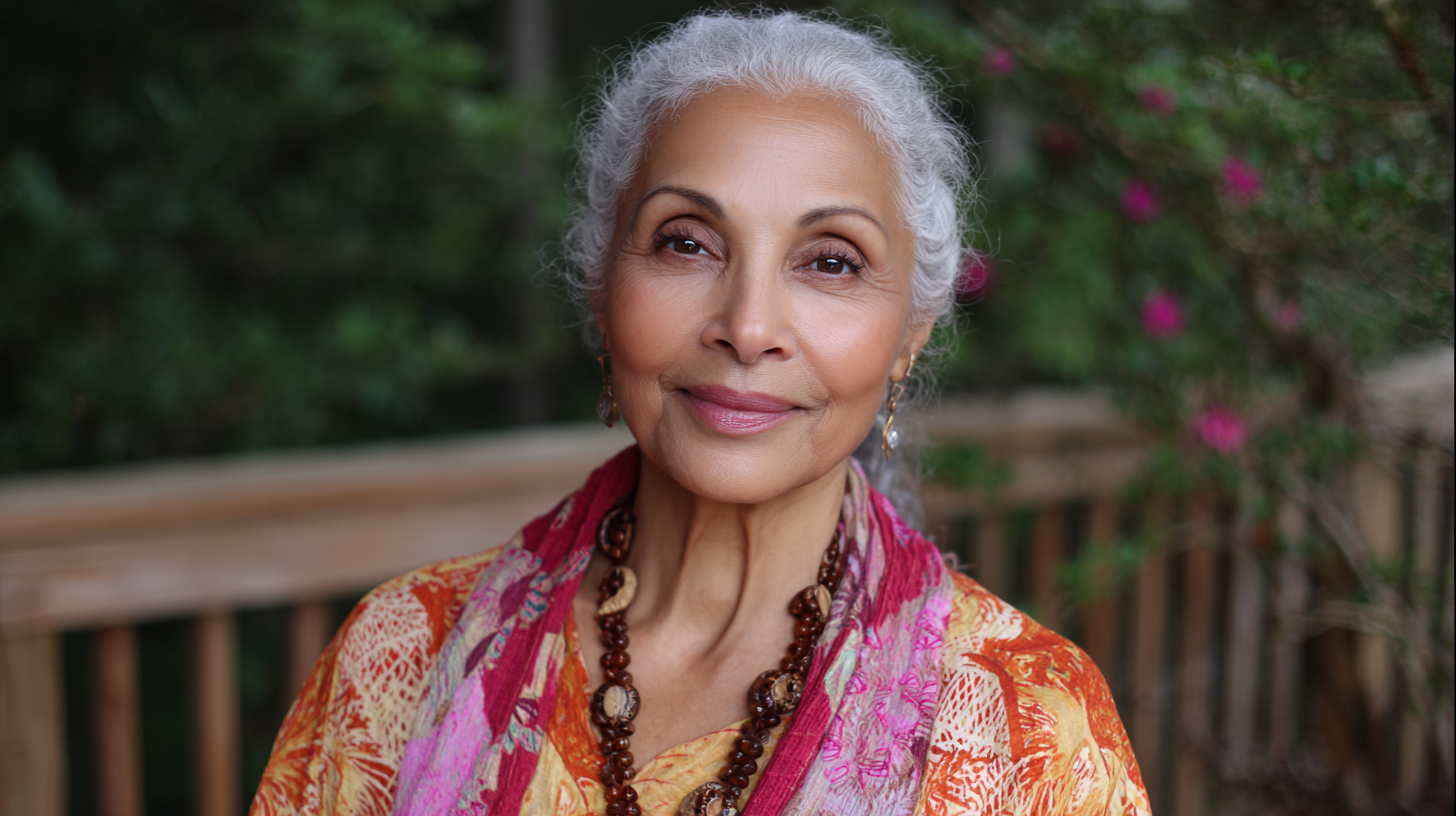
She asked: who is your elder self? Not the version of you that is managing the current crisis. The one on the other side of this transition — the woman who has come through perimenopause, who has made peace with her nervous system, who has stopped performing belonging and started actually inhabiting her life. What does she look like? What does she know that you don't yet? What story is she living inside?
That question is an invitation to begin practicing the future story now. To let the chi follow a narrative that hasn't fully arrived yet but that the body can already begin orienting toward. To give your nervous system something truer to move in the direction of.
You've always been a wish. From the moment you were born, you were a wish. And if no one in your story has said that to you yet — Dr. Janice's mother said it for all of us.
Connect With Dr. Janice Campbell
Dr. Janice Campbell practices at the intersection of Five Element acupuncture, neurodivergent-affirming care, and somatic medicine. She is the founder of the Octopus Movement and you can find her at drjanicecampbell.com, connect with her on LinkedIn, or reach her directly at [email protected].
The narrative medicine reflection that this episode connects to: When the Story Becomes the Medicine — Closing the Arc on the Her Series → (coming soon)
The sound healing episode that pairs beautifully with this one: When Words Won't Come: Sound Healing, Grief, and the Voice You Forgot You Had →
Start here if you are new to the nervous system framework: What Is Neuroaesthetics? The Gentle Science of How Beauty Heals Your Brain →
Join the Auntie Menopause Circle →
If this resonated with you, you are not alone in this journey. The Auntie Menopause Circle is where women who are done being dismissed come to learn, heal, and find each other.
Sources
Mesa N et al. Breast scars and creative well-being: Personal stories and experiences of healing. Women's Health. 2025. DOI: 10.1177/17455057251327839
Lu Q et al. Study protocol for writing to heal: A culturally based brief expressive writing intervention for Chinese immigrant breast cancer survivors. PLoS One. 2024. DOI: 10.1371/journal.pone.0309138