Pink Is Not a Soft Color. It's a Nervous System Signal.
Updated: April 2026
I want to tell you something about pink that the interior design world never quite got around to saying, and that the wellness world packages too sweetly to be useful.
Pink is not a soft color. I mean that clinically.
Soft is a judgment. Soft implies that pink is somehow less than the bolder colors — less serious, less powerful, less worthy of a grown woman's attention. But what pink actually is, in the language of the nervous system, is precise. It's a specific signal. And for a particular type of neurodivergent woman — the woman who feels everything, absorbs everything, holds everyone, and has been doing it so long she doesn't always know where their feelings end and hers begin — pink in its blush form is one of the most direct nervous system messages she can send herself.
That's what I want to talk about. Not pink as trend. Pink as medicine.

What Pink Actually Does to Your Brain
Let's start with the biology, because I think it matters to know what's actually happening before we talk about how to use it.
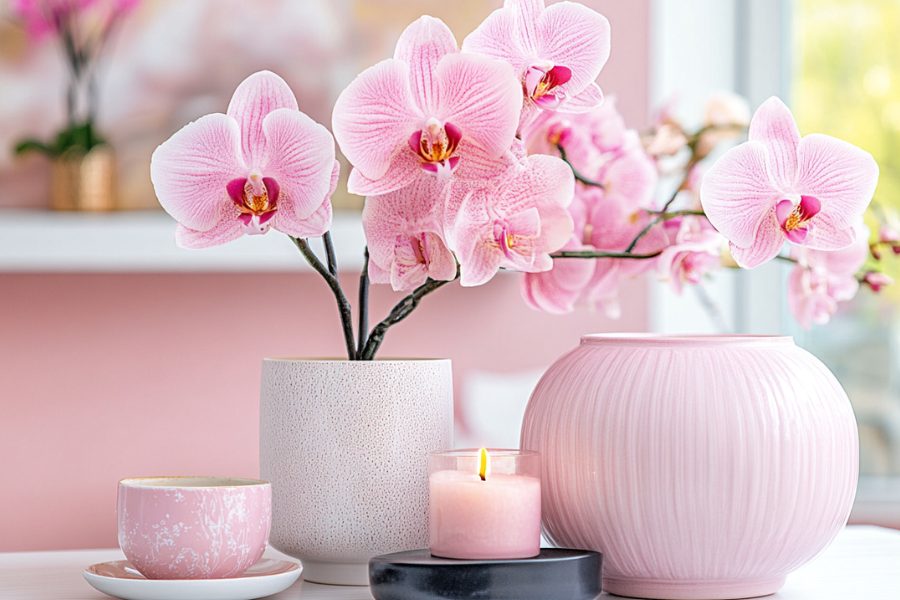
When you see a soft, desaturated pink — a blush, a rose, a warm dusty mauve — your visual cortex processes the wavelength and sends that information straight into your limbic system before conscious thought has time to form an opinion. And what research on built environment color consistently shows is that softer, lower-saturation hues produce measurably different autonomic responses than high-chroma colors. Where saturated red elevates heart rate and increases sympathetic arousal, a muted blush communicates something closer to the visual equivalent of a weighted blanket — containment without demand, warmth without urgency.
The chromotherapy lineage on pink specifically traces back to clinical observation that soft pink environments reduced aggressive behavior and physiological arousal in institutional settings — an effect studied enough to earn its own name, Baker-Miller pink. What that research pointed toward, even before we had the neuroimaging to explain the mechanism, is that color at the right saturation and tone can speak directly to the autonomic nervous system's threat-assessment system. And blush, specifically, says: nothing here requires a response. You can be here without performing.
For a woman whose nervous system has been on continuous threat-scan for decades — which is the lived reality of most neurodivergent women who've been masking through a world that wasn't designed for them — that message is not decorative. It's clinical.
Blush, the Empath, and Why This Color Finds You
In the Color Archetype framework I've developed through the Neuroaesthetic Reset Method™, Blush maps to what I call The Empath.
The Empath isn't a personality type in the pop-psychology sense. She's a nervous system pattern. And the pattern looks like this: she senses more than she can say. She carries more than she shows. Her interoceptive sensitivity — the way her body reads its own internal state and the emotional states of everyone around her — is heightened to a degree that most people around her don't understand and she can't always explain. She shuts down before she explodes. And her body is often asking for containment before it's asking for anything else.
If you have alexithymia — the experience of feeling deeply but being unable to name the emotions in real time — this archetype may feel like looking in a mirror. Research published in Biological Psychology found that autistic individuals show a particular pattern of interoceptive discrepancy: reduced accuracy in detecting their own internal bodily signals alongside what the researchers describe as an over-inflated subjective perception of sensation. (DOI: 10.1016/j.biopsycho.2015.12.003) In plain language: you feel everything intensely, but the signals don't always translate into named emotions. The body is flooded. The language isn't there. And the gap between those two things is one of the most exhausting and isolating experiences a neurodivergent woman can have.
A broader review in the Annals of the New York Academy of Sciences confirmed that interoceptive impairments — disruptions in the body-to-brain signaling pathway — are foundational to a range of conditions including autism, anxiety, depression, and eating disorders. (DOI: 10.1111/nyas.13915) Which means that for the Empath archetype, the nervous system's ability to accurately read and regulate its own internal state is genuinely compromised — and healing has to work through the sensory channels that bypass the language centers, not through the language centers themselves.
This is why color works for this woman in a way that talking alone often doesn't. And this is why blush, specifically, is her color — not because it's pretty, but because it communicates safety at the level where she actually receives communication: the body.
This Is Your Superpower, Not Your Weakness
I want to stay here for a moment, because this is the part that most nervous system content skips over.
The same interoceptive sensitivity that makes the Empath archetype vulnerable to overwhelm, to emotional flooding, to taking on everyone else's energy without a clear exit — that same sensitivity is also a genuine gift. You follow me?
Neurodivergent women who process the sensory and emotional environment at this depth aren't just more susceptible to dysregulation. They're also more capable of noticing things that other people miss. They pick up on shifts in atmosphere before anyone else does. They feel the quality of a space — its color, its texture, its light — in their body before their mind has processed it. They know when something is off before they can articulate it. And this means that when they intentionally design their sensory environment — when they choose colors, textures, lighting, and fabrics with their nervous system's language in mind rather than a trend board — the effect is more immediate, more powerful, and more clinically significant than it is for someone with lower interoceptive sensitivity.
Your sensitivity to color isn't a vulnerability to manage. It's a tool to wield. And learning to use it with intention is one of the most direct forms of self-care available to you in perimenopause, when the estrogen that was buffering your sensory processing is declining and your nervous system needs more environmental support than it used to.
What I'm saying is that the thing that has made the world hard for you is also what makes this work so powerful for you. That's all I'm saying.
Pink as Healing — In Your Space and On Your Body
Here's where we get practical. And I want to hold both dimensions — your environment and what you wear — because the nervous system doesn't distinguish between the two. Color on your walls and color on your skin are both inputs into the same sensory processing system. Both matter.
In your space, blush works best as a primary tone in the environments where your nervous system is supposed to be able to come down — your bedroom, your reading corner, the space where you return to yourself after a day of performing for other people. It doesn't have to be everywhere. It doesn't have to be a pink room. A blush throw. A rose-toned lamp. A small piece of art in the right corner. You're giving your nervous system a visual cue that says: this space is for you. Nothing is required here.
The texture pairing matters too. For the Empath archetype, velvet, soft cotton, fog-weight linen — textures that feel like containment rather than stimulation — reinforce the visual message of blush. The whole sensory package works together. This is not interior design. This is sensory prescription.
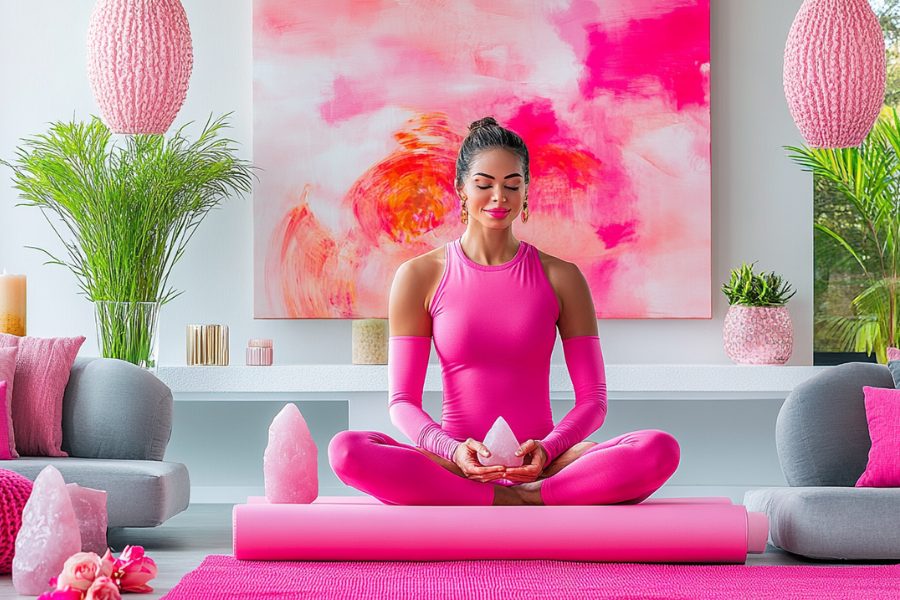
On your body, I want to say something that I mean from a clinical perspective and not as a fashionista: what you wear is a sensory experience from the moment you put it on until the moment you take it off. For a neurodivergent woman with heightened interoceptive sensitivity, the color and texture of your clothing is sending your nervous system a continuous signal all day long. Wearing blush or soft rose tones on a day when your system needs containment — a difficult meeting, a family event, a high-demand situation — is not a style choice. It's strategic nervous system support. You're putting your regulation color on your body and carrying it with you into the room.
This is what I mean when I say color is a superpower for women like us. Most people choose what to wear based on what looks good. You can choose what to wear based on what your nervous system needs today. That's a level of embodied self-knowledge that most people never access.

3 Ways to Use Pink as Nervous System Medicine
1. Build a Blush Anchor in Your Rest Space
Identify the one place in your home where your nervous system is supposed to be able to fully discharge — your bedroom, your chair, your corner. Introduce one to two blush or soft rose elements that belong specifically to that space: a pillow, a throw, a small lamp with a warm pink-toned shade. Pair it with a soft texture. Make it the sensory cue that tells your body: we're done for the day. You can let go now.
Use it deliberately — sit there, touch the texture, look at the color — as part of your transition from the day's demands back to yourself. You're training your nervous system to associate that sensory cue with permission to release. Over time, the cue alone will begin to initiate the physiological shift.
2. Wear Your Regulation Color Strategically
On the days when you know you're walking into something hard — a difficult conversation, a social event that requires sustained masking, a medical appointment, anything that's going to cost your nervous system something — wear blush close to your skin. A soft pink layer underneath. Rose-toned jewelry. A blush scarf. You don't have to explain it to anyone. You're not performing softness for the room. You're carrying your nervous system's anchor color into a situation where your system is going to need it.
3. Use the Blush Ritual as a Re-Entry Practice
When you come home from something depleting — or when you've been in sympathetic overdrive and you need to come back to yourself — this is the Empath's reset ritual: wrap yourself in something soft and blush-toned. Place your palm on your heart. Breathe in for four counts, hold for two, exhale for seven. Whisper to yourself: I don't have to explain today. Trace a small circle over your wrist or belly as you exhale.
This isn't just a breathing exercise. It's a full sensory experience — color, texture, touch, breath, and language — working through multiple channels simultaneously to signal your nervous system that the threat is over and it's safe to return. For a woman whose interoception doesn't always give her clear signals, the multi-channel approach reaches her in the language her body actually speaks.
Pink isn't soft. It's specific. And for the woman who feels everything and has been holding it quietly for longer than anyone knows — it might be exactly the color that finally says: you don't have to hold it alone anymore.
Find out if Blush is your archetype — or discover which color is actually speaking your nervous system's language right now.
Take the Color Archetype Quiz → quiz.drstaceydenise.com/color-archetype-quiz
Meet the full Color Archetype framework here: Why Color Makes You Feel Something — And Why That Matters When Your Nervous System Is Running on Empty →
The polyvagal layer underneath the Blush ritual lives here: Your Home Is Either Medicine or It Is Making You Sick →
For how interoception connects to the art therapy work: Art Is Medicine: Healing C-PTSD and Alexithymia →
Sources
Garfinkel SN, et al. Discrepancies between dimensions of interoception in autism: implications for emotion and anxiety. Biological Psychology. 2016. DOI: 10.1016/j.biopsycho.2015.12.003
Quadt L, Critchley HD, Garfinkel SN. The neurobiology of interoception in health and disease. Annals of the New York Academy of Sciences. 2018. DOI: 10.1111/nyas.13915
NOTE: This post originated as an interior design piece on Ceyise Studios exploring the psychology of pink in home décor. It's been fully rewritten here on drstaceydenise.com through the clinical lens of the Neuroaesthetic Reset Method™ — centering the Blush Empath archetype, the interoception science behind why neurodivergent women respond to color so deeply, and how to use pink as an intentional nervous system tool both in your environment and on your body.
Originally published on Ceyise Studios. Updated: April 2026.