Scent as Medicine: What a Clinical Aromatherapist Wants Every Menopausal Woman to Know
Have you ever caught a scent and felt—before a single thought formed—that your shoulders dropped?
Not because anything happened. Not because you made a decision to relax. Just because something in the air reached your nervous system before your brain could argue with it.
That's not incidental. That's biology. And for women navigating perimenopause and menopause—especially those of us who are late-diagnosed autistic, sensory-sensitive, or running on empty from decades of masking—it might be one of the most underutilized tools available to us.
In this episode of The Nervous System Eats First, I sat down with Amy Anthony, one of New York City's top certified clinical aromatherapists, founder of NYC Aromatica, herbalist, distiller, and host of the Essential Aromatica podcast. Amy designs aromatic experiences and rituals that support nervous system repair, emotional regulation, and sensory attunement.
And what she shared changed how I think about scent as clinical medicine.
Watch or listen to the full episode here →
Why Scent Works Below the Level of Language
Here's what conventional medicine doesn't explain often enough: when you're depleted, when alexithymia makes it impossible to name what you're feeling, when sensory overwhelm has you shutting down daily—talk therapy alone is not enough.
We need something that works below the level of language.
Scent does exactly that.
Inhalation of essential oils activates the parasympathetic nervous system—the "rest and digest" branch that counteracts chronic stress. It increases vagal tone, reduces cortisol, and directly modulates emotional states. For women with sensory sensitivities, scent can be both a bridge back to the body and a tool for creating calm when the world feels like too much.
As Amy said in our conversation:
"Always start with the stress response. This is always the entry point. When we work with stress, we can make you feel better. Your immune system improves. Sleep improves. It's a cascade."
This is precisely why I integrated neuroaesthetic principles—including intentional scent environments—into The Neuroaesthetic Reset Method™. Your nervous system is the operating system. And scent speaks directly to it.
What Makes Clinical Aromatherapy Different from the Mall
This matters and Amy said it clearly: there is a significant difference between what you pick up at a big box store and what a trained clinical aromatherapist creates for your specific nervous system.
Commercial synthetic fragrances and low-quality essential oils can actually cause harm—including endocrine disruption, allergic sensitization, and, in some cases, the opposite of the intended effect. Amy shared that she knows practitioners who developed reactions from using oils irresponsibly. She's seen lavender—commonly marketed as universally calming—cause agitation and anxiety in sensory-sensitive individuals because of dosing and quality issues.
The clinical aromatherapy principle that Amy returned to throughout our conversation was this: less is always more.
Especially for neurodivergent women. Especially for women whose sensory thresholds have been pushed past their limits for decades.
Key Oils Amy Recommends for Perimenopausal Women
Amy walked us through her clinical approach to several of the most debilitating menopause symptoms:
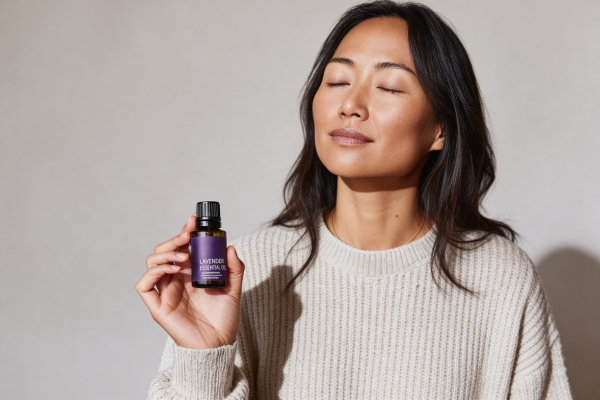
For brain fog and executive dysfunction: Rosemary, eucalyptus, holy basil, myrtle, laurel, and cedar wood. These activate and clarify without overwhelming. For neurodivergent women especially, Amy recommends a 30-second intentional inhalation—not continuous exposure—and then setting the oil aside. You can return in an hour. The goal is a nudge, not saturation.
For hot flashes and night sweats: Clary sage, vitex, geranium, rose, valerian, Roman chamomile, patchouli, and vetiver. Amy's approach is to build these into both a daytime and nighttime product so the support you receive during the day spills into better sleep at night.
For mood stabilization and emotional regulation: Cedar wood, vetiver, sandalwood, and sweet orange. Amy made a beautiful point here—sometimes the most effective aromatic intervention is simply pairing someone with a scent they genuinely love. "Just by loving it, you change your stress chemistry." I felt that in my bones.
For sensory-sensitive and neurodivergent women: Start with dilution. One drop on a cotton pad, aired out. A spray on a tissue rather than directly on skin. The essential oil doesn't need to be overwhelming to be effective. In fact, overwhelming it defeats the purpose entirely.
Teas vs. Tinctures -- Amy's Herbal Framework
Amy also walked us through the difference between herbal teas and tinctures for hormone support—a question I get from patients often.
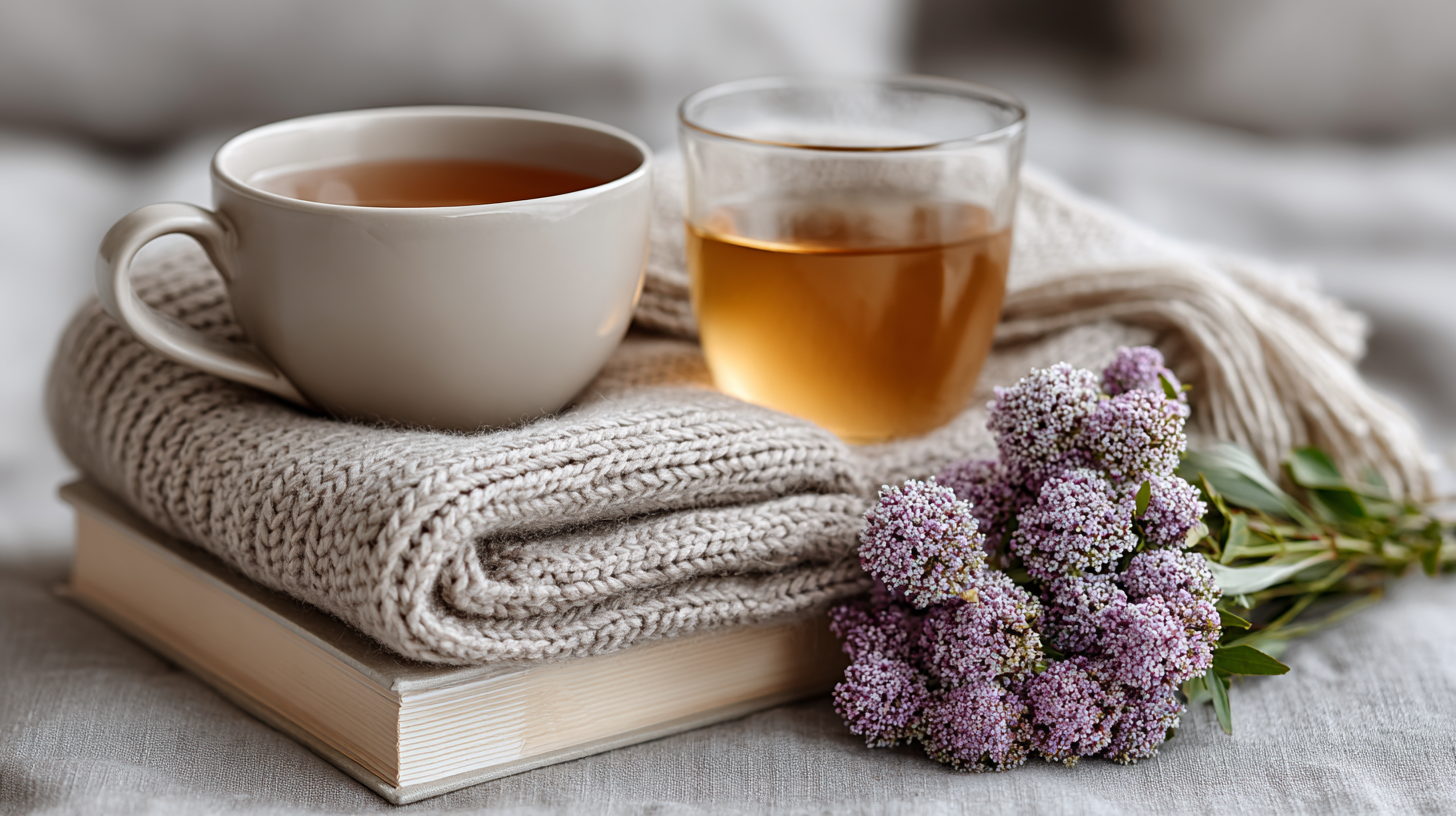
A tea is a gentle infusion—a teaspoon of dried herb steeped in hot water for 7 to 15 minutes. Tinctures are more potent—herbs macerated in alcohol and water for a full moon cycle, then strained. The medicine is more concentrated, taken in smaller doses.
Amy's clinical preference is to start with teas and use tinctures as an adjunct when needed. For perimenopause specifically, she looks to support the liver and digestive system first—because how your body processes and eliminates hormones is as important as what's being produced.
The Bedtime Ritual Amy Recommends for Night Sweats
For women whose sleep is being hijacked by night sweats, Amy's recommendation was a body oil aromatherapy ritual before bed—not a tea (she was clear: small bladder, no liquids before bed)—containing geranium, clary sage, vitex, valerian, patchouli, vetiver, and Roman chamomile.
The goal isn't to knock you out. It's to nudge your nervous system toward balance so the transition into sleep is less of a battle.
"The essential oil is not gonna put you to sleep. But it's gonna help you come to a balance. You'll feel a little dreamier, a little quieter, a little more settled."
That's the invitation. Not a pharmaceutical override. A gentle signal that it's safe to rest now.
For the Woman Who Thinks Aromatherapy Is Too Woo
I hear you. I thought that too once.
But here's what shifted for me as a physician: the research on essential oil inhalation and the autonomic nervous system is real. The parasympathetic activation is measurable. The cortisol reduction is documented. The limbic system pathway—from scent receptor to emotional memory center—is not a metaphor. It's anatomy.
And for women who have been dismissed by conventional medicine, who have been told their labs are normal while their bodies are screaming otherwise, who have spent decades in a nervous system that was never designed to rest—a 30-second palm inhalation of cedarwood or a bedtime body oil ritual is not woo.
It is one of the few interventions that works below the level of language, below the level of cognitive override, straight to the nervous system that has been waiting for permission to exhale.
I'm just saying.
Find Amy Anthony
Amy Anthony is the founder of NYC Aromatica and the host of the Essential Aromatica podcast. You can find her resources and connect with her work through NYC Aromatica online.
Continue the Conversation
If this episode resonated with you, the Auntie Menopause Circle is where we go deeper on nervous system medicine, sensory environments, and what healing actually looks like for women who have been dismissed.
Come join us.
Join the Auntie Menopause Circle →
Want to understand why environment -- including scent -- matters so much for your nervous system during menopause? Start here: What Is Neuroaesthetics? The Gentle Science of How Beauty Heals Your Brain →
And for the full conversation with Amy Anthony, watch or listen here: The Nervous System Eats First, Episode: Scent as Nervous System Medicine →