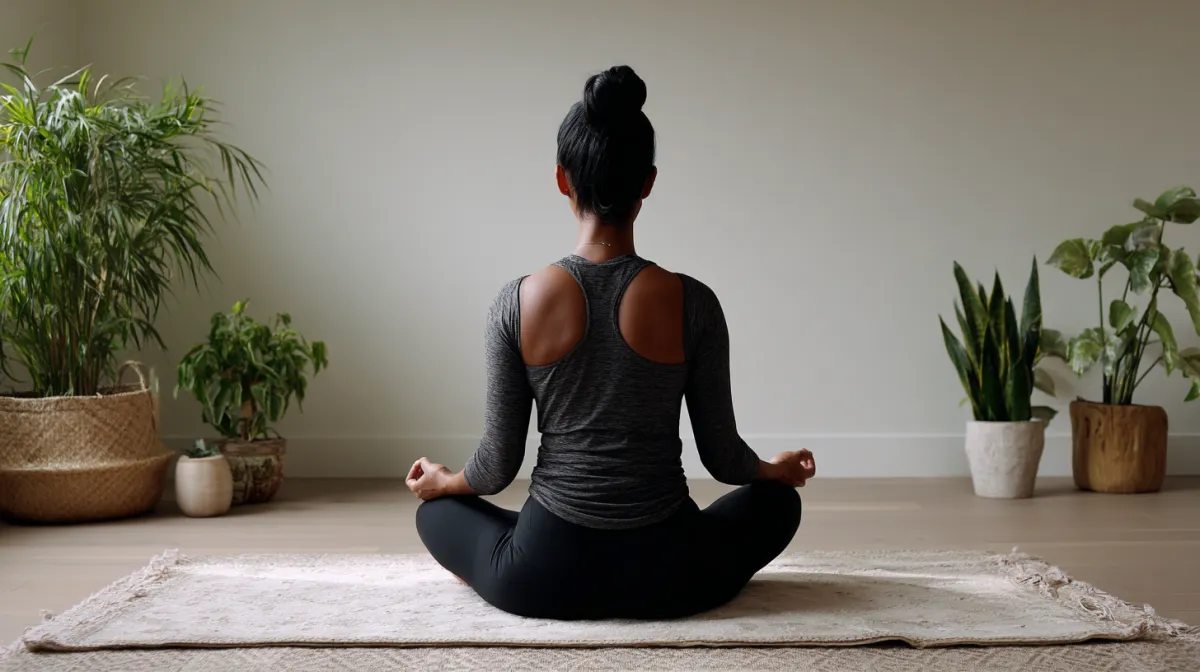
10 Meditation Room Ideas Every Menopausal Woman in Los Angeles Should Know
Los Angeles has been practicing before the rest of the country caught on.
While other cities were still debating whether meditation was real medicine, women in Silver Lake were maintaining their yoga studio memberships the way other people maintain health insurance. Women in Venice were building Ayurvedic routines into their mornings. Women in Pasadena were taking breathwork classes, integrating mindfulness, designing intentional spaces in their homes for stillness.
The wellness culture here is not a trend. For many women it is a survival strategy—a way to manage stress, regulate the nervous system, and stay functional in a city that demands constant performance.
And then perimenopause arrives. And the practices that were working start to feel insufficient. Hot flashes interrupt meditation. Sleep disruption means the morning routine that anchored everything is suddenly unreliable. The Ayurvedic protocols that used to feel balancing now feel inadequate against the magnitude of what the body is moving through.
Here is what most women in LA's wellness community have not been told: the practices you have been doing are more medically significant than you realized. And the reason they feel insufficient during perimenopause is not that they stopped working. It is that your cardiovascular system, your nervous system, and your hormonal architecture are all undergoing a simultaneous transition—and your practice needs to evolve to meet that.
Let me give you the science behind what your body has been intuiting all along. And then let me help you design a space that supports it.
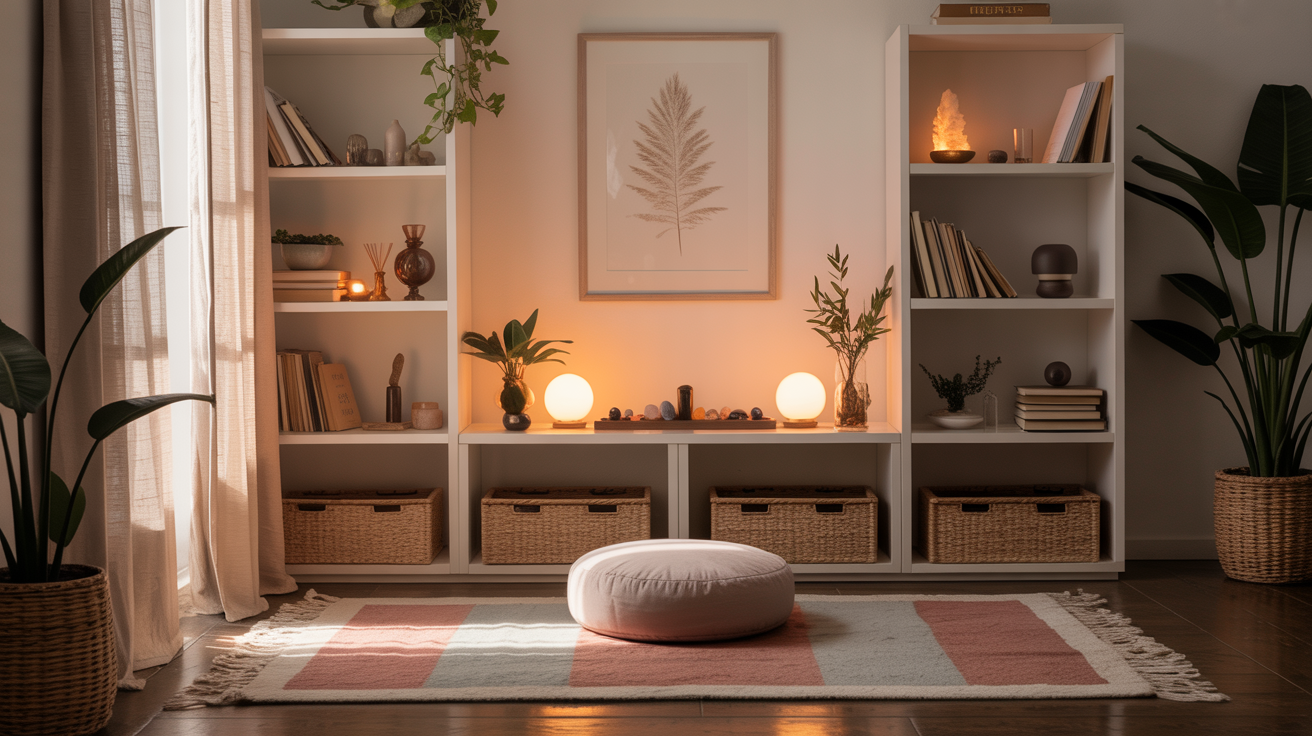
What Happens to Your Heart During Perimenopause
This is the conversation that doesn't happen enough in menopause care.
Before perimenopause, estrogen is actively protecting your cardiovascular system. It supports arterial flexibility, modulates inflammation, regulates blood pressure, and maintains the lipid profile that keeps your heart healthy. Estrogen is not just a reproductive hormone. It is a cardiovascular protector.
When estrogen declines, that protection is withdrawn. Based on articles retrieved from PubMed, a comprehensive review published in Current Atherosclerosis Reports confirmed that the postmenopausal period is associated with increased cardiovascular disease risk—a risk that was previously buffered by estrogen—and that this transition represents one of the most significant windows for cardiovascular intervention in women's lives. (DOI: 10.1007/s11883-020-00854-8)
For women who cannot or choose not to take hormone therapy—and in a city like Los Angeles where the wellness community is particularly thoughtful about this decision—this makes the non-pharmacological tools for cardiovascular protection more clinically urgent, not less.
This is where your meditation room becomes a medical decision.
Why Mind-Body Practice Is Cardiovascular Medicine for Women
A 2021 review published in Biomolecules examined the specific connection between women's cardiovascular susceptibility and the protective potential of mind-body interventions—including meditation, yoga, and qigong. The researchers found that women's brains are more sensitive than men's to stress-related factors and that poor mental health in women increases cardiovascular disease risk through measurable pathways: elevated cortisol, dysregulated autonomic nervous system function, disrupted HPA axis activity, and increased vascular inflammation. Critically, they found that mind-body interventions structurally and functionally change the brain, modulate cortisol secretion, improve heart rate variability, lower blood pressure, reduce menopausal symptoms, and positively affect women's cardiovascular health through all of these mechanisms simultaneously. (DOI: 10.3390/biom11050708)
Simultaneously. Not one at a time. Not marginally. This is happening through the same neural and hormonal pathways that perimenopause is disrupting.
And a 2024 systematic review and meta-analysis published in Menopause—analyzing 11 randomized controlled trials with over 1,000 participants—found that mind-body exercises including yoga, tai chi, Pilates, qigong, and mindfulness-based stress reduction significantly improved sleep quality, reduced anxiety, reduced depression, decreased fatigue, and improved bone mineral density in perimenopausal and postmenopausal women compared to control groups. (DOI: 10.1097/GME.0000000000002336)
These are not modest findings. These are randomized controlled trials—the gold standard of clinical evidence—showing that the practices LA women have been doing for decades are protecting their hearts, improving their sleep, and reducing their anxiety during the exact transition when all of those systems are under the greatest pressure.
Your meditation room is not a luxury. It is a clinical intervention space.
What Ayurveda Has Always Known
Ayurveda understood something that Western medicine is only now confirming with randomized controlled trials: the nervous system and the cardiovascular system are not separate. They are in constant conversation. When you calm one, you support the other.
The Ayurvedic concept of Vata -- the dosha associated with air, movement, and the nervous system -- recognizes that imbalanced Vata produces anxiety, restlessness, disrupted sleep, and cardiovascular irregularity. Perimenopause, in Ayurvedic terms, is fundamentally a Vata-aggravating transition. The cooling, grounding, rhythmic practices that balance Vata are the same practices that the research above confirms support cardiovascular and nervous system health.
This is not coincidence. This is 3,000 years of clinical observation converging with modern trial data.
For the woman in her Silver Goddess years navigating perimenopause in Los Angeles -- the woman who already has a yoga practice, who already knows about doshas, who is already thinking carefully about her environment -- the invitation is to bring clinical intentionality to what she has been doing intuitively.
And to design the room that makes that practice sustainable.
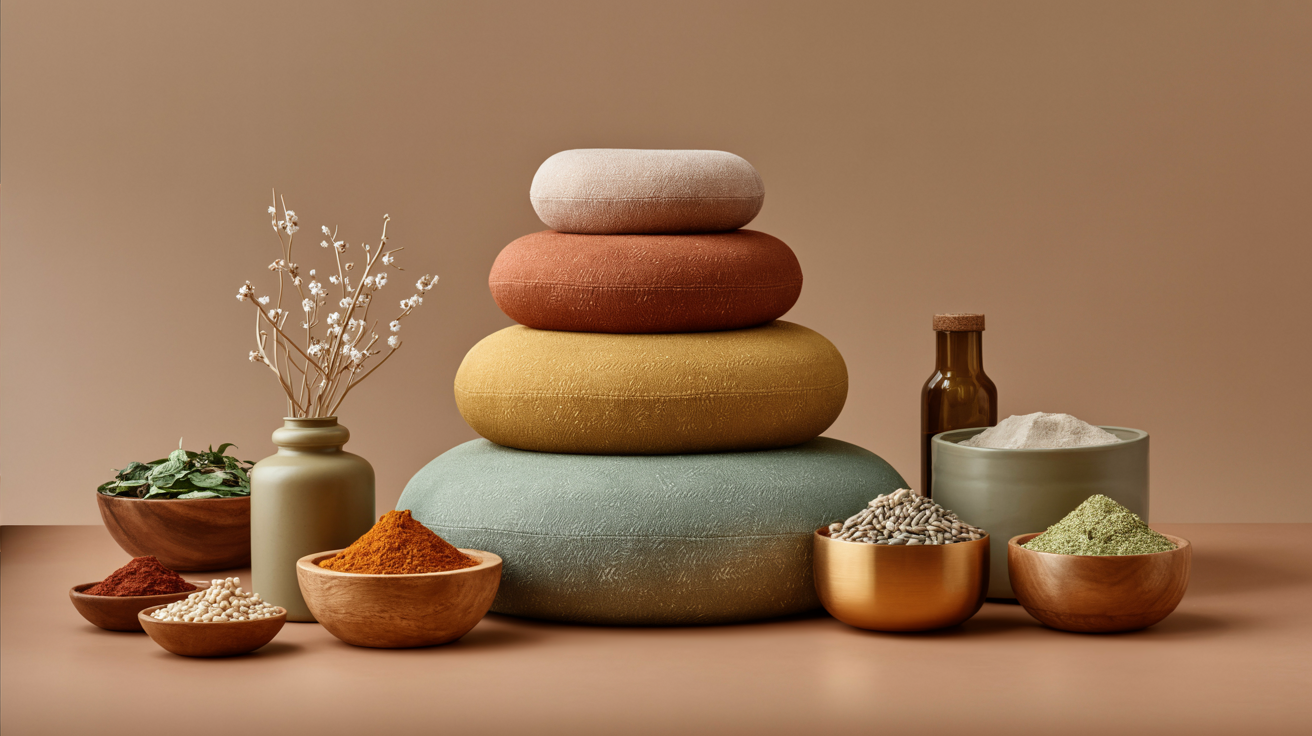
Designing Your LA Meditation Room - 10 Ideas
These are not generic meditation room suggestions. Each one is grounded in the science above and the specific context of being a perimenopausal woman in Los Angeles—in a wellness-saturated city where the standard advice is everywhere but the clinical precision is not.
1. Choose Your Dosha Color Palette
The color of your meditation space is a nervous system signal before you have consciously registered anything. Based on the Ayurvedic framework and The Neuroaesthetic Reset Method™:
For Vata-dominant women—scattered, anxious, sleep-disrupted—warm earth tones ground the nervous system. Deep terracotta, warm ochre, soft sand. Colors that feel weighted and contained.
For Pitta-dominant women—reactive, overheated, intense—cool greens and soft blues lower arousal. Sage, dusty teal, muted aquamarine. Colors that say exhale.
For Kapha-dominant women—heavy, withdrawn, emotionally flat—gentle warmth with soft contrast invites you back. Warm cream, soft gold, muted amber. Colors that say return.
The LA wellness community understands color intuitively. Now you have the clinical reasoning behind it.
2. Bring in Morning Light - and Protect Evening Dark
Los Angeles's year-round sunlight is one of its greatest nervous system resources. Morning light before 9am—whether accessed through a window, a skylight, or a brief moment on your Silver Lake deck or Pasadena patio—sets your circadian clock, suppresses lingering melatonin, and begins your cortisol curve appropriately for the day.
Your meditation room should face east if possible, or have access to natural morning light. The light itself is part of the practice.
But the evening is equally important. After 7pm, your meditation room should use only warm amber lighting—2700K or lower—to protect the melatonin production that perimenopause is already making more fragile. This is not aesthetic. This is circadian medicine.
3. Create a Dedicated Pranayama Corner
Breathwork is one of the most evidence-supported non-pharmacological interventions for menopausal symptoms. Slow, controlled breathing directly activates the parasympathetic nervous system through the vagus nerve—lowering heart rate, reducing cortisol, and supporting the HPA axis regulation that mind-body research above confirms is cardioprotective for women.
Your pranayama corner needs: a comfortable seated position at or near floor level, a natural anchor point for your gaze—a plant, a candle, a meaningful object—and acoustic privacy or soft sound coverage so your attention is not being pulled by ambient noise.
In LA apartments, this corner can be as small as a meditation cushion in a cleared corner. The size of the space is not the point. The intentionality is.
Want to go deeper on breathwork as nervous system medicine for hot flashes and alexithymia? 🎧Listen to this episode: Breathwork as Medicine: A Conversation with Angelia Abouhassan →
4. Design for Your Yoga Practice - Not Someone Else's
The research confirms that yoga significantly improves sleep quality, anxiety, depression, and fatigue in perimenopausal women. But the yoga that works for you during perimenopause may be completely different from the practice that served you in your 30s.
If you are Vata-dominant or in sympathetic overdrive—the hot power yoga that energized you before may now be dysregulating. Yin yoga, restorative yoga, and slow flow are more clinically appropriate for a nervous system that is already overactivated.
Your meditation room should have enough floor space for a yoga mat and comfortable props—bolsters, blocks, and a blanket. And it should be a space that feels genuinely inviting to a slower, more receptive practice. Not a performance space. A restoration space.
5. Water as a Parasympathetic Anchor
A small tabletop fountain in your meditation room provides continuous water sound that activates the parasympathetic nervous system. The sound of flowing water is one of the most consistent cross-cultural auditory cues for safety—your brain reads it as an environment where rest is appropriate.
In Los Angeles you are never far from actual water—the Pacific at Santa Monica or El Matador, the reservoir in Silver Lake, the Japanese garden at the Huntington in San Arcadia. When you can get there, get there. The research on nature exposure and mental health is unambiguous.
But on the days when the 405 wins, the fountain in your meditation room is doing real clinical work.
6. Scent as Medicine - Clinical Aromatherapy
The olfactory system has a direct pathway to the limbic system -- the emotional and memory processing center of the brain. Scent reaches your nervous system faster than any other sensory input. This is not wellness marketing. This is neuroanatomy.
For the perimenopausal meditation room:
Lavender - studied for parasympathetic activation, anxiety reduction, and improved sleep latency. Diffuse at low concentration in the evening.
Clary sage is traditionally associated with hormonal support and emotional processing. Warming and grounding for Vata states.
Frankincense is used across multiple ancient healing traditions for meditation and nervous system deepening. Supports slow, intentional breathing.
Rose - emotionally opening, associated with heart meridian work in multiple traditional systems. Particularly supportive for the emotional volatility of perimenopause transition.
Use high quality essential oils in a diffuser at very low concentration. For sensory-sensitive and neurodivergent women -- scent that is too strong is activating rather than calming. Start with two drops and adjust from there.
7. Sound - Frequency as Regulation
Sound is vibration. Vibration is experienced in the body, not just the ears. This is why certain music makes you feel physically different—because it is registering in your nervous system as a physiological input, not just an aesthetic one.
For the perimenopausal meditation room:
Theta wave binaural beats (4-8 Hz) support deep relaxation and emotional processing—appropriate for restorative yoga and meditation.
Delta wave frequencies (1-4 Hz) support deep rest and are appropriate for yoga nidra or pre-sleep practices.
Tibetan singing bowls, crystal bowls, and sustained tones create acoustic environments that promote vagal tone and parasympathetic activation.
Natural soundscapes—rain, ocean, forest—give the auditory nervous system organic, unpredictable-within-safe-parameters input that your brain reads as safety.
Choose what your specific nervous system finds settling. This is individual and non-negotiable.
8. Natural Textures - Grounding the Body
Yoga mats, meditation cushions, bolsters, blankets—the tactile environment of your practice space matters. Natural fibers—cotton, wool, jute, silk—interact with sensory receptors differently than synthetics. For neurodivergent women and for women whose sensory sensitivity has increased during perimenopause, this difference is not subtle.
A meditation room where every surface you touch is a natural material—a cotton meditation cushion, a wool blanket for savasana, a jute mat under your yoga mat—creates a cumulative sensory signal of groundedness and safety.
This is the Ayurvedic principle of environmental harmony made tactile.
9. The Altar as a Nervous System Anchor
Every great meditation tradition has some version of an altar—a curated focal point that signals to the nervous system: this is a different kind of space. This is where we shift.
Your altar does not need to be religious. It needs to be intentional. A candle. A meaningful stone or crystal. A photograph. A plant. A small bowl of water. Objects that carry meaning for you personally and that tell your nervous system this space is set apart from the demands of ordinary life.
For the Silver Goddess navigating perimenopause -- a woman who has spent decades tending to everyone else's spaces -- the altar is an act of radical self-acknowledgment. A physical statement that your inner life deserves a dedicated corner of the world.
10. Make It Transition-Proof
The most important design principle for a perimenopausal meditation room is that it must be usable on your worst days, not just your best ones.
That means: no setup required. Your cushion is already out. Your bolster is already there. Your diffuser is already filled. Your fountain is already running.
The nervous system that is most depleted—the one that woke up three times last night, that had a hot flash at 4am, that is running on insufficient sleep and elevated cortisol—that nervous system will not set up a whole meditation space before sitting down. It needs the space to already be ready.
Design for that woman. She is you on many mornings. And she deserves a space that meets her exactly where she is.
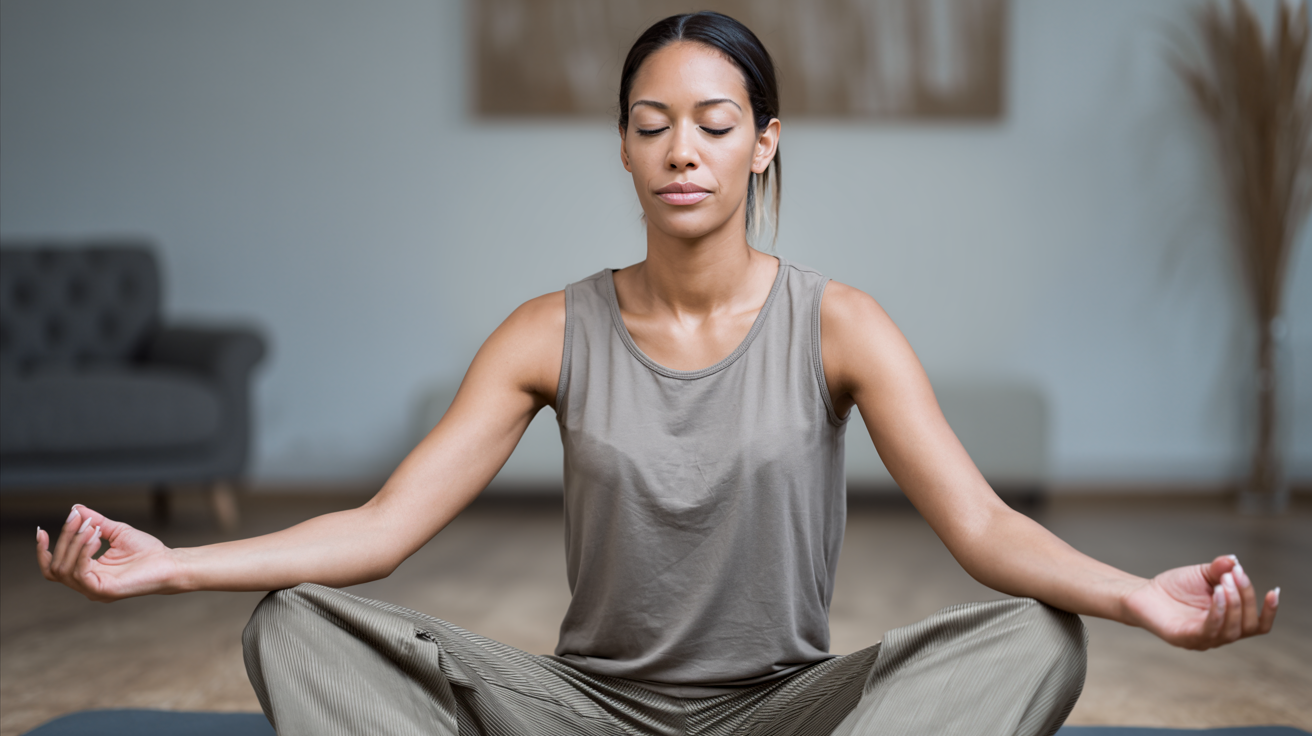
The Clinical Bottom Line
You already knew that your practice mattered. Now you have the clinical language to explain why.
Your meditation room is not a self-care indulgence. It is a cardiovascular intervention. A nervous system regulation tool. A HPA axis support structure. A space where the mind-body practices that 3,000 years of Ayurvedic tradition and multiple modern randomized controlled trials both confirm are protective for women's health during hormonal transition can actually happen.
The nervous system eats first. And in your meditation room—with the right color, the right light, the right scent, the right sound, the right texture—you are feeding it exactly what it needs.
Build the room. Do the practice. Your heart is listening.
If you want to go deeper on how your home environment is affecting your hormones, your sleep, and your nervous system during perimenopause -- the Auntie Menopause Circle is where we have these conversations every week.
Come join us.
Join the Auntie Menopause Circle →
Start with the science of your environment: What Is Neuroaesthetics? The Gentle Science of How Beauty Heals Your Brain →
Understand your color archetype and how it maps to your nervous system: Your Color Hue Is a Nervous System Signal: The Ayurvedic Approach to Color Therapy →
And bring nature into your indoor space: 5 Ways to Bring Nature Indoors for the Neurodivergent Perimenopausal Brain -- A Los Angeles Guide →
Sources
Yang HJ et al. Susceptibility of Women to Cardiovascular Disease and the Prevention Potential of Mind-Body Intervention. Biomolecules. 2021. DOI: 10.3390/biom11050708
Xu H et al. Effects of mind-body exercise on perimenopausal and postmenopausal women: a systematic review and meta-analysis. Menopause. 2024. DOI: 10.1097/GME.0000000000002336
Lundberg G et al. Menopausal Hormone Therapy: a Comprehensive Review. Curr Atheroscler Rep. 2020. DOI: 10.1007/s11883-020-00854-8