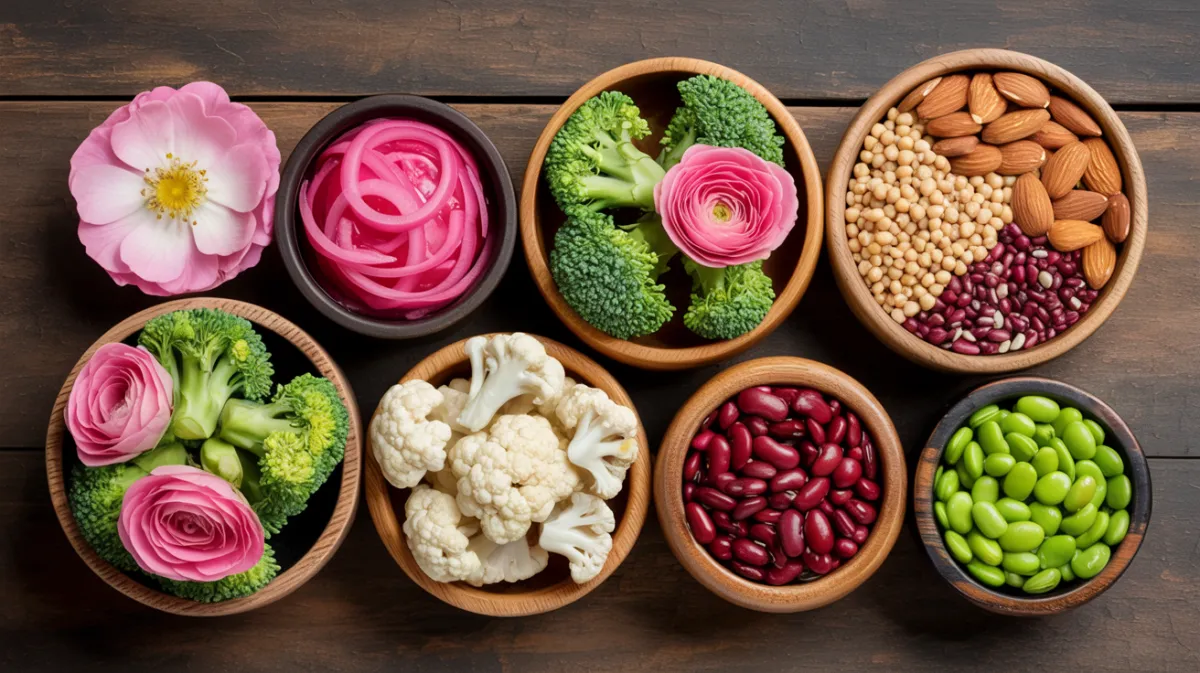
Estrobolome Foods: Feed Your Gut Bacteria for Better Hormones
Your Gut Bacteria Are Managing Your Estrogen. Here's What They Need.
You've heard a lot about gut health. Probiotics. Fermented foods. Fiber. The microbiome.
What you probably haven't heard is this: a specific community of gut bacteria is determining right now what happens to your estrogen after your liver processes it. Whether it gets properly excreted. Or whether it gets reactivated and sent back into circulation — adding to the erratic estrogen load that's already making perimenopause louder than it needs to be.
That community has a name. It's called the estrobolome. And most hormone conversations never mention it.
What the Estrobolome Is Actually Doing
Here’s the process in plain language:
Your liver processes used estrogen and prepares it for elimination
It gets sent to your gut through bile
Gut bacteria in the estrobolome produce an enzyme called beta-glucuronidase
That enzyme can remove the “tag” your liver added, which determines whether estrogen stays in the gut to be eliminated or gets reabsorbed
In a balanced system, this recycling process stays regulated and estrogen moves out as intended
In a disrupted gut, this process can become less coordinated, allowing more estrogen to be reabsorbed back into circulation
On reviewing a 2023 review in Gut Microbes, they confirmed that gut microbial beta-glucuronidase is a key regulator of female estrogen metabolism and that disruption of this system is directly associated with menopausal syndrome and estrogen-related conditions. (DOI: 10.1080/19490976.2023.2236749)
A disrupted estrobolome doesn't just affect estrogen levels. A 2025 review in Post Reproductive Health confirmed that the gut microbiome through the estrobolome influences menopausal symptom severity, weight changes, bone health, and cognitive function during the transition. (DOI: 10.1177/20533691251340491)
You follow what I'm saying? The food you eat, or don't eat, is directly affecting how your estrobolome functions. Which is directly affecting how much functional estrogen you have access to. Which is directly affecting your symptoms.
What Disrupts the Estrobolome
Before we get to what feeds it — here's what's working against it right now:
Low bacterial diversity — a narrow diet narrows the microbiome
Chronic stress — the stress response directly suppresses gut bacterial diversity
Antibiotic history — even one course years ago reshapes the microbiome
Processed food diets — ultra-processed foods feed inflammatory bacteria over estrogen-metabolizing ones
Perimenopause itself — declining estrogen changes the gut microbiome composition, which disrupts the estrobolome, which disrupts estrogen metabolism — a loop that compounds itself
What the Estrobolome Actually Needs
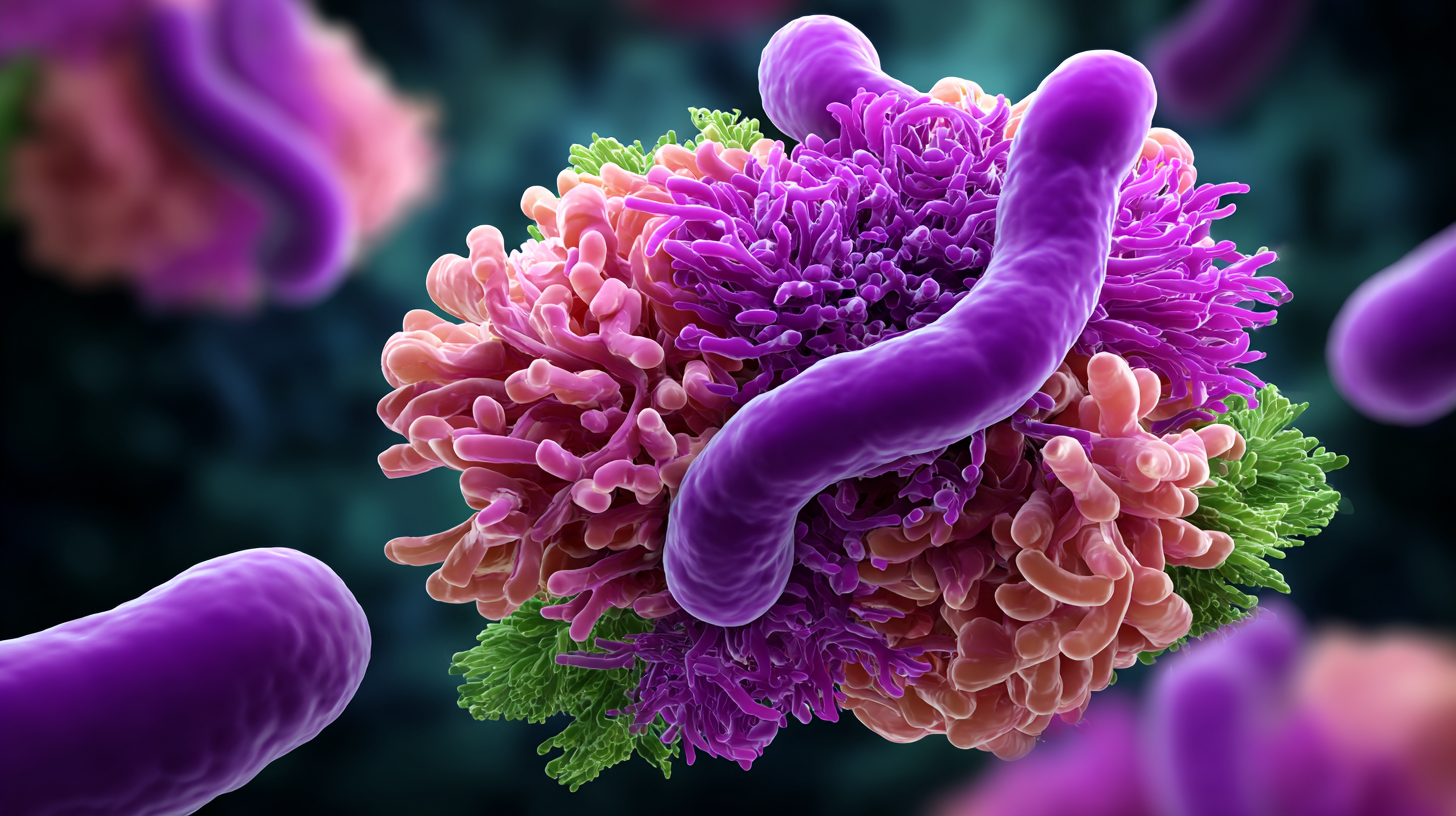
The single most helpful intervention for estrobolome health is diverse plant fiber. Not 30 grams of fiber as an abstract daily number, but 30 different plant foods across the week. Because diversity of plant input creates diversity of bacteria, which creates the full range of estrogen-metabolizing capacity your system needs.
Seeds count. Herbs count. Spices count. A sprinkle of cinnamon on your oatmeal is a plant food. So is the fresh parsley on your salmon. It adds up faster than most people think.
Here are the specific foods that do the most targeted work:
The 30 Plants Framework — Without the Overwhelm
Thirty different plants in a week sounds like a lot. Here's what a typical week actually looks like when you start counting:
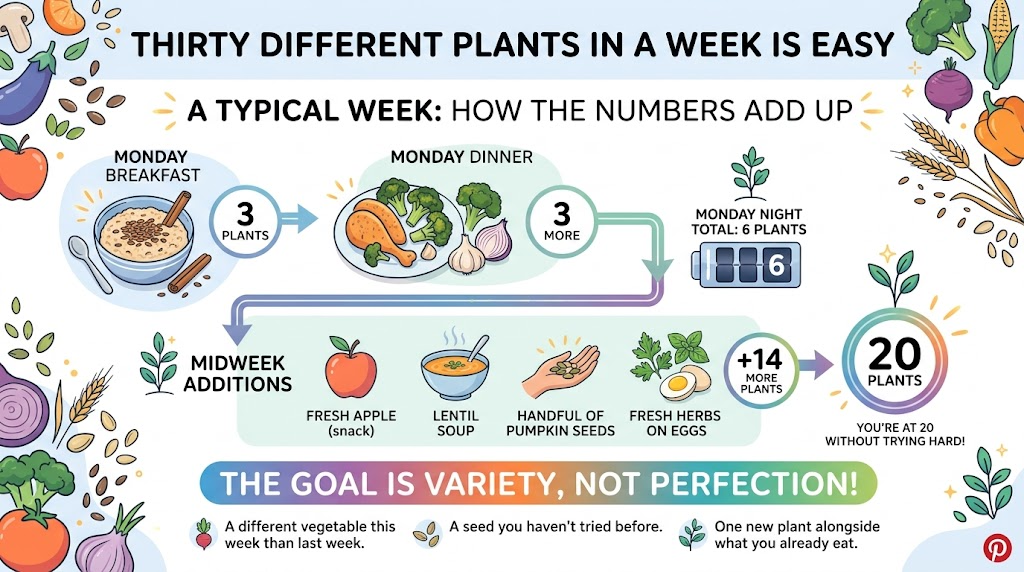
Monday breakfast: oatmeal with ground flaxseed and cinnamon — that's 3 plants Monday dinner: chicken with roasted broccoli, garlic, and onion — that's 3 more
You're at 6 plants by Monday night. Add a fresh apple as a snack, some lentil soup midweek, a handful of pumpkin seeds, fresh herbs on your eggs — you're at 20 without trying hard.
The goal isn't perfection. It's variety. A different vegetable this week than last week. A seed you haven't tried before. One new plant alongside what you already eat.
The Bigger Picture
The estrobolome is the second of three gut systems that perimenopause disrupts simultaneously. The first is the histamine-estrogen loop. The third is your gut's production of the neurotransmitters that run your nervous system and your brain. Together they explain why so much of what you're experiencing right now isn't just hormonal — it's gut-deep.
The full clinical picture connecting all three is in the hub post.
Read → Histamine Intolerance in Perimenopause: What Your Gut Is Telling You
And if you want to start with the most actionable list — the 10 specific foods that feed your gut hormones in perimenopause — that post has exactly that.
Read → 10 Foods That Feed Your Gut Hormones in Perimenopause
Sources
Hu S et al. Gut microbial beta-glucuronidase: a vital regulator in female estrogen metabolism. Gut Microbes. 2023. DOI: 10.1080/19490976.2023.2236749
Liaquat M et al. The gut microbiota in menopause: Is there a role for prebiotic and probiotic solutions? Post Reprod Health. 2025. DOI: 10.1177/20533691251340491
Published: April 2026