10 Foods That Feed Your Gut Hormones in Perimenopause

10 Foods That Feed Your Gut Hormones in Perimenopause

April 28, 20267 min read

Most conversations about food and perimenopause focus on what to cut out — alcohol, sugar, processed foods. That's useful. But it misses the more important question: what does your gut actually need you to add?

Your gut is doing three jobs right now that nobody told you about. It's managing what happens to your estrogen after your liver processes it. It's producing approximately 95% of your serotonin. And it's synthesizing the GABA and dopamine precursors that determine whether your nervous system feels regulated or like it's running a background threat loop all day. Gut hormone balance in perimenopause depends on feeding the bacterial community that does all of that work.

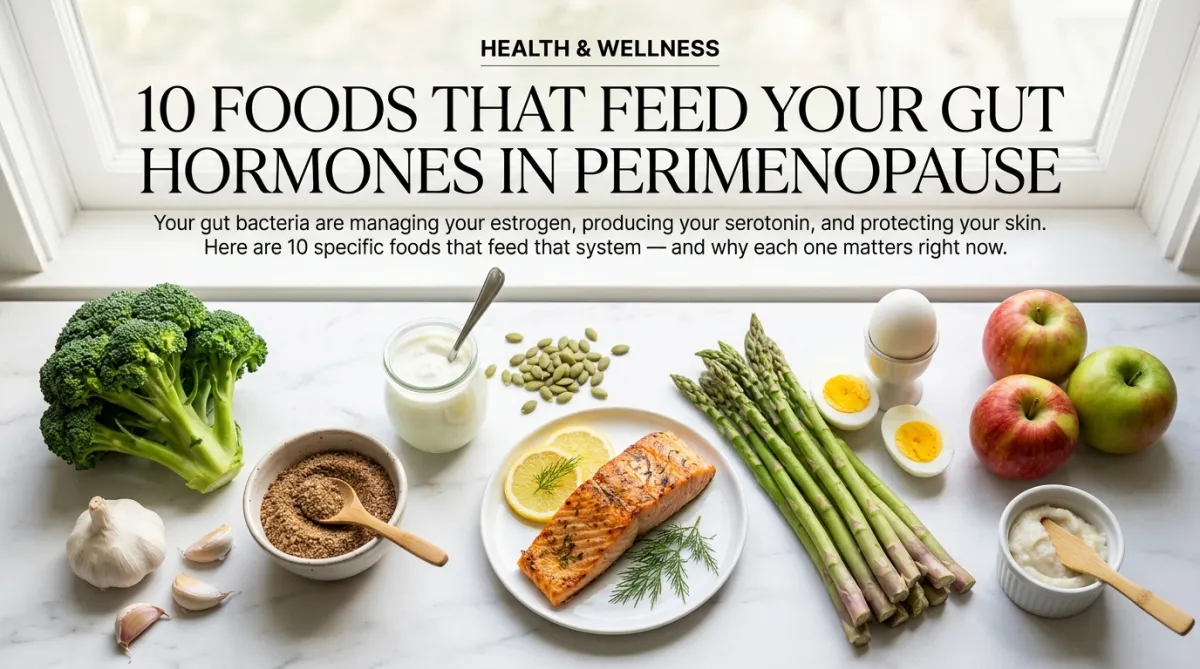
These 10 foods do the most targeted work for that system. Not superfoods. Not supplements. Real foods — most of which you probably already have.

1. Broccoli — For Estrogen Detoxification

Bowl of broccoli

Broccoli contains a compound called indole-3-carbinol that supports your liver's ability to process estrogen into its less reactive forms — which means less erratic estrogen recirculating through your system and amplifying your symptoms. Half a cup roasted, a few times a week, is a practical start to help your estrobolome. If the texture is a sensory issue, cauliflower from the same cruciferous family delivers the same benefit with a milder flavor and softer texture when roasted.

2. Garlic — For Prebiotic Bacterial Diversity

Garlic is one of the most studied prebiotic foods for gut microbiome diversity — meaning it feeds the bacteria already living in your gut rather than introducing new ones. The estrogen-metabolizing bacterial community in your gut thrives on inulin fiber, which garlic delivers abundantly. Raw or cooked, it doesn't matter. Add it to whatever you're already making. This is the simplest daily estrobolome intervention that costs nothing extra.

3. Ground Flaxseed — For Estrogen Metabolism and Fiber Diversity

Ground flaxseed contains lignans — plant compounds that directly support estrogen metabolism — alongside prebiotic fiber that feeds the estrobolome. One tablespoon stirred into your breakfast oatmeal, yogurt, or eggs is enough. It disappears into everything and it doesn't change the flavor. This is the one addition I'd put on the permanent rotation before anything else, because it's doing two jobs simultaneously — hormone support and bacterial diversity — with zero effort.

Organic ground flaxseed is available in my Amazon storefront below.

Dr. Stacey Denise Amazon Storefront Image

🛒 Affiliate Disclosure: This post contains affiliate links including Fullscript and Amazon Associates. I earn a commission from qualifying purchases at no additional cost to you.

4. Plain Yogurt — For Serotonin and GABA Production

The live cultures in plain yogurt — specifically Lactobacillus strains — may support gut-brain signaling pathways involved in serotonin and GABA regulation. Plain only. The flavored versions carry enough added sugar to undermine everything the cultures are trying to do. If yogurt texture is difficult, stir it into something or use it as a sauce base — it still counts. And if you've been noticing food sensitivities since perimenopause started, plain fresh yogurt tends to be better tolerated than long-aged fermented foods like sauerkraut or kimchi, even though all of them are technically fermented.

5. Pumpkin Seeds — For Serotonin Synthesis

Pumpkin seeds are one of the highest magnesium foods available, and magnesium is the cofactor your body needs to actually convert tryptophan into serotonin. many women do not consistently meet magnesium needs. This can show up as anxiety, poor sleep, and low mood, the exact triad that gets attributed to "just hormones." A small handful daily as a snack is enough. They also contain tryptophan itself, making them doubly effective for serotonin support.

Magnesium glycinate in supplement form — when food alone isn't enough — is in my dispensary below.

Dr. Stacey Denise Fullscript dispensary banner.

6. Wild Salmon — For Gut Inflammation and Skin Barrier

The omega-3 fats in wild salmon reduce the systemic inflammation that drives both gut permeability and skin reactivity simultaneously. Inflammation is the background condition that makes every perimenopause symptom louder — hot flashes, brain fog, sleep disruption, skin reactivity. Omega-3s are one of the most direct dietary levers for turning that background condition down. Two servings a week is the whole protocol. Sardines and mackerel deliver the same benefit for a fraction of the price.

7. Asparagus — For Estrobolome Bacteria

Asparagus is high in inulin — a specific prebiotic fiber that estrobolome bacteria thrive on. It feeds the bacterial populations that keep beta-glucuronidase (the enzyme that manages your estrogen recycling) in balance. Roasted, steamed, or eaten cold from the fridge — all of it counts. If the texture of whole asparagus is a sensory issue, chop it small and mix it into whatever you're already eating so it disappears into the meal.

8. Eggs — For Tryptophan and Gut Lining

Eggs on a countertop

Eggs give you tryptophan — the amino acid your body uses to help make serotonin. — alongside sulfur-containing amino acids that support your gut lining and skin matrix simultaneously. They're also one of the most tolerable foods for women with sensory food aversions, which makes them a reliable anchor in any nervous-system-friendly eating plan. Pair them with sweet potato or oats at the same meal — the complex carbohydrates help tryptophan cross the blood-brain barrier and complete the serotonin conversion.

9. Fresh Apples — For Histamine Clearance and Prebiotic Fiber

Fresh apples contain quercetin — a natural compound that stabilizes mast cells and helps your gut manage histamine load without pharmaceutical intervention. If you've been noticing more food reactions since perimenopause started — flushing, skin reactions, headaches after eating — quercetin is one of the most direct dietary tools available. Fresh apples also provide prebiotic fiber that feeds your estrobolome. Fresh and eaten same day is best — overripe fruit or fruit stored improperly accumulates histamine along with other compounds.

10. Miso — For Bacterial Diversity Without Histamine Load

Miso is fermented — which makes it good for bacterial diversity, with histamine caution. — but unlike sauerkraut, kimchi, and kombucha, it tends to be better tolerated for women whose histamine threshold has dropped in perimenopause. Stir a small amount into warm (not boiling) broth alongside your meal. Boiling water kills the live cultures, so warm water preserves them. It doesn't have to change the main meal at all — it's just a cup of broth you sip alongside what you're already eating.

How to Use This List

You don't need all ten foods this week. Start with the two or three that are closest to what you already eat and add them consistently. Consistency over time builds bacterial diversity — not intensity of effort in a single week.

If you eat the same foods on repeat — which many neurodivergent women do and which is not a failure — the goal is to add one of these foods ALONGSIDE the safe rotation. Not instead of. Alongside. One new thing next to the familiar things. Over time the range expands without your nervous system having to defend against it.

Want to Understand the Full Science Behind Why This List Works?

The estrobolome — the community of gut bacteria that manages your estrogen — is explained in full in the post below. Including what disrupts it, what the research actually shows, and why what you eat directly affects your hormone pattern in perimenopause.

Read → Your Gut Bacteria Are Managing Your Estrogen. Here's What They Need.

Not Sure Which Gut Pattern Is Running Your Symptoms?

The Gut Saboteur Quiz identifies which specific gut disruption is amplifying your perimenopause symptoms — and gives you a personalized starting point for your first week of changes. In 2 minutes, take the quiz below.👇🏽

Dr. Stacey Denise gut saboteur quiz banner

Affiliate Disclosure: Dr. Stacey Denise is a participant in the Fullscript affiliate program and the Amazon Services LLC Associates Program. I may earn a small commission if you purchase through my links at no extra cost to you. I only recommend products I personally use or would recommend to my patients.

Published: April 2026 | Dr. Stacey Denise | The Neuroaesthetic MD™ | drstaceydenise.com

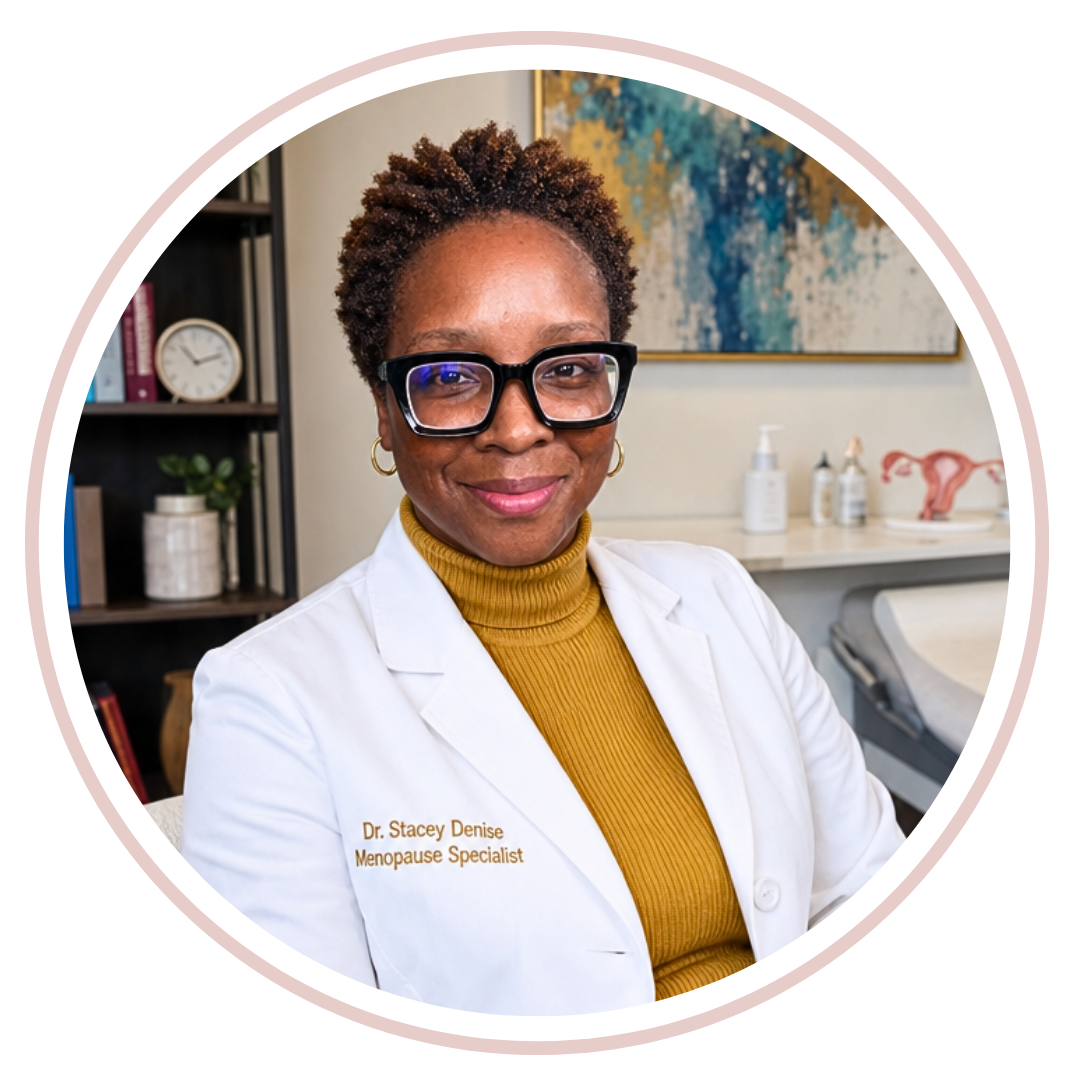
Dr. Stacey Denise Moore is a board-certified surgeon, lifestyle medicine physician, and the founder of Ceyise Studios®. Known as The Neuroaesthetic MD™, she specializes in helping women in midlife optimize their metabolic health, sleep, and environments. By blending clinical neuroscience with sensory design, she teaches patients and organizations how to create spaces and habits that support nervous system regulation and hormonal balance.

Dr. Stacey Denise

Dr. Stacey Denise Moore is a board-certified surgeon, lifestyle medicine physician, and the founder of Ceyise Studios®. Known as The Neuroaesthetic MD™, she specializes in helping women in midlife optimize their metabolic health, sleep, and environments. By blending clinical neuroscience with sensory design, she teaches patients and organizations how to create spaces and habits that support nervous system regulation and hormonal balance.

LinkedIn logo icon
Instagram logo icon
Youtube logo icon
Back to Blog