Histamine Foods Making Your Perimenopause Symptoms Worse
Why Wine, Cheese, and Leftovers Are Making Your Perimenopause Worse
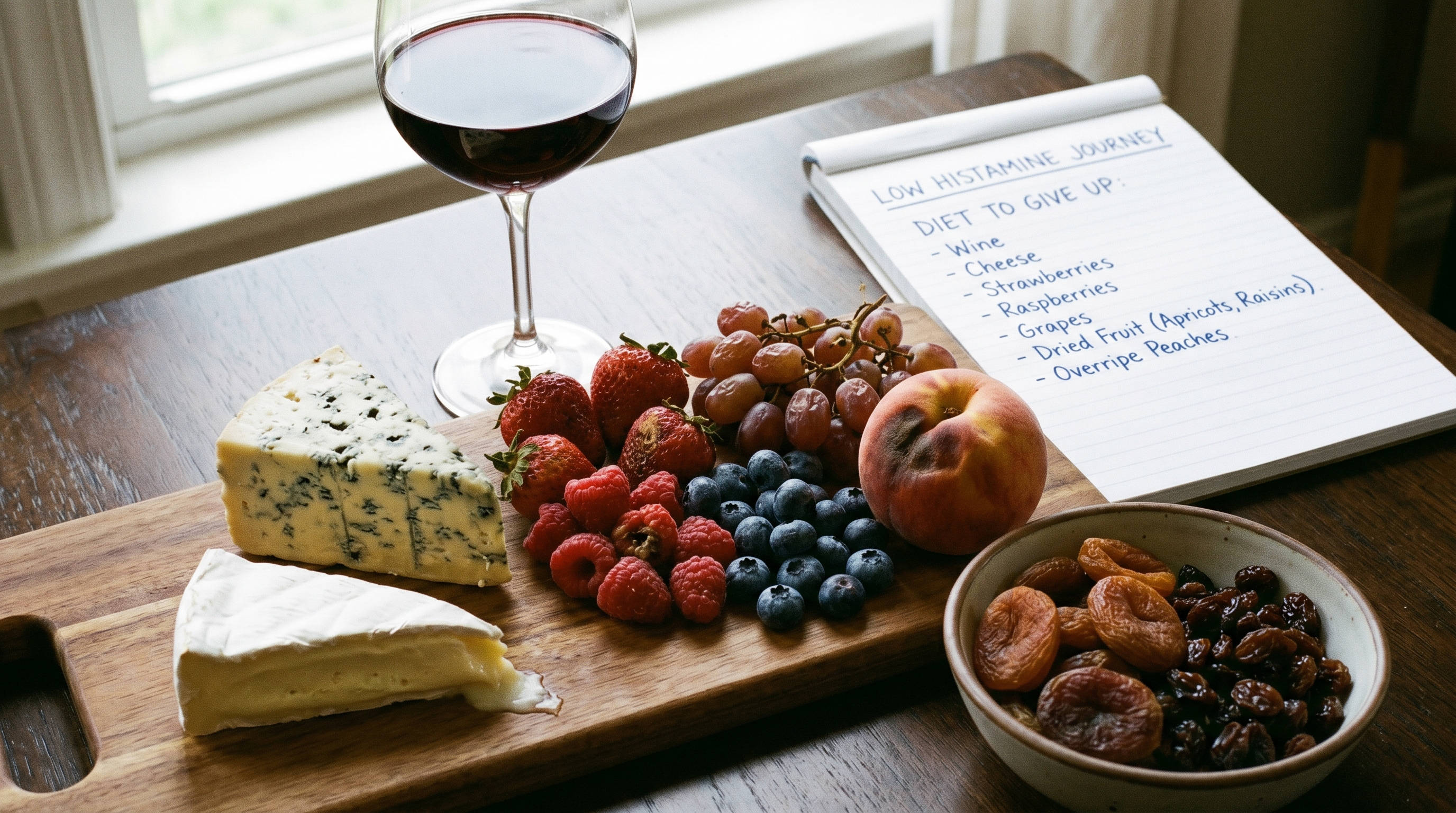
I had to give up the wine. That wasn't hard — I don't drink much anyway. But then it was the cheese. And then certain fruits, especially the ones that had been sitting a little too long or stored somewhere warm where mold finds a foothold — strawberries, blueberries, raspberries, grapes, peaches. Overripe anything.
I started getting rashes under my breasts that just wouldn't quit. Persistent. Annoying. And honestly confusing for someone who spent decades in medicine and thought she knew her own body.
Here's what I had to understand first — and what I wish someone had told me before I spent months figuring it out on my own.
The Loop Nobody Told You About
Estrogen and histamine have a relationship that most hormone conversations completely skip. And once you understand it, a lot of things that seemed random suddenly make sense.
Here's how it works:
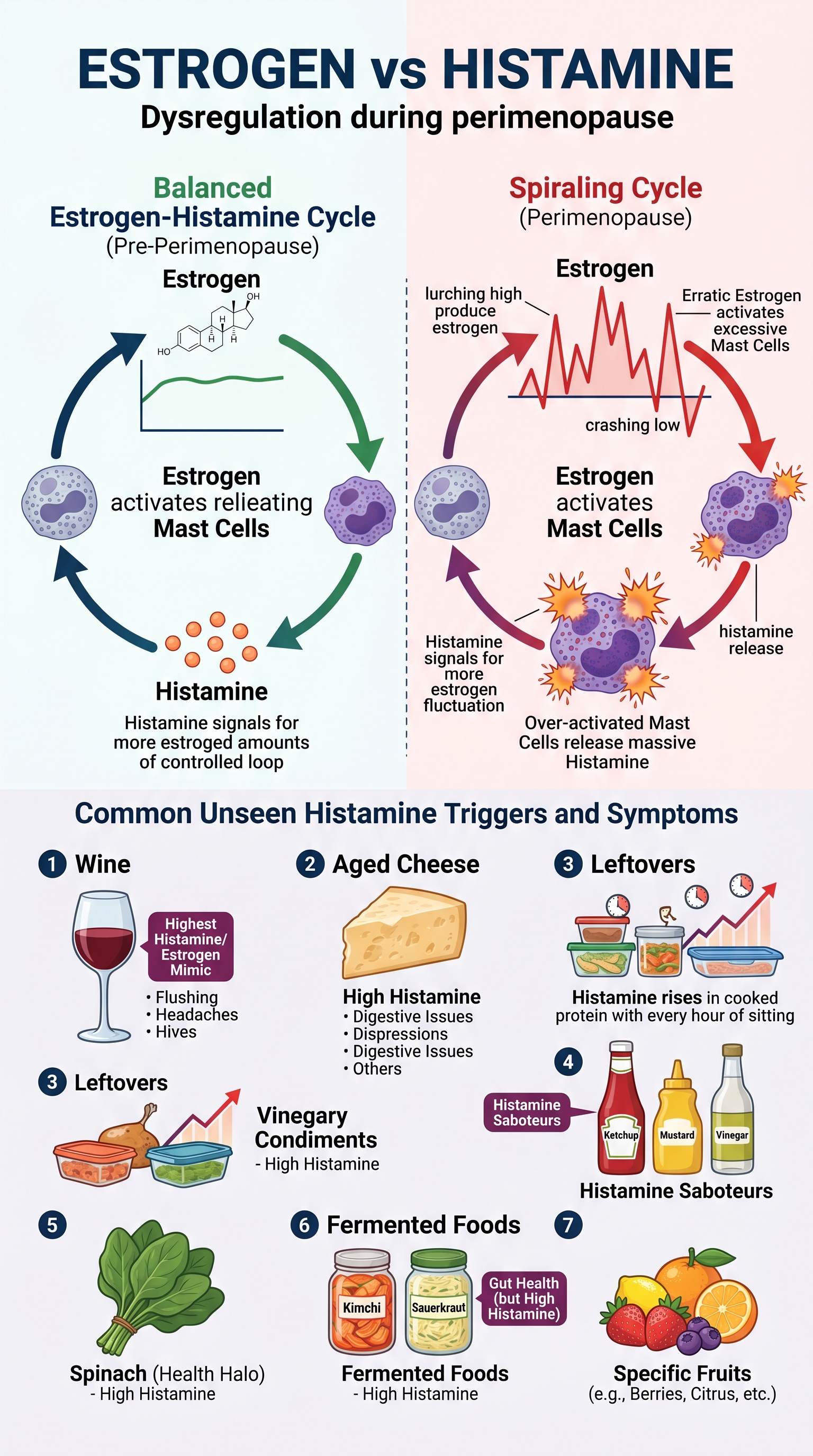
Estrogen activates mast cells — the immune cells responsible for releasing histamine
Histamine then signals the body to produce more estrogen
In a balanced system, this loop stays controlled
In perimenopause, when estrogen is swinging erratically — lurching high then crashing low — the loop spirals
The mast cells get over-activated. They release excessive histamine. That histamine signals for more estrogen fluctuation. Which activates more mast cells. Which releases more histamine.
You follow what I'm saying? The foods that never bothered you before are now triggering reactions — not because the food changed, but because your estrogen did.
The High-Histamine Foods You're Probably Eating Right Now
This list may surprise you. Several of these have health halos. That's exactly why they're worth knowing about.
🚩 Wine and alcohol Among the highest histamine-containing substances there are. Alcohol also directly blocks the enzyme that breaks histamine down in your gut. This isn't about cutting alcohol for moral reasons — it's about understanding why one glass now does what three used to.
🚩 Aged cheese The longer the aging process, the higher the histamine content. Parmesan, aged cheddar, gruyère, blue cheese — the ones that taste the most complex are usually the ones highest in histamine. Fresh mozzarella and ricotta are lower-histamine alternatives.
🚩 Leftovers This one catches people off guard. Histamine levels in cooked protein rise with every hour it sits. The chicken you cooked Monday is a different food by Wednesday. The workaround: cook smaller batches, freeze immediately rather than refrigerating, or eat within 24 hours of cooking.
🚩 Spinach Yes, spinach. It has a health halo — iron, magnesium, "it's invisible in a smoothie." But spinach is naturally high in histamine regardless of how fresh it is. Swap it for kale, chard, or collard greens which deliver similar nutrition without the histamine load.
🚩 Fermented foods Kombucha, sauerkraut, kimchi, long-aged kefir. These are genuinely good for your gut microbiome — AND they're high in histamine. For a woman whose DAO enzyme is already compromised, the gut benefit may not outweigh the histamine load right now. Miso and fresh plain yogurt tend to be better tolerated options.
🚩 Vinegar-based condiments Ketchup, mustard, soy sauce, most salad dressings. Small amounts, daily exposure — it adds up. Swap for olive oil, lemon, and fresh herbs.
🚩 Specific fruits — especially when not stored properly Strawberries, blueberries, raspberries, grapes, peaches. And here's what most people miss about frozen fruit — frozen doesn't automatically mean safe. Commercially frozen fruit can be processed with chemical washes, and some berries show mold contamination before they ever reach the freezer. The cleanest option: buy fresh, wash thoroughly, freeze yourself at home. Fresh mango, papaya, pear, and apple are lower-histamine alternatives.
🚩 Dried fruit Apricots, raisins, dates, prunes. The drying process concentrates everything — including histamine and mold byproducts. Most dried fruit also has commercial coatings that add to the load.
🚩 Avocado Painful, I know. But avocado is moderately high in histamine. Worth rotating out temporarily if you're reacting to other foods and haven't identified the source yet.
Why Your Body Can't Clear It Like It Used To
There's an enzyme called diamine oxidase — DAO — that's responsible for breaking down dietary histamine in your gut. A2021 clinical review in Nutrients confirmed that when DAO production drops, dietary histamine accumulates and produces a wide, inconsistent range of symptoms — skin reactions, gut disturbance, flushing, headaches. (DOI: 10.3390/nu13072228)
DAO is produced in your intestinal lining. And it drops when:
Your gut lining is inflamed
Your microbiome diversity is low
You've been under chronic stress
You've been on medications that compromise the gut wall
All of which perimenopause either causes or accelerates.
So the rash under my breast wasn't random. It was my gut giving me information my hormone labs hadn't caught yet.
What Supports Your Body's Ability to Clear Histamine
You don't need a formal elimination diet to start. Begin with a two-week food-symptom log — not macros, just what you ate and what your body did within an hour or two afterward. Skin, gut, flushing, headache, brain fog. Patterns will emerge.
And while you're watching for patterns, these foods actively support histamine clearance:
FoodWhat It DoesFresh applesRich in quercetin — a natural mast cell stabilizerOnions and garlicAlso quercetin-rich, plus prebiotic fiberCapersOne of the highest quercetin sources availableBell peppersVitamin C supports DAO enzyme productionKiwi and broccoliMore vitamin C for DAO supportFresh gingerNatural antihistamine properties + supports gut motility
The Bigger Picture
The histamine-estrogen loop is just one part of what your gut is doing during perimenopause. The estrobolome — the bacterial community that manages your estrogen recycling — and your gut's production of serotonin, GABA, and dopamine are the other two pieces. Together they explain why so much of what you're experiencing right now traces back to what's happening in your intestinal tract.
Read the full story on the post below.
Read → Estrobolome Foods: Feed Your Gut Bacteria for Better Hormones
Sources — via PubMed
Hrubisko M et al. Histamine Intolerance — The More We Know the Less We Know. Nutrients. 2021. DOI: 10.3390/nu13072228
Published: April 2026