When Your Sleep Is Fragmented — And the Light in Your Room Is Breaking It
Updated: April 2026
Listen. There is something happening in your bedroom right now — even while you are trying to rest — and most of the women I work with have no idea it's there.
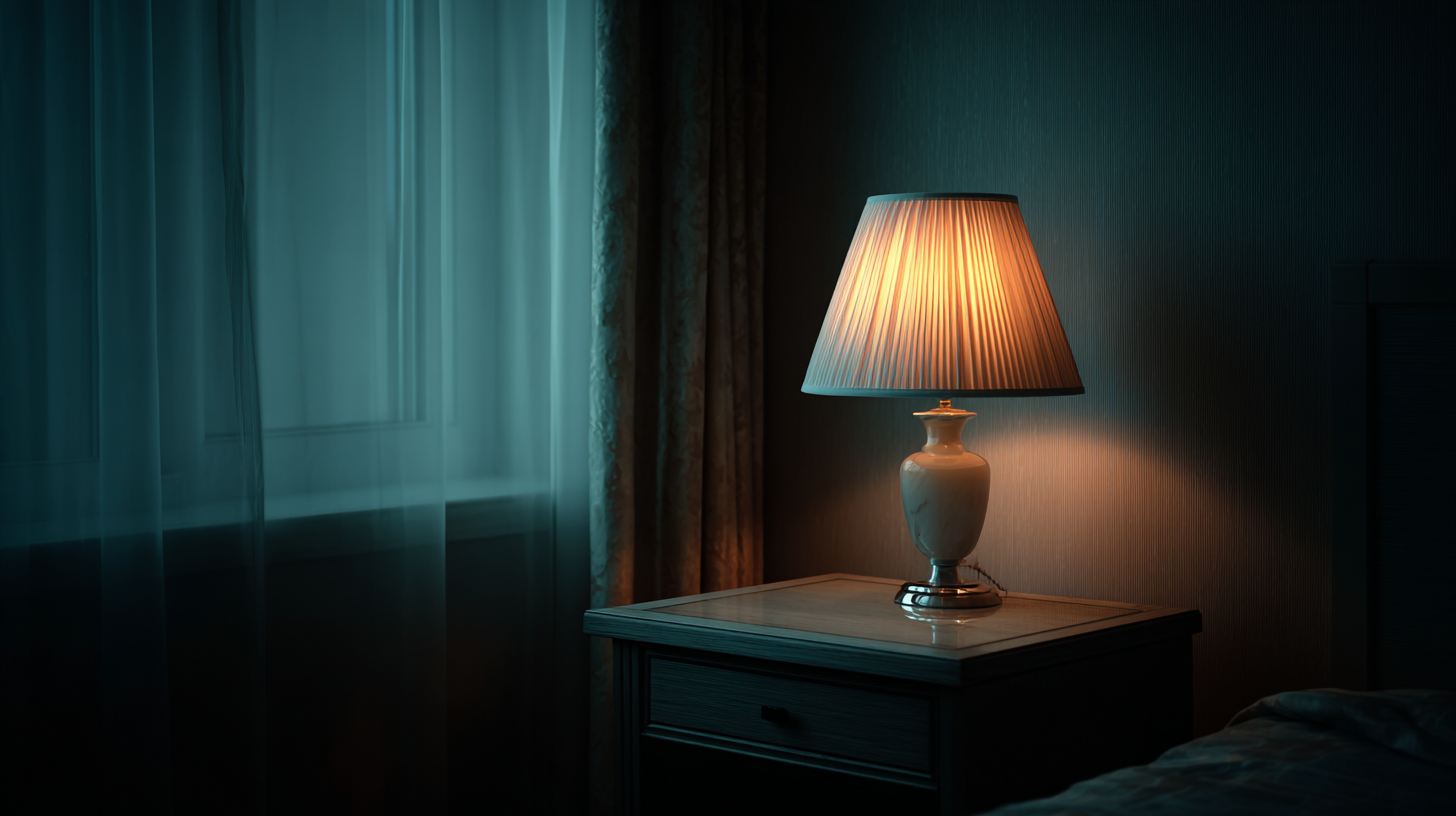
It's the light from the TV you fell asleep to. It's the glow from your phone charging on the nightstand. It's the streetlamp bleeding through curtains you keep meaning to replace. And if you live anywhere near a commercial strip — bless your heart — it might even be the Jumbotron from the Hyundai dealership that's still blasting blue light at 2 a.m. while you're lying there wondering why you can't get back to sleep.
I'm not being dramatic. I'm describing what I see from my own bedroom. And I'm describing what is happening inside your nervous system whether you notice the light or not.
Here's what I want you to understand: your body is not broken. Your sleep is not broken. But your environment may be lying to your brain about what time it is — and in perimenopause, when your hormonal buffer is already thin, your body cannot afford that confusion the way it used to.
The Nervous System Eats First — and Light Is the First Meal
Your circadian rhythm — the internal biological clock that governs when you sleep, when you wake, when your hormones release, when your gut does its repair work, when your immune system does its housekeeping — runs on light. Not willpower. Not good intentions. Light.
I came across a systematic review published in Chronobiology International that synthesized 128 studies on how light exposure shapes the human circadian system, and what the researchers found was consistent across study after study: evening exposure to blue-spectrum light, even at relatively low levels, suppresses melatonin production. And melatonin is not just the sleep hormone. Melatonin is the signal your brain sends to the rest of your body that it is safe to shift into repair mode, to slow the heart rate, to drop the cortisol, to do the cellular housekeeping that can only happen in real, deep sleep. (DOI: 10.1080/07420528.2018.1527773)
The review also found something I want you to sit with: even low light levels — as little as five to ten lux, the kind of ambient glow that doesn't feel bright at all — triggered a circadian response when people were exposed to it while sleeping with their eyes closed. Meaning the light you think you're not noticing? Your nervous system is noticing it. All night. Every night.
Now add perimenopause to this picture. A second study published in GeroScience found that as we age — and this begins in our forties and fifties, squarely in the perimenopause window — our sensitivity to light changes in ways that affect melatonin production and sleep quality simultaneously. The relationship between light and the brain's circadian signals becomes less precise. Which means your circadian system needs more support from your environment, not less, exactly at the moment when your environment has probably gotten more cluttered with screens, more artificially lit, and less aligned with the biology your body is trying to run on. (DOI: 10.1007/s11357-021-00333-1)
You follow what I'm saying? The system that was running your sleep cycles is getting less efficient just as the hormonal scaffolding that was helping compensate for that inefficiency is also declining. That is not a personal failure. That is two systems losing their buffer at the same time. And light — the right light at the right time — is one of the most direct interventions you have access to right now, tonight, before anything else changes.
The Invisible Saboteurs — How Your Environment Is Running a Night Shift You Didn't Agree To
Let me be specific, because general advice about "limiting screen time" isn't going to help you because you already know. What you needs is the mechanism — the why — so you can make decisions that your nervous system will actually respond to.
Blue light is not the villain. Mistimed blue light is.
During the day, blue-spectrum light is exactly what your circadian system needs. It suppresses melatonin during daylight hours, promotes serotonin release, keeps you alert and focused. This is why I talk about morning light exposure as a clinical intervention, not a wellness suggestion. Getting your eyes exposed to natural light in the first hour after waking — even through a window, even on a cloudy day — anchors your circadian clock and sets the timing for when melatonin will release that evening. That timing matters. The quality of your sleep tonight is partly determined by the light you got this morning.
The problem is what happens at night. When blue light — from your phone, your overhead LEDs, your TV, your refrigerator door — keeps reaching your eyes after sunset, your brain reads it as "still daytime." The melatonin that should be rising to carry you into sleep is suppressed. The cortisol that should be falling is kept artificially elevated. And for a nervous system that is already dealing with the HPA axis dysregulation that comes with perimenopause, adding a mistimed light signal on top of that is not a small thing. It is a continuous drain on a system that doesn't have surplus capacity right now.
The nighttime bathroom trip nobody talks about.
Here is something I hear from patients constantly: they wake to use the bathroom at 2 or 3 a.m., flip on the overhead light, and then cannot get back to sleep. And they think the problem is the waking. The waking is not the problem. The light is the problem.
When you expose your eyes to bright white or blue-spectrum light in the middle of the night, your brain reads it as a signal that dawn has arrived. Melatonin drops. Your nervous system begins preparing for waking. And then you lie back down in the dark wondering why your brain won't let you go back under — and the answer is that you just told it morning had come.
The fix is specific: red light. Install a dim red night light in your bathroom. Use a red-spectrum bulb or a motion-activated amber light for the path from your bed. Red wavelengths are the longest in the visible spectrum and have the least suppressive effect on melatonin — your brain does not read red light as a sunrise signal. You can navigate safely, do what you need to do, and return to bed without triggering a full circadian reset. This is not a luxury. This is a clinical sleep tool that costs twelve dollars and changes the second half of your night.
What to do with your bedroom right now.
Blackout curtains or a well-fitted sleep mask — not just dark curtains, actual light-blocking coverage — is the environmental baseline. If your phone must be in the room, put it face down and across the room. If you use an alarm clock, choose one with red digits or cover the display. If your partner uses devices, discuss it. Your circadian system does not negotiate.
For the two hours before bed, shift to warm amber lighting — lamps rather than overheads, bulbs in the 2700K range or lower. If you use screens in the evening, a blue-light filtering app is a partial mitigation, not a substitute for dimming the actual environment. And if you can build even a ten-minute outdoor light ritual in the morning — sitting with your coffee by a window that opens, or stepping outside before your day starts — you are giving your circadian clock the anchor signal it needs to run the rest of your sleep timing correctly.

Nutritional Menopause Biology — Because Your Gut Has Something to Say About Your Sleep
This is where the three pillars converge in a way I don't hear talked about enough, and I want to hold it here for a moment.
Serotonin — which is not just a mood neurotransmitter but also the precursor to melatonin, the molecule your brain converts into the sleep signal we've been discussing — is produced predominantly in the gut. Not in the brain. In the gut. Somewhere around 90% of the body's serotonin is synthesized in the gut lining, and the bacteria living in your gut microbiome play a direct role in whether that synthesis happens efficiently.
Now add estrogen to this picture. Estrogen is metabolized partly through a specialized community of gut bacteria called the estrobolome. When your estrobolome is healthy and diverse, it helps regulate circulating estrogen levels — which in turn influence the gut environment that produces serotonin, which in turn supports the melatonin production that governs your sleep. These systems are not separate. They are in continuous conversation.
Research published in International Journal of Molecular Sciences found that gut bacteria directly influence the production of serotonin, GABA, and dopamine — the three neurotransmitters most involved in mood regulation and sleep initiation — and that this influence is especially significant during periods of hormonal fluctuation, including menopause. (DOI: 10.3390/ijms26209948) And a study published in Scientific Reports found that declining estradiol levels — exactly what happens in perimenopause — alter the composition of the gut microbiome in ways associated with increased anxiety and mood disruption, with specific bacterial shifts correlating with those behavioral changes. (DOI: 10.1038/s41598-023-31783-6)
What does this mean for you on a Tuesday night when you cannot sleep? It means that what you ate today, and the bacteria living in your gut, are part of the conversation happening in your sleep architecture tonight. It means that supporting your estrobolome — through fiber-rich foods that feed the bacteria that metabolize estrogen, through fermented foods that introduce diverse bacterial strains, through reducing the ultra-processed foods that erode microbiome diversity — is a sleep intervention. It is a mood intervention. And it is especially relevant in perimenopause, when the estrogen-gut-serotonin-melatonin chain is already under hormonal pressure.
I'm not saying skip HRT and eat more yogurt. I'm saying these systems are connected and if you are treating your sleep problem only at the level of the mattress and the white noise machine, you are missing part of the picture.
What This Looks Like as a System
The original version of this post gave you a list of tips about light. I want to give you something more useful, which is how these three pillars actually relate to each other in your body when you are in perimenopause and your sleep is disrupted.
Your nervous system governs when your circadian clock runs and how well your sleep architecture holds. Light is the primary input that sets that clock. When the light environment is wrong — too bright too late, not bright enough in the morning, blue-spectrum when it should be amber — the nervous system is receiving incorrect timing signals and the downstream effects touch everything: mood, cortisol patterns, gut motility, hormone metabolism, immune function, and the depth and architecture of sleep itself.
Your gut is processing the estrogen your ovaries are producing less of. It is synthesizing the serotonin that becomes the melatonin your nervous system needs to shift into sleep. What you feed it determines how well it does this work.
And your environment — the light, the temperature, the sounds, the fabrics, the sensory field of your bedroom — is either supporting or undermining both of the above at every hour of the day and night, without asking permission, without waiting for you to notice.
This is why I call these The Invisible Saboteurs. Not because they're mysterious, but because most of the women I work with have been told their sleep problems are about stress management or needing to wind down better, when what's actually happening is that their environment is running a biology they don't know about, in the wrong direction, and nobody explained the mechanism.
Now you know the mechanism. And knowing it changes what you do next.
If you want to find out exactly which patterns are disrupting your sleep right now — the nervous system layer, the environmental layer, the hormonal layer — start with the quiz. It's the first thing I do with every patient before we go anywhere else.
Take the Sleep Saboteur Quiz → drstaceydenise.com/takethequiz
The polyvagal layer of why your environment talks directly to your nervous system lives here: Your Home Is Either Medicine or It Is Making You Sick →
For the neuroaesthetic framework underneath all of this: What Is Neuroaesthetics? The Gentle Science of How Beauty Heals Your Brain →
The environmental saboteurs go beyond light — sound, temperature, and color are in the same conversation: Calming Colors and the Nervous System Reset Method →
Sources
Tähkämö L, Partonen T, Pesonen AK. Systematic review of light exposure impact on human circadian rhythm. Chronobiology International. 2018. DOI: 10.1080/07420528.2018.1527773
Chellappa SL, et al. Age-related neuroendocrine and alerting responses to light. GeroScience. 2021. DOI: 10.1007/s11357-021-00333-1
Rosas-Sánchez GU, et al. Estrogenic effect of probiotics on anxiety and depression: a narrative review. International Journal of Molecular Sciences. 2025. DOI: 10.3390/ijms26209948
Acharya KD, et al. Estradiol-mediated protection against high-fat diet induced anxiety and obesity is associated with changes in the gut microbiota in female mice. Scientific Reports. 2023. DOI: 10.1038/s41598-023-31783-6
NOTE: This post originated as a neuroaesthetic design piece on Ceyise Studios. It has been fully rewritten and updated here on drstaceydenise.com to reflect the clinical pillars of the Neuroaesthetic Reset Method™ — specifically how light, circadian biology, and nutritional menopause biology intersect for neurodivergent women navigating perimenopause and menopause. The interior design lens is gone. The nervous system science is what remains.
Originally published on Ceyise Studios on January 1, 2024. Updated: April 2026.