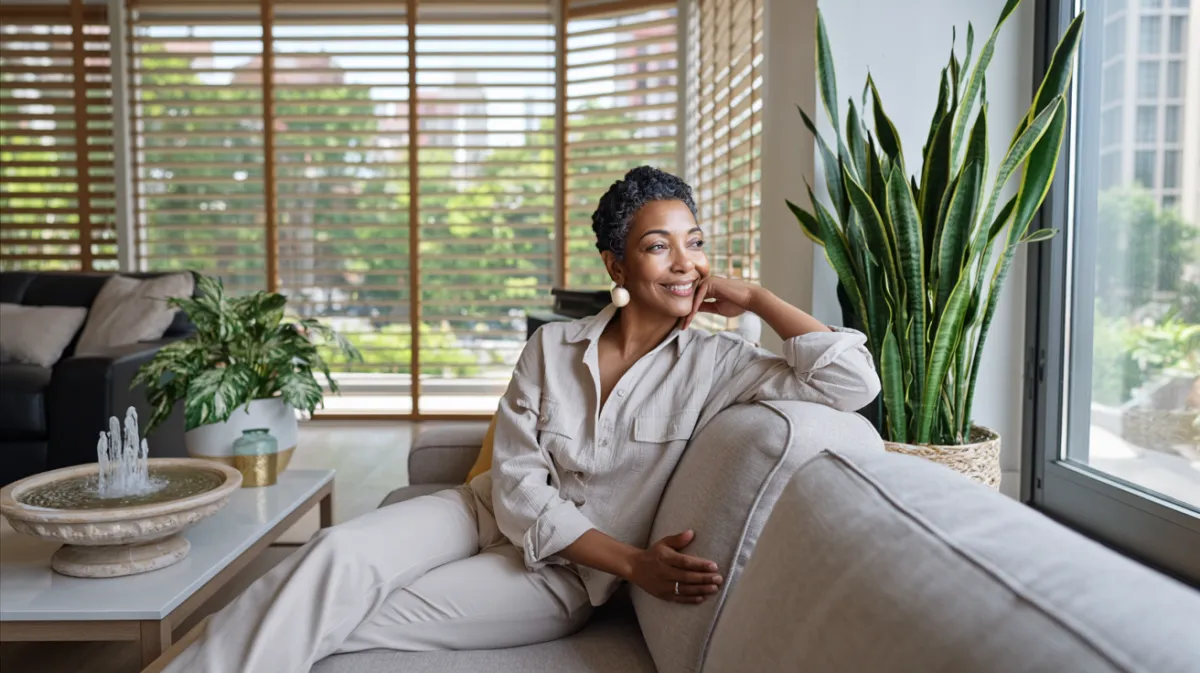
5 Ways to Bring Nature Indoors for the Neurodivergent Perimenopausal Brain — A Houston Guide
Houston does not make it easy.
Nine months of heat that feels personal. Humidity that sits on your chest before you have even made it to your car. A city designed around highways and air conditioning where the outdoors—the actual, unmediated outdoors—can feel like a threat rather than a refuge from June through September.
And yet your nervous system is out here desperately needing what nature provides. The cortisol regulation. The parasympathetic activation. The visual quiet of organic shapes and living things that your brain was literally designed to respond to.
I hear it from my patients in the Heights, in Katy, in Sugar Land, in Third Ward—women who used to love being outside but have stopped because the heat is too much, because hot flashes make 95 degrees feel like a clinical emergency, because stepping outside in July in Houston feels like asking your already dysregulated nervous system to manage one more assault.
You are not being dramatic. Houston heat is genuinely physiologically demanding. And for women in perimenopause, whose thermoregulatory system is already compromised by declining estrogen, the barrier to outdoor nature access during summer is real and clinical.
So we are going to talk about bringing it inside. Not as a compromise. As a strategy.
Why Houston Women in Perimenopause Need This More Than Most
Houston sits in one of the most heat-stressed urban environments in the United States. The urban heat island effect—the way concrete, asphalt, and dense infrastructure trap heat—means that Houston's city neighborhoods can run several degrees hotter than surrounding areas. For a woman in perimenopause whose estrogen is declining and whose thermoneutral zone is narrowing by the day, those extra degrees are not abstract. They register in the body as threat.
Hot flashes are driven by sympathetic nervous system activation in the context of a narrowed thermoneutral zone. External heat exposure—stepping from air-conditioned interiors into Houston's summer—can trigger or intensify that sympathetic firing. This means the heat is not just uncomfortable. For some women it is genuinely dysregulating, pulling them further from the parasympathetic recovery state their body needs to sleep, to heal, and to feel like themselves.
The nervous system eats first. And if your environment is keeping it on high alert—whether through hormonal disruption, sensory overload, or literal thermal stress—nothing else you do for your sleep or your health will work as well as it could.
Nature indoors is not a lifestyle preference for Houston women in perimenopause. It is a clinical strategy.
What the Research Confirms
While writing this article, I came across a few articles on PubMed. One comprehensive 2024 literature review published in Annali di Igiene found that exposure to both outdoor and indoor green spaces was consistently associated with measurable improvements in mental health—including reduced stress, anxiety, and depression—as well as physical improvements, including lower blood pressure, reduced heart rate, and decreased inflammation. Critically, the researchers confirmed that these benefits are not limited to outdoor green spaces. Indoor plants and nature-evoking elements in living and working environments produced comparable benefits. (DOI: 10.7416/ai.2024.2654)
A 2025 study published in the International Journal of Occupational Safety and Ergonomics found that just 15 minutes of caring for indoor plants—watering, tending, and interacting with them—produced a significant decrease in systolic blood pressure, increased relaxation scores, reduced anxiety, and EEG patterns associated with a calmer cognitive state compared to the same time spent on computer tasks. (DOI: 10.1080/10803548.2025.2550858)
And research published in IJERPH confirmed that purposeful activity in green spaces -- even brief and low-intensity engagement—was associated with improved mood across all domains measured, with a significant association between location in nature and reduction in stress. (DOI: 10.3390/ijerph16152712)
Fifteen minutes with a plant. Measurable blood pressure reduction. Calmer brain waves. Lower anxiety.
That is not a wellness trend. That is a clinical intervention you can do in your kitchen on a Tuesday in August when it is 98 degrees outside and you have not left the house since Friday.
A Note Before We Start
For neurodivergent women in Houston—autistic, ADHD, or sensory-sensitive—the relationship with nature indoors has some specific nuances worth naming before we get into the practical suggestions.
Some of you love plants but have no capacity to keep them alive during autistic burnout or perimenopause fatigue. Some of you find certain textures—the feel of soil, the roughness of bark—activating rather than regulating. Some of you love the idea of a lush indoor garden but the visual complexity of too many elements is itself dysregulating.
Every suggestion below includes a neurodivergent adaptation. Because the goal is always your specific nervous system in its current state. Not someone else's version of a healing space.
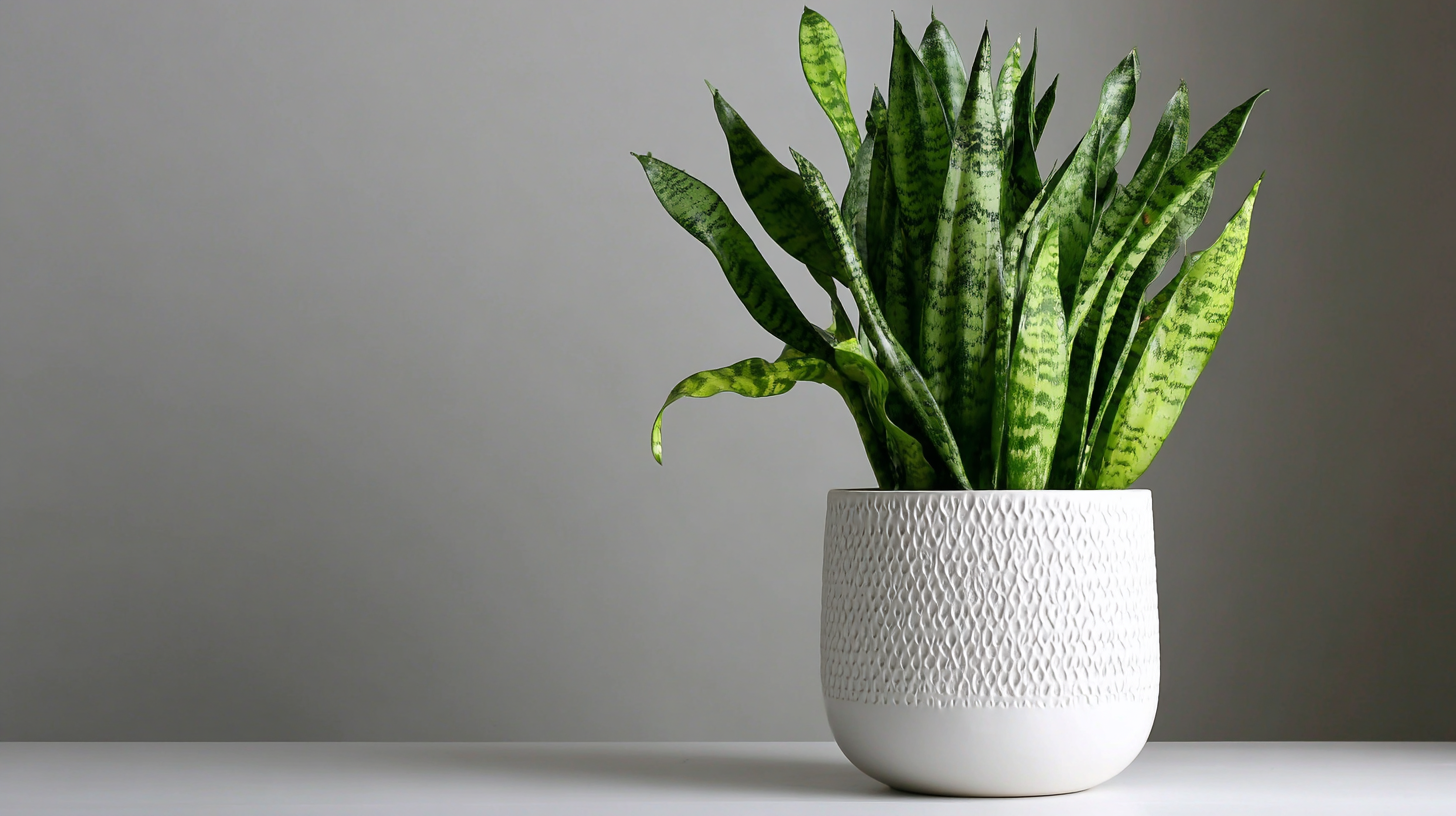
1. Plants -- With a Heat-Adapted, Low-Maintenance Approach
Houston's humidity and indoor air conditioning create a specific growing environment—plants that thrive in humid warmth do well here, but the air conditioning that keeps you comfortable can dry out plants faster than you expect.
For Houston women who want plants that actually survive without becoming another thing to manage: snake plants are nearly indestructible, tolerate low light, and filter indoor air—important in Houston where indoor air quality can be affected by our industrial environment. Pothos grow vigorously in Houston's climate and can trail from shelves or hang from hooks, keeping the tactile experience of the plant away from your hands if touch is a sensory issue. Peace lilies thrive in Houston's humidity even indoors and bloom with minimal effort.
Based on the research above, even the act of watering—15 minutes of quiet, tactile engagement with a living thing—is enough to measurably lower your blood pressure and shift your brain into a calmer state. In a city where most of your day is spent in traffic, in meetings, or on screens, that 15 minutes is not small.
The neurodivergent adaptation: If keeping plants alive feels like one more thing you will fail at during perimenopause -- preserved botanicals, dried grasses, or high-quality faux plants give you the visual and aesthetic benefit without the maintenance demand. Your nervous system does not require the plant to be alive. It requires the visual presence of organic, natural form. Work with what your capacity allows right now.
The Houston-specific angle: Consider a small herb garden on your kitchen windowsill—basil, rosemary, mint. Houston's year-round warmth makes herbs easy to grow indoors. And the scent of fresh herbs is itself a nervous system cue. Rosemary has been studied for cognitive clarity. Lavender for parasympathetic activation. Your windowsill herb garden is doing double duty.
Want to understand how your color environment connects to your nervous system regulation? Read this: Your Color Hue Is a Nervous System Signal: The Ayurvedic Approach to Color Therapy →
2. Natural Light - Managing Houston's Intensity
Houston gets an average of 204 sunny days per year. That is a significant circadian resource—and most Houston women are not using it clinically because they are avoiding the heat that comes with it.
Morning light before 9am in Houston is genuinely accessible for most of the year. The temperature is manageable, the UV index is lower, and the light spectrum at that hour is exactly what your circadian system needs—broad spectrum natural light that suppresses lingering melatonin, raises cortisol appropriately, and sets your biological clock for the day.
A 10-minute sit on your back porch or near a window with direct morning light—before the heat becomes a clinical issue—is one of the most powerful nervous system reset tools available to you. You do not need to go to Buffalo Bayou or Memorial Park. You need a chair near a window facing east.
For the rest of the day: bring filtered natural light in rather than blocking it out completely. Sheer curtains over west-facing windows filter the harsh afternoon light while still allowing the visual connection to outdoor trees, sky, and greenery. Your nervous system reads that visual connection as nature contact even when you cannot be outside.
The neurodivergent adaptation: If bright light is a sensory trigger—if mornings feel too sharp and overwhelming—use a warm-toned sunrise lamp set to gradually increase rather than subjecting your nervous system to sudden brightness. The gradual transition from dark to light is more regulating for sensory-sensitive women than an abrupt light exposure.
3. Water Elements -- Sound as Regulation in a Loud City
Houston is not a quiet city. Traffic on I-10, construction, the ambient noise of a dense urban environment -- for neurodivergent women whose auditory processing is already sensitive and who are navigating perimenopause-related irritability and anxiety, the acoustic environment of a Houston home matters clinically.
A small tabletop fountain provides a continuous water sound that gives your auditory nervous system something predictable and organic to anchor to—replacing the unpredictable urban noise with a sound your brain reads as safe. The research on water sounds and parasympathetic activation is consistent: flowing water is one of the most reliable auditory cues for nervous system downshift.
Houston is also uniquely positioned for water access. Brazos Bend State Park, the bayous, Lake Houston, Clear Lake—there is water within 45 minutes of most Houston neighborhoods. When the heat breaks in October and the beautiful Houston fall arrives, getting to actual water is one of the most powerful resets available to you. But on the days when you cannot get there, the tabletop fountain in your bedroom is doing real work.
The neurodivergent adaptation: If water sounds are activating rather than calming for your specific nervous system—if the sound of dripping or flowing water triggers urgency or irritation rather than relaxation—use nature soundscapes instead. Forest sounds, rain on leaves, birdsong. Choose the version your nervous system finds regulating. There is no universal correct answer.
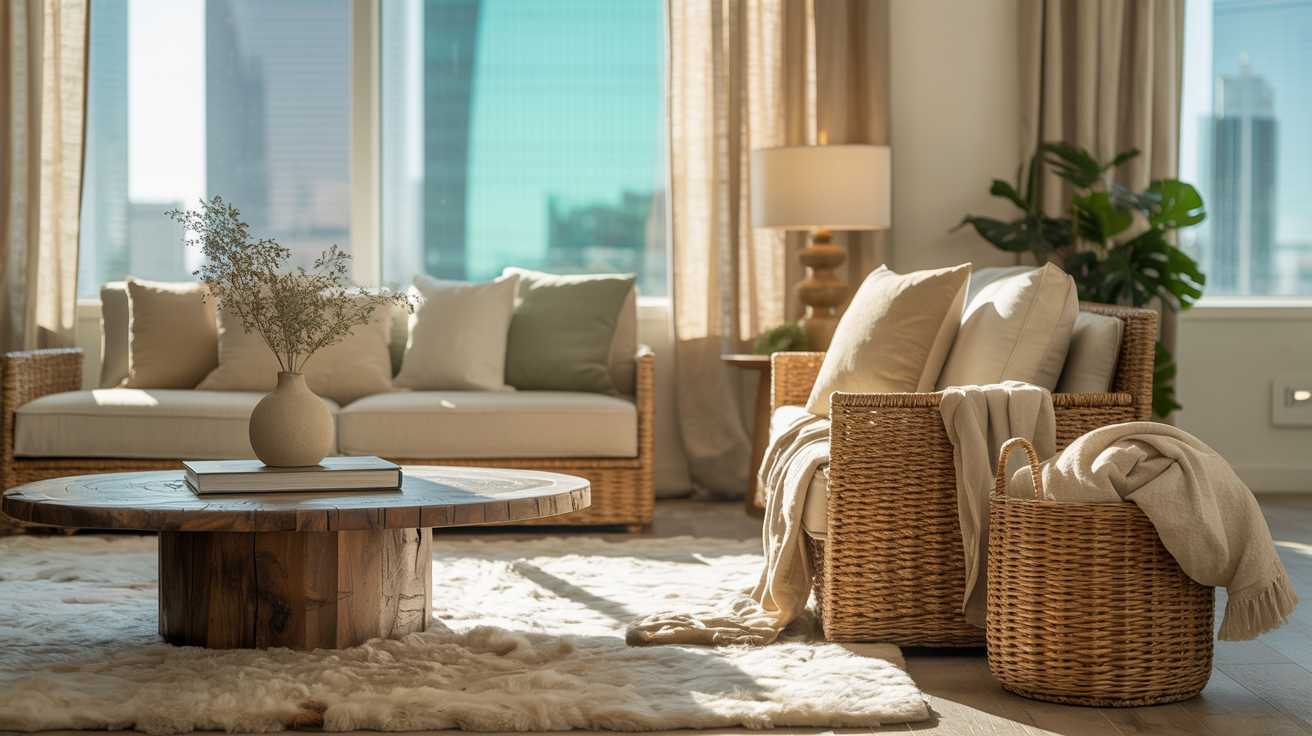
4. Natural Textures -- Grounding in a High-Tech City
Houston is one of the most economically and technologically dynamic cities in the country. Many of my patients spend their days in glass office buildings, on screens, in synthetic-material environments that give the nervous system very little organic texture to process.
Natural materials in the home—cotton, linen, jute, wood, stone, wool—provide a different quality of tactile input than synthetic surfaces. For neurodivergent women whose sensory systems are already more finely calibrated than average, this difference is not subtle. Natural fibers read differently to the skin. They tend to feel safer, less electrically charged, more grounding.
A cotton throw you actually want to reach for. A wooden cutting board on your kitchen counter. A smooth river stone on your desk—something you can hold during a stressful call, something with temperature and weight that gives your nervous system a concrete input to process instead of ambient anxiety.
The neurodivergent adaptation: Texture needs are deeply individual. Some of you find wool intolerable. Some of you need smooth over rough, cool over warm. The goal is finding natural textures that your specific nervous system reads as safe rather than alerting. That set of textures belongs to you and nobody else. Experiment with one new natural texture this week and let your body tell you whether it helps.
The perimenopause connection: Declining estrogen affects skin receptor sensitivity, which is why textures that did not bother you before perimenopause may now feel wrong or uncomfortable. This is not you becoming more difficult to accommodate. This is your body asking for more precise sensory support during the transition.
5. Biophilic Design - Creating Your Houston Sanctuary
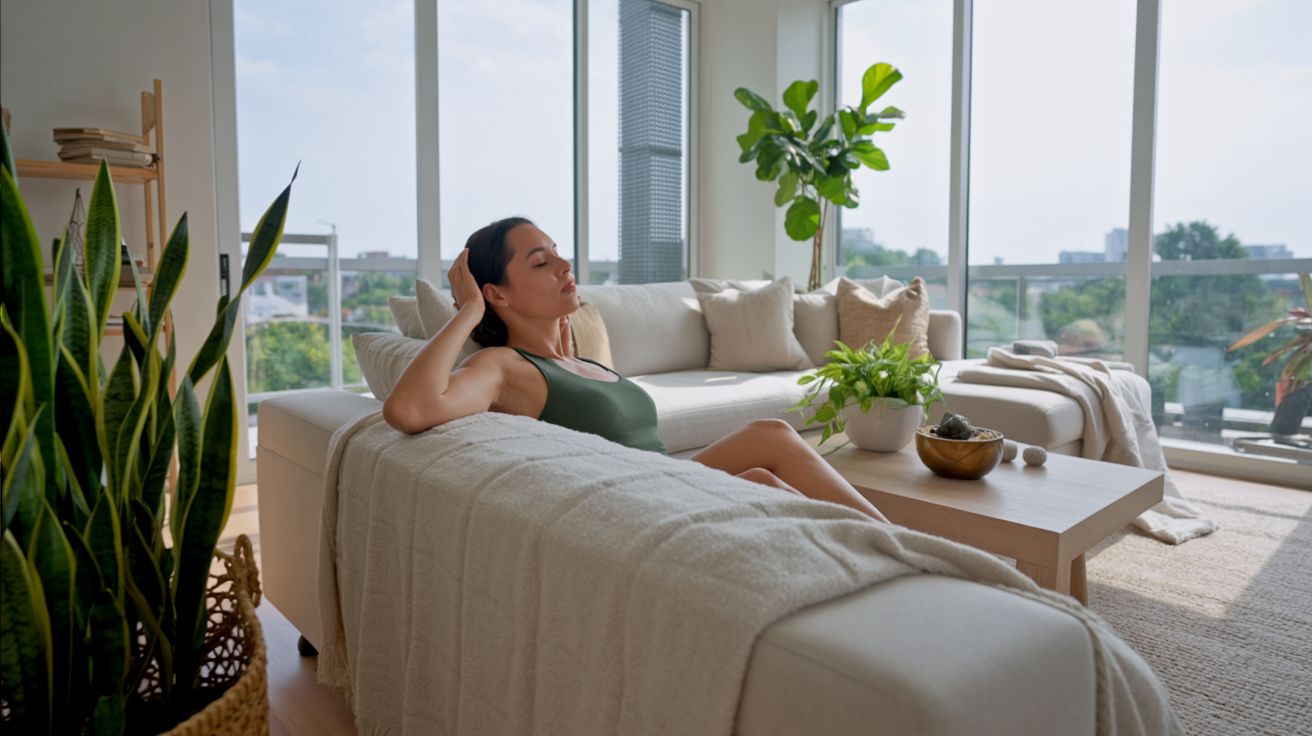
Biophilic design is the intentional integration of nature into built environments—and in Houston, where we spend so much of the year in climate-controlled indoor spaces, it is not optional for women who need their nervous systems to feel safe.
The principles are practical: natural light when possible, organic curves over hard angles, living elements alongside manufactured ones, views of greenery or sky from your most-used rest positions, and natural materials in the things you touch most.
In a Houston home this means:
In the Heights or Midtown where bungalows often have deep front porches—use that porch as your transitional nature space. Morning coffee outside before the heat builds. An evening sit when the temperature drops. You do not need to be in a park. You need 10 minutes in organic air surrounded by your neighbor's oak trees.
In Sugar Land or Katy where suburban homes often have larger backyards -- a shade structure and a comfortable chair near your landscaping gives you a nature access point that is actually usable in Houston's climate. Shade is everything here.
In apartments in Montrose or Midtown -- a single large plant near your most-used window does the work of a garden. Prioritize one large specimen plant over many small ones. One 4-foot fiddle leaf fig creates more nervous system impact than six small succulents.
The neurodivergent adaptation: More is not always more. One carefully chosen natural element in a visually simple space is more regulating than a richly layered environment that overstimulates. Start with one change this week. Let your nervous system tell you what to add next.
Houston's Secret Weapon - The Fall and Spring Windows
Here is what people who move here from other cities eventually discover: Houston's fall and spring are extraordinary. October through November and March through April bring temperatures that are genuinely mild, skies that are wide and blue, and an outdoor environment that is accessible and regulating in ways that the summer months are not.
Buffalo Bayou Park, Discovery Green, Hermann Park, the Houston Arboretum—these are genuine green space resources. Brazos Bend State Park for women who can make the drive. The bayous for those who live near them.
When those windows open -- get outside. Bank the nervous system credit of actual outdoor nature exposure during the seasons when Houston lets you. Your body will carry that regulation forward into the harder months.
But in the meantime. In August. In your air-conditioned home with your snake plant and your tabletop fountain and your linen throw—you are not making do.
You are doing exactly what your nervous system needs.
Your environment is not neutral. It is either supporting your nervous system through this transition or working against it. In a city like Houston—where the climate itself can be a barrier—being intentional about what you bring inside is not a luxury. It is medicine.
Start with one thing. One plant. One natural texture. One morning near a window before the heat builds.
The nervous system eats first. Feed it something it recognizes.
If you want to go deeper on how your home environment is affecting your hormones, your sleep, and your nervous system during perimenopause, the Auntie Menopause Circle is where we have these conversations every week.
Come join us.
Join the Auntie Menopause Circle →
Want to understand the full science of how your environment shapes your nervous system during menopause? Start here: What Is Neuroaesthetics? The Gentle Science of How Beauty Heals Your Brain →
And for the clinical explanation of why trauma, neurodivergence, and perimenopause collide in the body: Why Trauma, Neurodivergence, and Menopause Collide -- And Why Your Doctor Keeps Missing It →
Sources
Panicicà M et al. How outdoor and indoor green spaces affect human health: a literature review. Ann Ig. 2024. DOI: 10.7416/ai.2024.2654
Yan H, Hassan A. Stress reduction: a comparative analysis of watering indoor plants and computer work. Int J Occup Saf Ergon. 2025. DOI: 10.1080/10803548.2025.2550858
Coventry PA et al. The Mental Health Benefits of Purposeful Activities in Public Green Spaces. Int J Environ Res Public Health. 2019. DOI: 10.3390/ijerph16152712