Art Isn't Just Good for Your Soul. It's Good for Your Brain.
Updated: April 2026
I want to tell you something that took me a long time to say out loud as a physician, because it sounded too simple to be taken seriously in the clinical spaces I was trained in.
Art is medicine for the brain.
Not metaphorically. Not as a nice supplement to real treatment. As a measurable, documented, neurobiologically grounded intervention that changes the way your brain processes stress, regulates emotion, and maintains the kind of cognitive flexibility that perimenopause can begin to erode if you don't actively support it.
I knew this before I had the language for it. I knew it when I was making the Fragments to Fusion collection — when the process of creating seventeen pieces of figurative expressionist art did something to my nervous system that years of forward motion and professional achievement had not managed to do. I knew it in the particular quality of attention that making art required, the way it pulled me fully into the present moment and out of the perpetual motion that had been my survival strategy for decades. I knew it the way the body always knows things before the mind catches up.
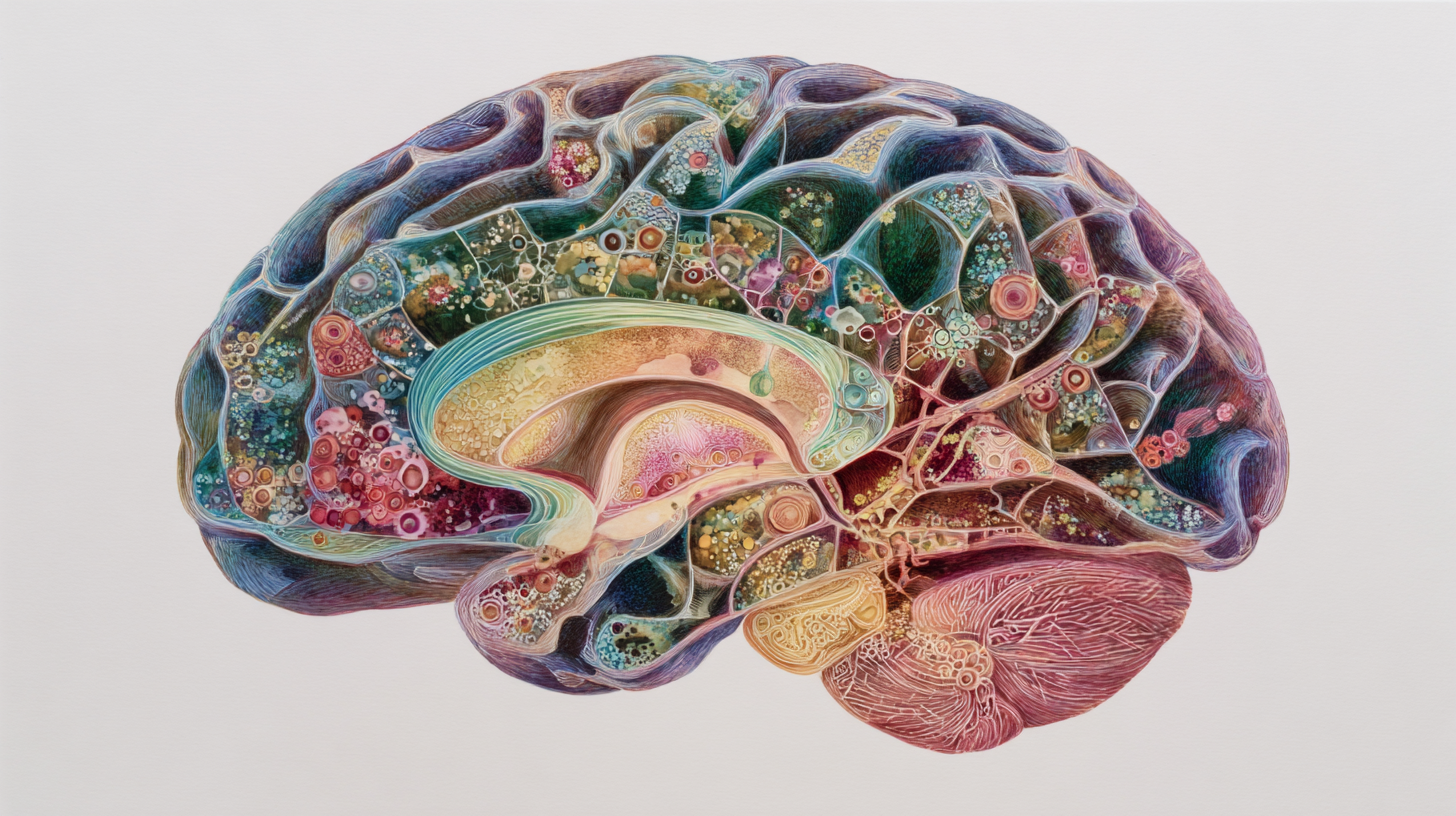
What I want to give you in this post is the clinical language to match what your body may already be telling you about the relationship between your creative life and your brain health — especially right now, in this hormonal chapter, when the cognitive symptoms of perimenopause are real and your doctor may not be connecting them to everything that's actually driving them.
What Perimenopause Does to the Brain — and What Gets Left Out of the Conversation
Let me be direct about what's actually happening neurologically in perimenopause, because the conventional conversation about it is still too narrow.
Estrogen is not only a reproductive hormone. It is a neuroprotective agent. Estrogen receptors are distributed throughout the brain — in the hippocampus, the prefrontal cortex, the amygdala, the areas that govern memory, executive function, emotional regulation, and stress response. When estrogen fluctuates and declines in perimenopause, those brain regions feel it. The word-finding difficulties aren't imagination. The brain fog isn't weakness. The emotional volatility that arrives without a clear trigger isn't a personality change. It's a neurological event, and it deserves to be treated as one.
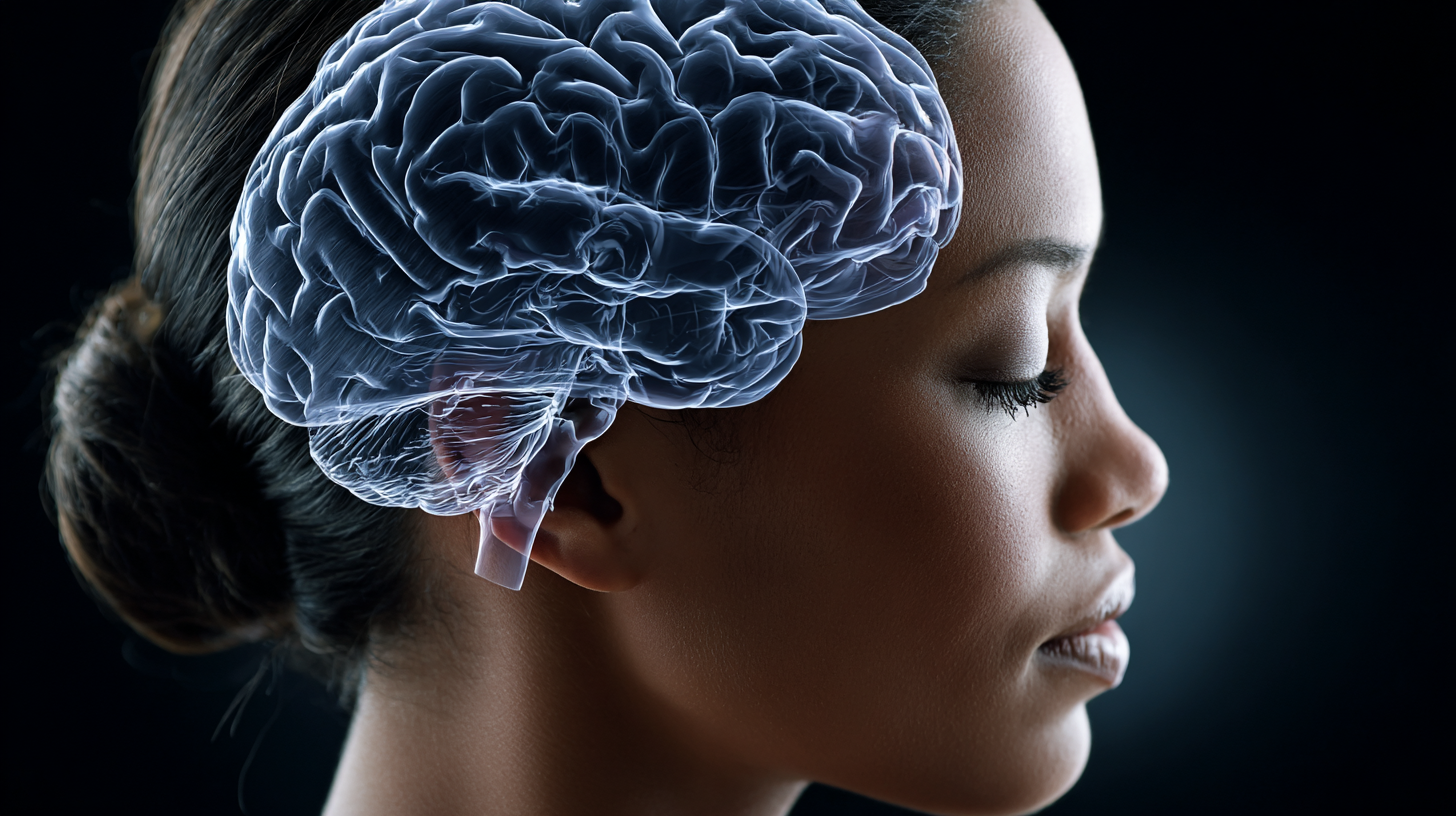
But here's what gets left out of the conversation: the brain is not passive in this process. It has capacity for adaptation that most conventional medicine doesn't leverage. Neuroplasticity — the brain's ability to reorganize itself, form new connections, and compensate for what is being stressed or lost — doesn't stop in midlife. And certain activities support that adaptive capacity in ways that are clinically meaningful. Creative engagement is one of the most consistently documented of those activities. Not because it distracts from the symptoms, but because it directly engages the neural networks that perimenopause is putting under pressure.
What the Research Says About Art and the Brain
I came across research published in NeuroImage that fundamentally changed how I think about what happens when a woman stands in front of a beautiful piece of art — or makes one herself. The study used fMRI to examine what the brain's default mode network does during aesthetic experience, and what they found was striking: when a person encounters art they find genuinely pleasing, the default mode network — the network associated with self-referential thought, memory consolidation, and internal state regulation — activates in a way that is time-locked to the experience of the art itself. The brain is not just processing visual information. It is integrating it into the self. It is doing the same work that we understand as meaning-making, emotional processing, and identity consolidation. (DOI: 10.1016/j.neuroimage.2018.12.017)
For women in perimenopause whose capacity to process and integrate emotional experience is already under hormonal pressure, this is not a small thing. The default mode network is exactly the network that supports the kind of internal coherence — the sense of continuity of self, the ability to hold your own story — that perimenopause can challenge. Art engagement, viewed or made, gives that network something to organize around.
A randomized controlled trial published in Frontiers in Public Health in 2024 took this further. The study followed 126 adults over 65 through a twelve-week participatory art program and found that participants who engaged in art-based activities showed significant improvement in quality of life and significant reduction in apathy compared to the control group. Importantly, the control group showed a significant increase in emotional blunting over the same period — the flattening of emotional responsiveness that is one of the more quietly devastating symptoms of cognitive and emotional decline — while the art group remained stable. (DOI: 10.3389/fpubh.2024.1257411) The art wasn't just making people feel better. It was protecting the emotional responsiveness that makes life feel worth inhabiting.
And for neurodivergent women specifically — the late-diagnosed autistic women, the women with ADHD, the women with sensory processing differences that have made the standard wellness approaches feel wrong in their bodies — a 2024 review in Neuroscience and Biobehavioral Reviews examined how aesthetic processing works differently in neurodivergent brains, finding that the reward circuits, the frontolimbic connections, and the default mode network all show distinctive patterns of aesthetic engagement across neurodivergent populations. (DOI: 10.1016/j.neubiorev.2024.105878) In plain language: neurodivergent women don't just enjoy art differently. Their brains process it through different pathways, which means art-based interventions may work through mechanisms that more conventional cognitive health approaches simply don't access. For women who have spent their entire lives in systems that weren't built for how their brains work, this matters enormously.
The Child Who Understood Something Adults Forget
The original version of this post — written before I had all of this clinical language — opened with something I want to honor because it's true: children don't need a reason to make art. They pick up paint because it makes them happy. They mix colors because the mixing itself is satisfying. They draw without worrying whether the drawing is good, because the drawing isn't the point — the making is the point.
And then life happens. Stress accumulates. The predictable demands of adulthood narrow the bandwidth for anything that doesn't produce a measurable outcome. The creative impulse goes quiet — not because it has died, but because we stopped giving it air.
What I know now, from the inside of my own healing and from the clinical literature, is that the child who was free to make things without judgment was accessing something neurologically real. The state of focused, generative, non-evaluative creative engagement — what psychologists call flow — produces measurable changes in cortisol, in autonomic tone, in the activation of the brain's reward and default mode networks. The child eating ice cream and the child mixing paint are activating some of the same neural pleasure pathways. The child wasn't wrong about what art feels like. She was just doing science without calling it that.

In perimenopause, when the HPA axis is more reactive, when the cortisol that should follow a healthy diurnal rhythm starts to flatten or spike, when the nervous system is more easily dysregulated than it used to be — returning to that quality of engagement isn't regression. It's medicine. It's giving the brain an input that supports exactly the neural functions that this hormonal transition is stressing.
Why Physical Health Alone Isn't Enough — and Why This Matters Clinically
There's a conversation I have with patients that has become a consistent pattern over time. They come in focused on the physical — the sleep, the weight, the hot flashes, the labs. And those things matter enormously, and we address them. But there's another layer that conventional medicine consistently underdresses, and it's the layer that connects everything else.
The brain is an organ. It lives in a body. And what the body's environment feeds into that brain — the stress load, the beauty input, the creative engagement, the quality of sensory experience — directly shapes how the brain functions, how it regulates emotion, how it consolidates memory, and how it maintains the kind of plasticity that supports health across the lifespan. Reducing perimenopause care to hormone management and lifestyle optimization misses the entire neuroaesthetic dimension that my own clinical journey has taught me is not supplementary. It is foundational.
You wouldn't tell a woman to manage her inflammation without addressing her diet. You shouldn't manage her cognitive and emotional health without addressing what her brain is being fed — and art, intentional creative engagement, and a beautifully designed sensory environment are part of that diet.
What Art Does That Supplements Can't
Listen. I'm not telling you to stop eating well or exercising or taking your magnesium. I'm telling you to add a layer that most health conversations never get to.
Art engagement — whether you're making it yourself, surrounding yourself with it in your environment, or encountering it in community — does something for the brain that supplements can't replicate and that no pharmaceutical addresses directly. It activates meaning-making at the neural level. It engages the self-referential processing networks. It gives the brain's reward circuits something beautiful to organize around. It reduces the emotional blunting that creeps in when the creative dimension of life gets quietly deprioritized. And for neurodivergent women whose brains have always processed beauty and aesthetic experience through different pathways than the norm, intentional art engagement may be one of the most targeted and effective nervous system interventions available.
The Fragments to Fusion collection was my evidence base. Seventeen pieces made across a period of deep personal excavation that produced, in me, exactly what the research documents in populations — the reintegration of self, the reduction of emotional flatness, the kind of meaning-making that gave the story back to the woman living inside it. I was the patient and the physician simultaneously. And what I found is that the art did something the clinical work alone could not fully reach.
That's not anecdote. That's the default mode network doing its job.
The nervous system foundation underneath this work: Your Space Isn't Just Decorating You — It's Running Your Biology →
The color layer that connects art to your body: Every Color You See Is Talking to Your Nervous System. Here's What It's Saying. →
The arc that started it all: See Her — A Declaration of Visibility →
Join the Auntie Menopause Circle →
If this resonated with you, you are not alone in this journey. The Auntie Menopause Circle is where women who are done being dismissed come to learn, heal, and find each other.
Sources
Belfi AM et al. Dynamics of aesthetic experience are reflected in the default-mode network. NeuroImage. 2018. DOI: 10.1016/j.neuroimage.2018.12.017
Payne M et al. Productive art engagement in a hybrid format: effects on emotions of older adults during COVID-19 pandemic. Frontiers in Public Health. 2024. DOI: 10.3389/fpubh.2024.1257411
Buck Z et al. Aesthetic processing in neurodiverse populations. Neuroscience and Biobehavioral Reviews. 2024. DOI: 10.1016/j.neubiorev.2024.105878
NOTE: This post originated as a general wellness piece on Ceyise Studios exploring how art improves health and wellness. It has been fully rewritten here on drstaceydenise.com through the clinical lens of the Neuroaesthetic Reset Method™ — centering the neurological impact of estrogen decline on the brain in perimenopause, the default mode network research on aesthetic experience, the RCT evidence on art engagement and emotional health in aging adults, the specific relevance of neuroaesthetic processing for neurodivergent women, and Dr. Stacey's own experience of the Fragments to Fusion collection as a documented clinical outcome.
Originally published on Ceyise Studios. Updated: April 2026.