Every Color You See Is Talking to Your Nervous System. Here's What It's Saying.
Updated: April 2026
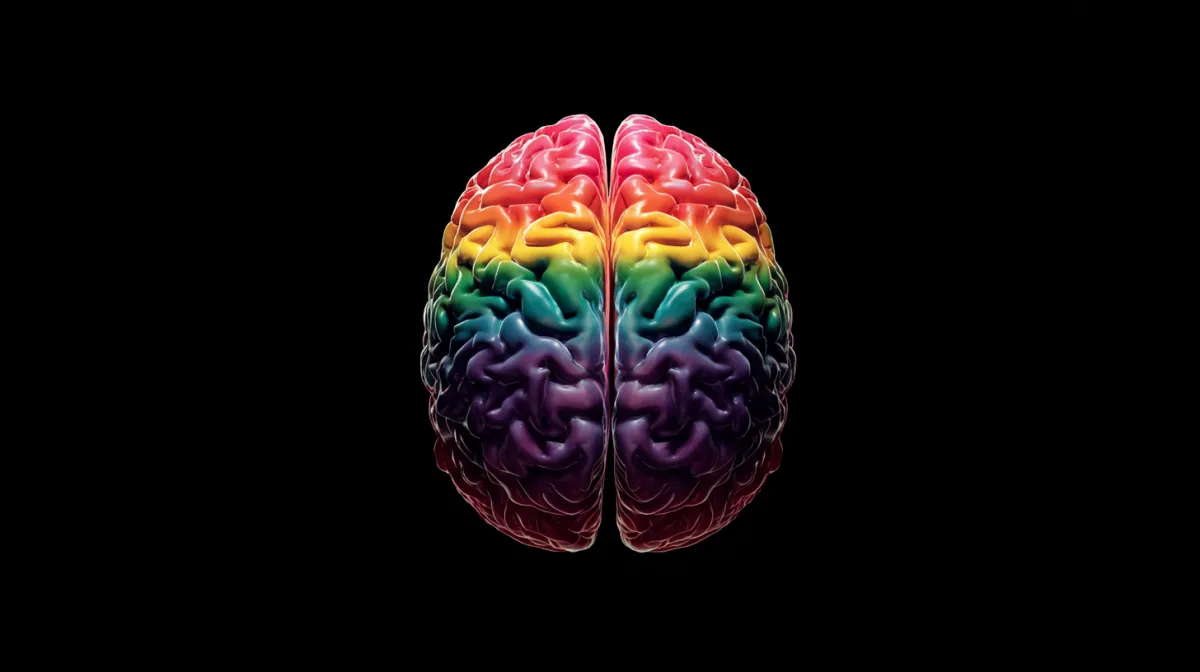
Listen. Before your brain has a single opinion about a color — before you think "I love that" or "that's too much" — your nervous system has already responded to it. The signal has already traveled from your retina through your optic nerve into your limbic system. Your heart rate, your skin conductance, your respiratory rhythm, your autonomic tone — all of it has already shifted. The color got there first.
That's not a metaphor. That's documented neurobiology. Research published in Psychophysiology measured exactly what happens in the autonomic nervous system and the brain when the built environment changes color — and found measurable changes in respiration, skin conductance, and brain wave activity in the frequency bands associated with emotional processing. The color of the walls was directly modulating the body's physiological state. (DOI: 10.1111/psyp.14121)
So when traditional medicine looks at a woman in perimenopause who can't sleep, can't focus, has skin eruptions, feels anxious for no clear reason, has gut issues, feels emotionally flat or overwhelmed — and attributes all of it to declining estrogen — they're missing the layer that sits underneath hormones and runs through every organ in her body. They're missing the nervous system. And they're missing the environment that is feeding it, continuously, in colors she's not even consciously registering.
This post is about that layer. It's about what each color in the healing spectrum is doing to your body — the physiological outcomes that chromotherapy traditions have documented for centuries, the nervous system states they correspond to, and how the Color Archetype framework maps all of it to the specific woman standing in front of me, in her specific hormonal chapter, with her specific sensory processing profile.
This isn't ROYGBIV. I made a deliberate choice to depart from the traditional rainbow spectrum and organize the healing colors around nervous system states and emotional healing energy — because that's how the body actually experiences color, and that's how my clinical work uses it. You'll understand why as we move through each one.
The Yin Arc — Calming, Containing, Restoring
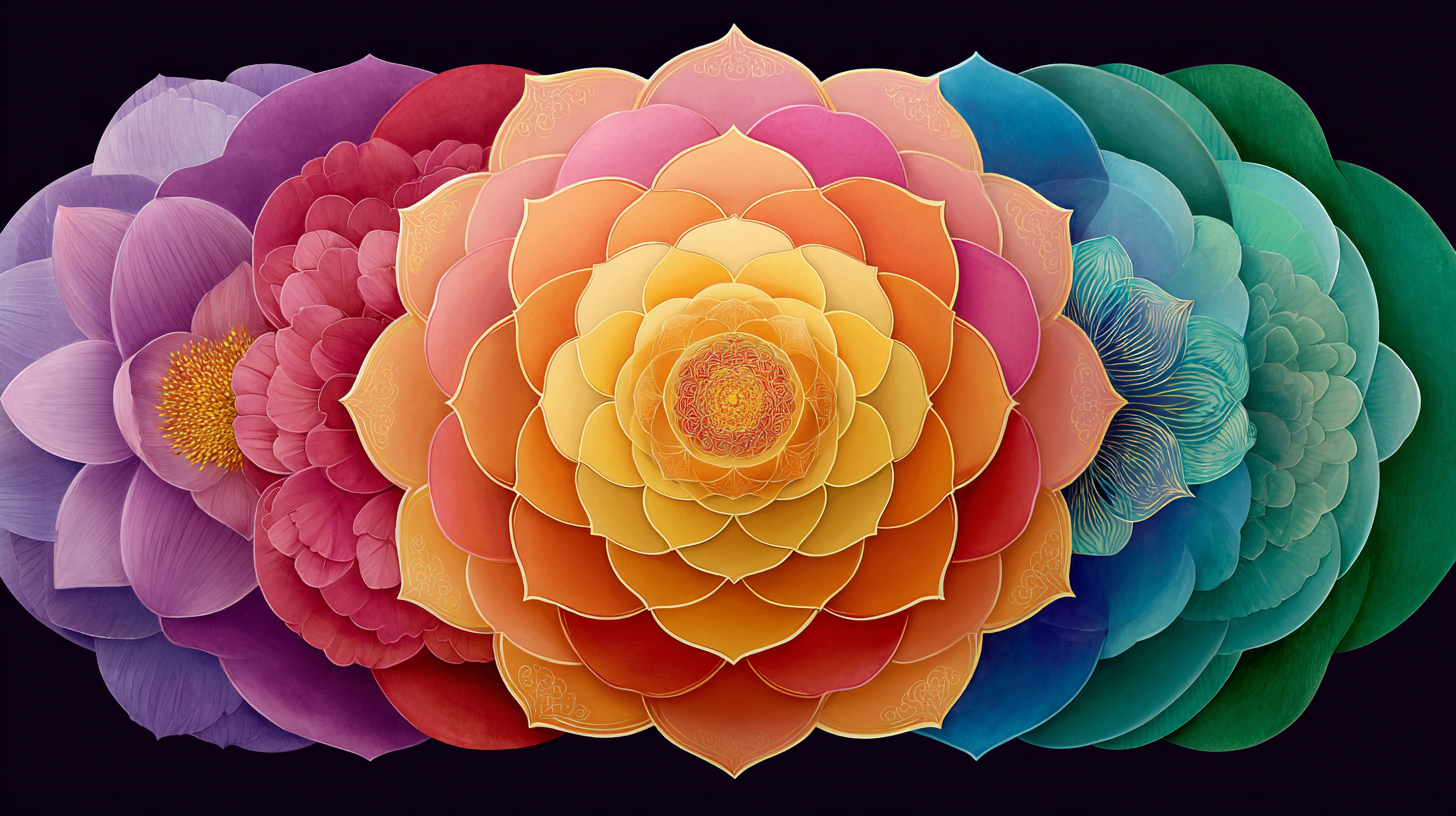
These are the colors of the parasympathetic nervous system. The colors that say: the threat is over. You can come down now. They run from tender emotional containment through grounded calm through harmonizing balance through structured clarity through intuitive depth through protective boundaries. For neurodivergent women in perimenopause whose nervous systems have been running in sympathetic overdrive or dorsal shutdown for years, these colors aren't decorative preferences. They're therapeutic targets.
Blush — The Empath Nervous system state: Freeze / Masking fatigue / Emotional flooding
Blush is where the yin arc begins — not with purity or cleanliness the way white is traditionally framed, but with emotional permission. Blush says: you don't have to hold all of this right now. You can be here without performing.
In chromotherapy tradition, soft pink dissolves anger, promotes reconciliation, and soothes emotional wounds. It's used for the heart and the emotional body — specifically for the woman who absorbs everyone else's experience and has lost track of where theirs begins. For circulation, pink is noted to strengthen the veins and arteries rather than stimulate them the way red does — a gentler activation that supports the cardiovascular system without demanding it.
The Empath archetype — the neurodivergent woman who feels everything intensely but can't always name it, whose interoceptive sensitivity is a gift and a burden simultaneously — finds her regulation color here. The ritual phrase is "I don't have to explain today." The sensory prescription: velvet textures, rose and lavender scent, warm amber light, alpha binaural beats at 8Hz. This is the color of coming home to yourself after a long day of being someone else.
Sage — The Grounded Nervous system state: Overfunctioning / Creative depletion / Functional calm that isn't actually calm
Sage is green softened — nature's color with the intensity turned down. In chromotherapy, green is the great balancer. It's the color most easily processed by the human eye, which tells you something about its relationship to the nervous system: it doesn't demand processing effort. It simply settles. Green balances the autonomic nervous system, supports immune function, and is consistently associated with renewal, growth, and the restoration of equilibrium after strain.
Sage specifically, as a muted, earthy green, carries the grounding frequency without the activation of brighter greens. For the woman who has been holding everything together with such competence that nobody — including herself — knows she's depleted, sage is the color that gives the nervous system permission to slow down without shutting down. The outcome is stillness that restores rather than collapses. The ritual entry is a simplified task, a cleared surface, and a moment of genuine quiet.
Teal — The Harmonizer Nervous system state: Emotional flatness / Performance calm / Appearing okay while not being okay
Teal lives in the space between green's balance and blue's calm — and that in-between position is clinically intentional. For the woman who has mastered the appearance of regulation while her nervous system runs quietly dysregulated underneath, teal offers something neither pure green nor pure blue can: the experience of emotional clarity without demand. Teal says: you can feel what's actually here without it becoming a crisis.
In chromotherapy, teal benefits hormone balance and endocrine health — specifically the endocrine system's regulatory function, which is directly relevant to the perimenopausal woman whose hormonal axis is already under pressure. It promotes articulation and emotional clarity, supporting the throat and the expression channels that shut down under chronic stress. The Harmonizer's ritual involves water-based sensory cues — the sound of water, the sensation of cool on the skin — because water and teal speak the same nervous system language: flow without force.
Navy — The Conductor Nervous system state: Cognitive overload / Emotional detachment / Thinking without feeling

Navy is blue made deep and grounding. In chromotherapy, blue reduces nervous tension, calms an overactive mind, aids sleep and respiratory function, and has been used for pain management — specifically to reduce pain sensation and inflammation. It's the color of the body's cooling system, physiologically and emotionally.
Navy adds structure to that cooling. Where soft blue opens and releases, navy contains and focuses. For the woman whose primary defense against emotional overwhelm is cognitive dominance — who thinks rather than feels, who manages rather than processes — navy gives the nervous system a container that feels safe rather than demanding. The ritual entry is naming: one word, one feeling, one honest statement about what's actually happening. Structure lets her soften.
Lavender — The Oracle Nervous system state: Intuitive overwhelm / Dream-logic / Spiritual bypass

Lavender sits at the intersection of blue's calm and purple's depth, and its physiological effects reflect both. In chromotherapy, purple and violet have depressant qualities that reduce pain sensitivity, support emotional transformation, and help process grief and loss. They work on the nervous system's higher processing centers — the places where meaning is made, where pattern recognition lives, where the unconscious speaks.
Lavender specifically has been associated with reduced emotional overarousal — that particular state where feeling too much simultaneously floods and numbs. For the intuitive, deeply perceptive neurodivergent woman who processes the world through symbolism, pattern, and internal sensation, lavender is the color that gives the nervous system permission to slow its associative processing down long enough to feel what it already knows. The binaural prescription is theta at 6Hz — the frequency of intuitive reconnection and dream states. The scent is lavender and palo santo, the lighting a cool periwinkle. This is the color of wisdom that doesn't need to be spoken immediately.
Black — The Mystic Nervous system state: Dorsal vagal shutdown / Dissociation / Flatness
Black in traditional color associations carries darkness and endings. In the healing spectrum I work with, black carries something different: definition and protection. For the nervous system in deep dorsal shutdown — the state of flatness where everything feels far away and nothing quite reaches — black provides the edges the nervous system needs to know where it ends and everything else begins.
In chromotherapy, black is used for grounding diffuse energy, providing containment, and supporting the root chakra's sense of physical presence and belonging. For the woman who dissociates, who feels unreal, who loses herself in the sensory and emotional overwhelm of other people and other spaces, black isn't depression. It's a boundary. It's a wall that says: this is mine. Everything outside this stays outside.
The ritual prescription is scent-led — because for the woman in dorsal shutdown, scent reaches the nervous system when visual cues can't. Palo santo, grounding smoke, layered sensory anchors that say: you're still here. Your body is real.
The Yang Arc — Activating, Mobilizing, Illuminating
These are the colors of the sympathetic nervous system used intentionally — not the dysregulated sympathetic overdrive of chronic stress, but the healthy mobilization of energy, clarity, and agency. For women in perimenopause who have slid into dorsal shutdown or chronic flatness, these colors are re-entry tools. They say: it's safe to come alive again.
Red — The Liberator Nervous system state: Fight energy / Expressive burnout / Suppressed mobilization
Red is the body's most direct activation signal. In chromotherapy, red stimulates the adrenal glands and circulation, increases energy, and is the primary color for overcoming inertia, fear, and suppressed motivation. It activates the root chakra — the body's foundation of safety, groundedness, and physical presence — which is precisely what perimenopause erodes when estrogen removes the nervous system's hormonal stabilizer.
But red in the healing spectrum isn't aggression. It's grounded power. The Liberator archetype is the woman whose fight response has been suppressed for so long that it's metabolized as anxiety, muscle tension, and chronic irritability — the body wanting to move, express, and discharge what social masking has kept contained. Red used intentionally — not blasted at the nervous system but introduced as a deliberate activation cue — is the color that says: your fire is yours. Use it.
The ritual is breathwork and embodied pacing. The scent is cinnamon and patchouli. The binaural tone is low gamma at 40Hz — the frequency of post-shutdown re-embodiment.
Gold — The Alchemist Nervous system state: Sympathetic overdrive / Aesthetic overwhelm / Identity fragmentation
Gold is where orange becomes wise. In chromotherapy, orange stimulates digestion, enhances energy and enthusiasm, and supports the sacral chakra — the center of creativity, pleasure, and emotional fluency. Orange lifts depression and counters lethargy by activating the body's life force energy. Gold takes that activation and refines it: it adds the quality of radiance, integration, and the sense that what's been scattered can be gathered back into something coherent.
For the woman whose creativity runs faster than her nervous system's capacity to process it — who lives in flashes of brilliance and crashes of overwhelm — gold is the color of creative energy organized into something sustainable. The ritual is symbolic placement: an object, a piece of art, something that holds meaning. Gold says: your fragmentation isn't failure. It's raw material.
Yellow — The Radiant Nervous system state: Hypervigilance / Expressive burnout / Scattered activation
Yellow is the color of the solar plexus — the body's center of personal power, confidence, and clear decision-making. In chromotherapy, yellow enhances mental clarity, concentration, and memory. It supports digestive processes and enzyme production. It reduces fear and helps the nervous system access the cognitive clarity that chronic stress and perimenopause both erode.
For the woman with ADHD who struggles to consolidate scattered activation into focused energy, yellow is the color that channels rather than amplifies. It's not the frantic brightness of chronic hypervigilance — it's the clear morning light that says: today has a direction. Your mind has a task. You can begin.
The prescription is filtered sunlight, citrus scent, and structured sound — music with rhythm and boundary. Yellow is the color of organized momentum.
Why Your Archetype Changes With Your Hormonal Chapter
Here's the thing that ROYGBIV color theory completely misses: you are not the same nervous system you were ten years ago.
In perimenopause, as estrogen declines, sensory processing changes. The nervous system's capacity to filter, buffer, and recover from input diminishes. A color that activated creative energy at 38 may overstimulate at 48. A palette that felt grounding may now feel confining. The yin arc colors that used to feel boring may suddenly feel like medicine.
This is why the Color Archetype framework doesn't assign a fixed color based on personality. It maps where your nervous system is right now — in this hormonal chapter, with this sensory sensitivity, under this specific allostatic load — and asks which color speaks to the state you're actually in, not the state you used to be in or wish you were in.
The quiz does this work. It's the clinical intake before the prescription. Because color is medicine, and medicine isn't one-size-fits-all.
Take the Color Archetype Quiz → quiz.drstaceydenise.com/color-archetype-quiz
For how color reaches the nervous system before conscious thought: Why Color Makes You Feel Something — And Why That Matters When Your Nervous System Is Running on Empty →
For the organ-mind-body axis underneath all of this: Your Space Isn't Just Decorating You — It's Running Your Biology →
For the deep dive on the Blush Empath: Pink Is Not a Soft Color. It's a Nervous System Signal. →
Sources
Bower IS, et al. Built environment color modulates autonomic and EEG indices of emotional response. Psychophysiology. 2022. DOI: 10.1111/psyp.14121
NOTE: This post originated as a color physiology and design piece on Ceyise Studios exploring how the body responds to color. It has been fully rewritten here on drstaceydenise.com through the clinical lens of the Neuroaesthetic Reset Method™ — introducing the Color Archetype healing spectrum, departing deliberately from ROYGBIV to organize color around nervous system states and emotional healing energy, and drawing on chromotherapy tradition, polyvagal theory, and the organ-mind-body axis to give neurodivergent women in perimenopause a clinical framework for using color as medicine.
Originally published on Ceyise Studios. Updated: April 2026.