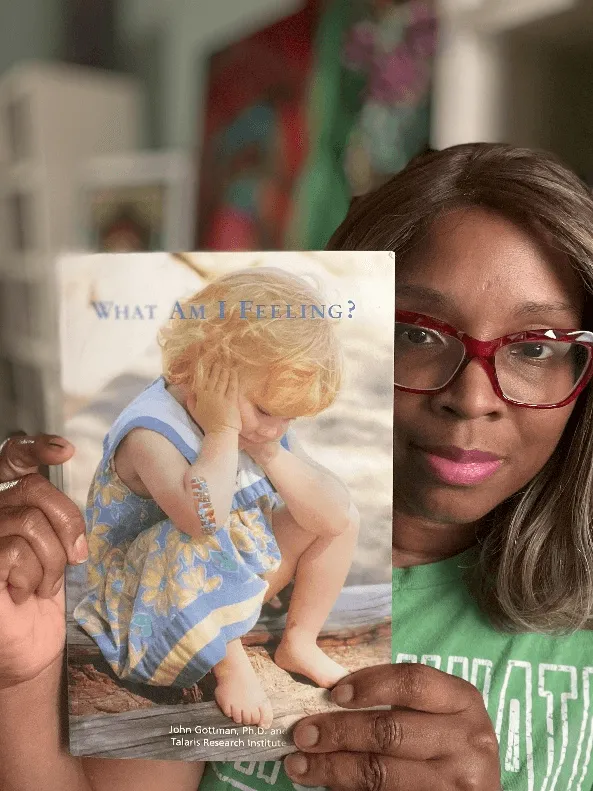
What Am I Feeling? A Neuroaesthetic MD Book Club Reflection on Emotional Naming and Somatic Awareness
Book: What Am I Feeling? by Dr. John Gottman & Talaris Research Institute
Category: Emotional Fluency | Inner Parenting | Sensory Integration
Read for: Rebuilding your emotional vocabulary when you’ve never been given one.
Affiliate Link: Get the book on Amazon →
Why This Book Matters to Me
I read What Am I Feeling? not as a parent, but as a woman with alexithymia—a trait where my emotions don’t always come with words. Feelings rise like waves, but the names don’t always follow. For years, I mistook tightness in my chest for anger or numbness for strength. This book didn’t teach me how to feel; it taught me how to speak what I already sensed.
That’s why I’m starting my book club here.
Because before we heal, we name.
What the Book Teaches
Dr. John Gottman’s book is a soft invitation into emotion coaching, a practice originally designed for children—and deeply healing for adults who missed this type of care. Through five core steps, the book shows how to:
- Notice emotional cues early
- See feelings as teachable moments
- Validate the emotion without shame
- Name the emotion clearly and gently
- Guide problem-solving after the wave passes
This is core limbic repair, restoring foundational emotional balance, for the emotionally unsupported self. It’s simple, visual, and calming—especially helpful for neurodivergent readers who process through imagery or body awareness.
Why It Belongs in Neuroaesthetic Lifestyle Medicine
This book is an ally in the Emotional Fluency pillar of my practice—where we use design, language, and embodied awareness to help you feel what you feel, not just think about it.
In my work with clients (and in my own life), I use tools like:
- Emotion wheels
- Color archetypes
- Somatic prompts
…to gently bridge the gap between sensation and cognition. This book sits on that same bridge—small enough to carry, wise enough to shift a pattern.
Sensory Healing Takeaways
- Image as Anchor: Each illustrated page works like a visual flashcard, helping your brain imprint the facial expressions, postures, and colors of emotion.
- Color as Regulator: Pair your reading with the Color Archetype palette. Ask: What does this emotion look like in pigment?
- Body as Compass: Begin to track where each emotion shows up in your body. Not to fix it—just to notice.
How I Use It Now
This book lives on my desk, next to my emotion wheel and journal.
I flip it open when I feel too much—or nothing at all.
It reminds me that:
“You can be a healer and still be learning to feel.”
Read With Me
If you’re doing inner parenting work, facing emotional numbness, or re-learning to feel without fear, this book is a gentle place to start.
👉 Buy What Am I Feeling? on Amazon
Affiliate disclosure: As an Amazon Associate, I earn from qualifying purchases. I appreciate your support with the book club and our community.
Suggested Book Pairings
- Atlas of the Heart by Brené Brown (Vocabulary expansion)
- Permission to Feel by Marc Brackett (Emotion science meets education)
- My Grandmother’s Hands by Resmaa Menakem (Somatic healing for racialized trauma)