Be Her — The Coming Out Party Nobody Sent Me an Invitation To
Updated: April 2026
Listen. I want to tell you something about this piece before I tell you anything else.
Be Her is my favorite.
Not because it was the most technically complex. Not because it got the most attention at the exhibition. Because of what it represents: the moment I finally stopped asking permission to be myself and just became her.
This is the coming out party nobody sent me an invitation to — because I had to throw it for myself.
The Girl Who Was Allante
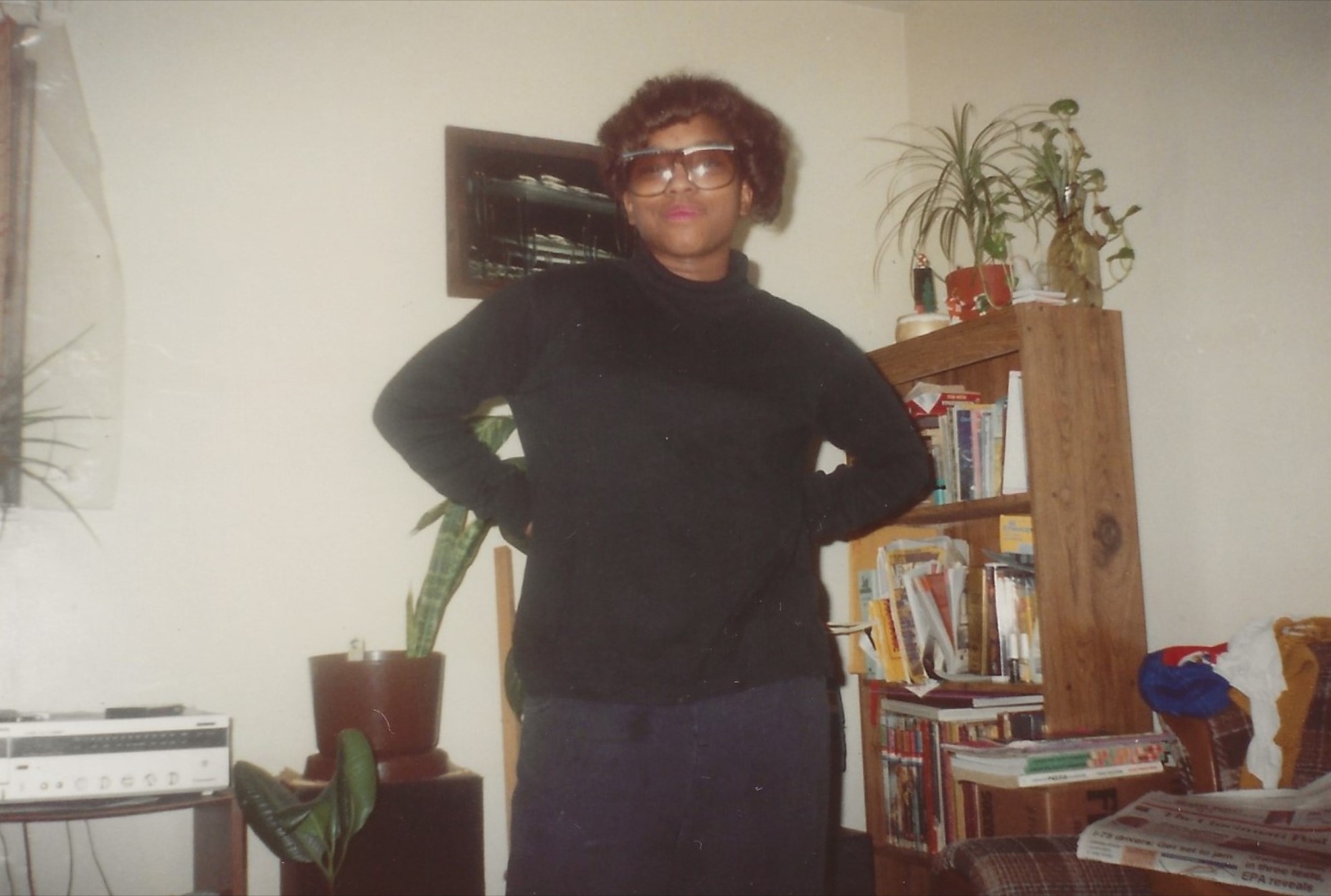
Before medical school, before surgery, before all the years of performing competence in a system that demanded I make myself smaller to survive it — there was a girl in Ohio who thrived in the energy of early hip-hop. Her stage name was Allante, inspired by the sleek red Cadillac sports car. She wrote raps. She performed on stage. She felt most alive in bold colors and unfiltered expression and the particular electricity of a room that was moving with you.
That girl didn't disappear. She went underground.
Because the world — and specifically the voices that shaped my world — had a different plan. My mother, shaped by her own generation's practicality and survival wisdom, said it plainly: "No little girl, you need to go to medical school so you can eat and take care of yourself." She wasn't wrong about the economics. She was wrong about what would happen to the part of me that needed to create.
So I channeled the creativity into science. Chemistry at Texas Southern. Medical school. Surgery. I found beauty in the precision of anatomy, in the colors of tissue, in the craft of operating. Medicine gave me an intellectual home. But it never fully silenced the voice of Allante. She was just waiting.
What Lady Liberty Has to Do With It
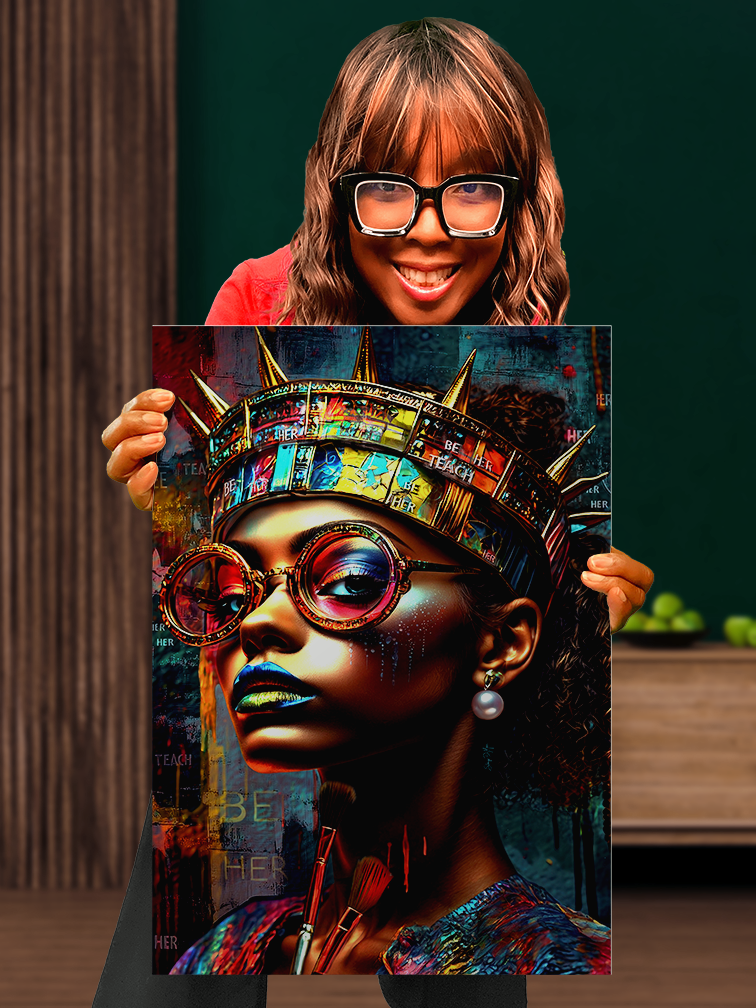
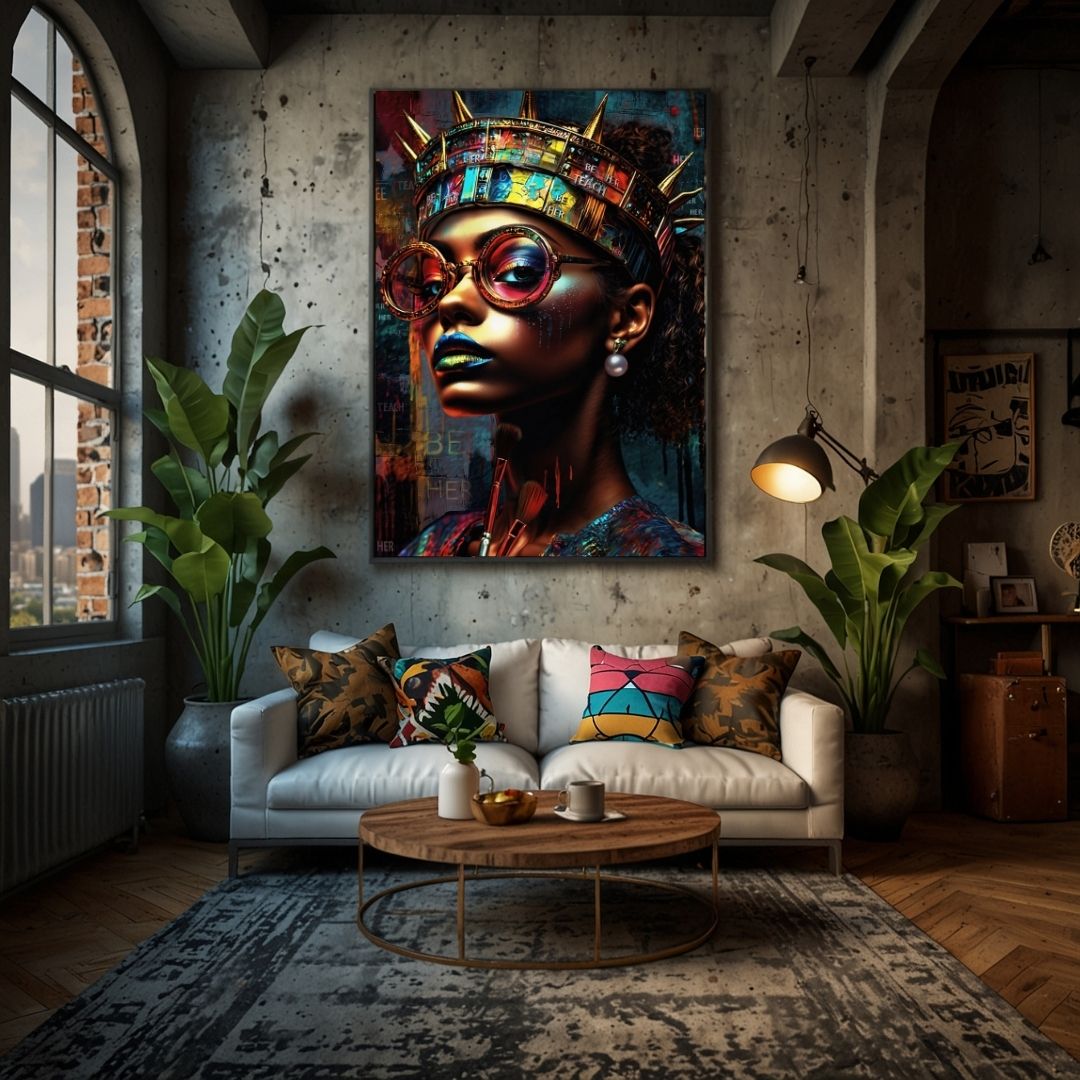
Be Her is an Afro-futuristic homage to Lady Liberty. And I want to be specific about why Lady Liberty — because this is not an incidental choice.
Lady Liberty holds her torch for the tired, the poor, the huddled masses yearning to breathe free. She isn't a gatekeeper. She's a welcome. She says: come as you are. Bring what you've survived. There is room for you here.
In Be Her, my paintbrush is that torch.
What I was declaring with this piece is that creativity — art, color, expression, the making of things that hold what words can't carry — is the same freedom that Lady Liberty represents. Not freedom from difficulty. Freedom to be fully, authentically, unapologetically present in your own life. To stop hiding what you were born with because the systems you moved through didn't know what to do with it.
The figure in this piece wears a crown with the patina of history and resilience. Not a new crown. Not a clean crown. One that has been weathered — that has absorbed what the years brought and is still holding. That's not a metaphor for overcoming. That's a portrait of what it actually looks like to arrive at yourself after a long journey through everything that tried to prevent it.
The Pearls and What They Cost
Every figure in the Her Series wears pearls. I want you to understand what pearls are before you let that detail pass.
A pearl is made under pressure. An irritant enters an oyster — something foreign, something that wasn't supposed to be there, something the organism needs to protect itself from — and the oyster responds by building layer upon layer of nacre around it. The pearl isn't formed despite the irritant. It's formed because of it. The pressure produces the beauty.
The pearls in Be Her are symbols of resilience born from pressure — reminders that strength and beauty are deeply intertwined. Every layer of armor I wore in training, every time I made myself smaller in a system that wasn't built for me, every year of managing emotions I couldn't name, every marriage that failed because I hadn't yet healed what was driving the patterns — each of those was an irritant. Each of those was pressure.
And here, in Be Her, is what the pressure made.
Therapy, My Daughters, and the Permission to Be Vulnerable
The exhibition booklet description of this piece says that therapy, deep introspection, and open-hearted conversations with my daughters allowed me to see myself in a new light — releasing the weight of expectations and discovering the strength in vulnerability.
I want to stay with that for a moment because it's true in a way that still surprises me.
The daughters I had been so afraid I had failed — who sat me down and told me what they had witnessed growing up — became part of the bridge back to myself. Those conversations could have broken me. They didn't. They clarified me. They gave me back the truth about what had happened, and in doing so, they gave me something I hadn't had before: a complete picture of the story I had been living inside.
Therapy gave me the container to do something with that picture.
And somewhere in the intersection of those two things — the truth my daughters offered and the tools therapy gave me to hold it — I found the courage that Be Her is made of. The courage to seek help. The courage to connect with my heritage and own my truth. The courage to pick up a brush and say: this is who I actually am. And I'm done keeping her quiet.
The Afro-Futuristic Frame and What It Means for You
Be Her is Afro-futuristic by design — and that matters clinically, not just aesthetically.
Afro-futurism as an artistic and cultural framework imagines Black identity liberated from the constraints of the present and the trauma of the past — placed in a future where those constraints don't define what's possible. It's an act of creative reclamation. Of saying: the story doesn't end here. The story goes forward. And in the forward version, she is whole.
For the women reading this — particularly the neurodivergent women, the Black women, the women who have been navigating perimenopausal transitions without seeing themselves reflected in the medical literature or the clinical care they've received — Be Her is also for you.
Because you have been taking in the tired and the overwhelmed and the dismissed parts of yourself for decades. You have been the support system, the caregiver, the one who handles it. And now you're in the hormonal chapter where the buffer is gone and the body is insisting on being acknowledged — and the conventional medical system is still not pausing long enough to see you.
Be Her says: you don't need their permission to arrive. You can throw the party yourself. You can hold your own torch. The patina on your crown is evidence of what you've survived, not proof that you're past your prime. The pearls are yours. You made them.
What Changed When I Became Her
When my daughters graduated and left home, the quiet voice got louder. And terrifying as it was to leave the certainty of medicine for the unknown of art, something about following it felt like the most rational decision I had ever made.
Not because it was safe. Because it was true.
My friends thought I was crazy. My family understood — creativity was always in our DNA. And I understood something I had been moving too fast to acknowledge: that Allante had never left. She had just been waiting for me to slow down long enough to let her back in.
Be Her is the moment I did that. The moment I stopped running from the voice and started listening to it. The moment I picked up the brush — the torch — and decided that the freedom Lady Liberty represents was mine too.
Not someday. Now. Not after I'd earned it. Already. Not once I had everyone's approval. Without it.
That's the freedom. That's the triumph. That's what Be Her holds.
And I want it for every woman reading this who has been waiting for someone to give her permission to be fully, exactly, unapologetically herself.
I'm just saying. That's all I'm saying.
The piece that came before this one: See Her — A Declaration of Visibility →
The piece that comes after: Teach Her — Paying It Forward →
The shadow work that made this possible: Meeting the Shadow — Carl Jung, the Dark Night of the Soul →
Join the Auntie Menopause Circle →
If this resonated with you, you are not alone in this journey. The Auntie Menopause Circle is where women who are done being dismissed come to learn, heal, and find each other.
NOTE: This post originated as a reflection on the Be Her artwork on Ceyise Studios. It has been fully rewritten here on drstaceydenise.com — grounded in the exhibition booklet description, the Afro-futuristic Lady Liberty imagery, the patina crown, the pearls as resilience born from pressure, the role of therapy and the daughters' conversations in opening the door to authenticity, and Dr. Stacey's own words: the paintbrush as the torch of freedom, Be Her as the coming out party to live the most authentic expression of self she knows how.
Originally published on Ceyise Studios. Updated: April 2026.