Autistic Women in Menopause: Why Masking Breaks and How to Heal Your Nervous System

October 23, 20254 min read

A letter to all the pretty ladies out there that need to hear this: The Research That Changed Everything

Dear Pretty Lady,

As an autistic woman in menopause, I need to share something that might be hard to read but will finally validate everything you've been experiencing. When masking becomes impossible and your nervous system feels completely dysregulated, you're not alone.

💔 Why Autistic Women Experience Trauma Differently

Dr. Fabienne Cazalis and her team in France did something remarkable. They surveyed 225 autistic women about their experiences with trauma and violence and asked twice.

First, they asked an open-ended question: “Have you experienced sexual violence?”
68.9% said yes.

Then they asked again with more detailed examples.
88.4% said yes.

Nine out of ten autistic women have experienced sexual violence.

  • 75% experienced multiple assaults.
  • Two-thirds were under 18.
  • Only one-third reported it.
  • 75% of those who reported saw no follow-up or justice.

Compared to the general population, where about 30% of women experience sexual violence, autistic women are enduring trauma three times more often.

How Masking Affects the Nervous System in Autistic Women

Recent studies show a powerful connection between trauma and masking, the learned performance of “normalcy.”

A 2024 study by Tubío-Fungueiriño found that autistic adults who masked more often had:

  • Lower self-esteem and authenticity
  • Higher anxiety and depression
  • Greater self-alienation

Your masking wasn’t just adaptation, Pretty Lady. It was survival.
Every time you forced eye contact that felt like sandpaper, every time you smiled through overstimulation, every time you performed “fine” to avoid danger, your nervous system was keeping score.

When Menopause Unmasks Autistic Women: The Research

And then menopause hits.

Research shows that autistic women experience significantly worse menopausal symptoms than neurotypical women.

One 2024 international survey found:

  • Women unaware of their autism rated their symptoms at 70.49
  • Women aware of their autism rated them at 62.28

The more autistic traits you express, the more intense the menopause transition can feel.

Hormonal shifts don’t just change your body, they unmask decades of stored trauma and make your sensory sensitivities louder.

Nervous System Nutrition for Autistic Women in Menopause

This is why your old coping mechanisms collapsed.
Why therapy felt insufficient.
Why HRT eased the edges but didn’t touch the exhaustion.

Your nervous system wasn’t just managing menopause, it was managing menopause and trauma while your primary survival mechanism (masking) was falling apart.

No wonder you felt like you were disappearing.

The Science of Your Survival Strategy

Researchers call it camouflaging. You might call it “being palatable.”
Either way, it’s exhausting.

Camouflaging in autistic women has been linked to:

  • Burnout
  • Identity loss
  • Chronic fatigue
  • Emotional disconnection

But here’s the truth: you didn’t choose to mask, you learned it to survive in environments that punished authenticity.

Your Hypervigilance Makes Perfect Sense

When I read that 88.4% statistic, everything clicked into place.

Your hypervigilance isn’t anxiety. It’s accurate threat assessment.
Your inability to “just relax” isn’t a flaw. It’s your nervous system’s intelligent protection.
Your exhaustion isn’t weakness. It’s the cost of decades spent scanning for safety.

Your body has always known the truth.

Why I Switched from Carnivore to Ketovore

When my own menopause began, my nervous system changed.

Pure carnivore once worked beautifully, until stored trauma began surfacing. Suddenly, my system couldn’t tolerate the intensity.

I needed hormone-supportive foods: flax for phytoestrogens, fiber for estrogen metabolism, and nutrients that soothed my overactive stress response.

Your nutrition must evolve as your body’s trauma unravels. Healing your gut is healing your nervous system.

The Path Forward: Neuroaesthetic Healing

Listen, Dear One, you’re not splintered. You’re brilliant.

Your nervous system has been doing its sacred job, protecting you.
Now, your healing begins not with fixing yourself, but with teaching your body that the chase is over.

Let’s remind your nervous system that safety can feel like art, like color, like breath.

Explore the Neuroaesthetic MD Podcast where I unpack menopause, masking, and neuroaesthetic medicine.
🔥 Take the Menopause Burnout Quiz to see where your nervous system needs rest.
🌺 Join the Neuroaesthetic Reset™ Waitlist to learn how to recalibrate through color, ritual, and design.

Your sensitivity is not a flaw; it’s a feature.

You deserve a menopause experience designed for your brain, not against it.

With profound respect for your survival and brilliance,
Dr. Stacey Denise

P.S. - If this research resonates with you, Dear One, you're not alone. Comment below and let me know which statistic hit you hardest. Your story matters!


Sources:

  • Cazalis, F., Reyes, E., Leduc, S., & Gourion, D. (2022). Evidence that nine autistic women out of ten have been victims of sexual violence. Frontiers in Behavioral Neuroscience.pmc.ncbi.nlm.nih
  • Tubío-Fungueiriño, M., et al. (2024). Autistic Masking in Relation to Mental Health, Interpersonal Trauma, Self-esteem, Authenticity, and Autistic Community Involvement. Autism.pmc.ncbi.nlm.nih
  • International survey on Autistic experiences of menopause (2024). Journal of Autism and Developmental Disorders.journals.sagepub
Dr. Stacey Denise Moore is a board-certified surgeon, lifestyle medicine physician, and the founder of Ceyise Studios®. Known as The Neuroaesthetic MD™, she specializes in helping women in midlife optimize their metabolic health, sleep, and environments. By blending clinical neuroscience with sensory design, she teaches patients and organizations how to create spaces and habits that support nervous system regulation and hormonal balance.
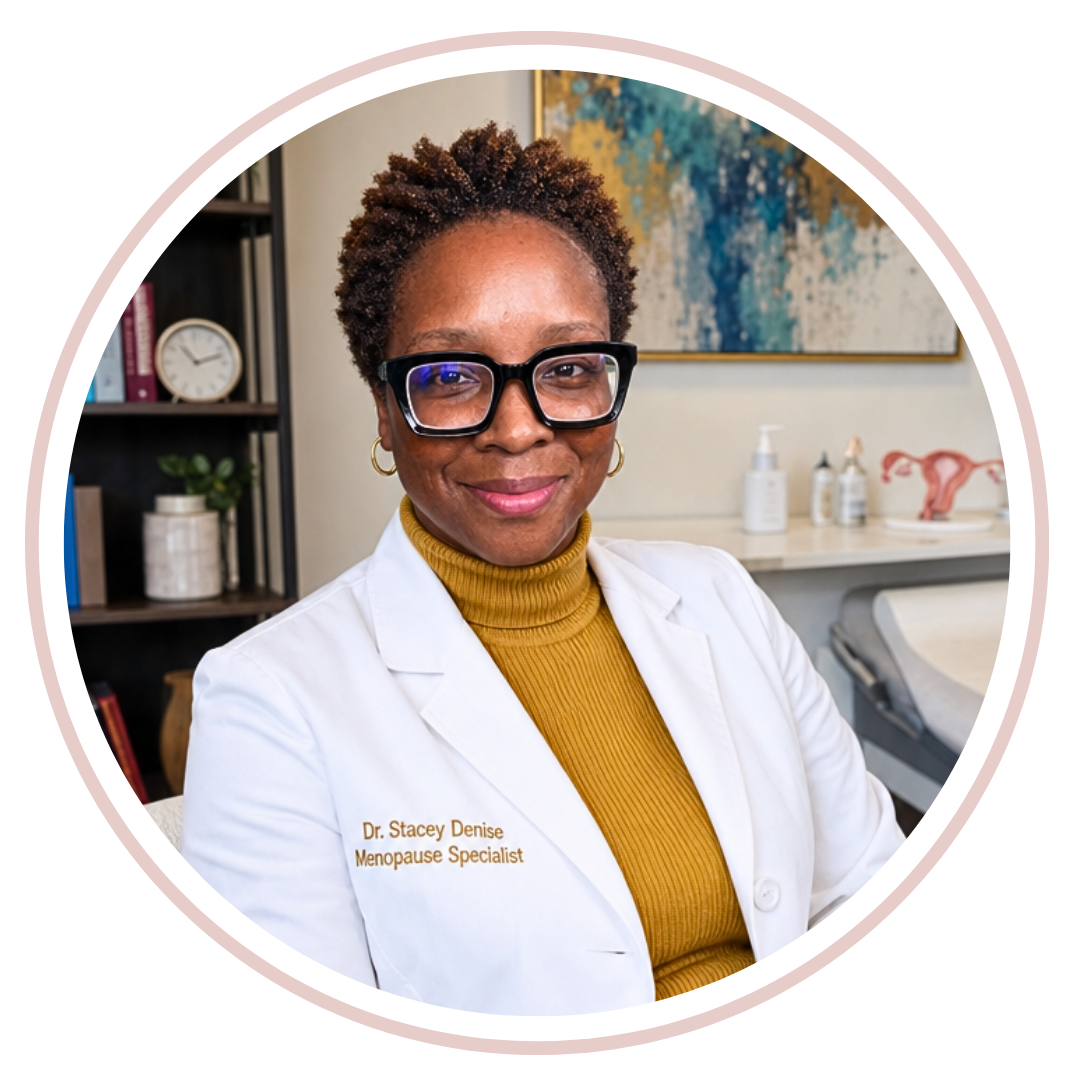
Dr. Stacey Denise

Dr. Stacey Denise Moore is a board-certified surgeon, lifestyle medicine physician, and the founder of Ceyise Studios®. Known as The Neuroaesthetic MD™, she specializes in helping women in midlife optimize their metabolic health, sleep, and environments. By blending clinical neuroscience with sensory design, she teaches patients and organizations how to create spaces and habits that support nervous system regulation and hormonal balance.

LinkedIn logo icon
Instagram logo icon
Youtube logo icon
Back to Blog