What Is Alexithymia — And Why Art Might Be the Only Language That Reaches It
Updated: April 2026
I want to start with something honest.
When I first wrote about alexithymia and art therapy, I was writing about it the way you write about something you've read and studied and understand intellectually. I was writing about Jean — a composite case study, a woman who couldn't name her emotions, who found her way through art — without fully telling you that Jean was also me.
I wasn't ready to say that yet. I could only speak in images about things I couldn't name directly. Which, if you understand alexithymia, is exactly the kind of thing someone with alexithymia would do.
So this is the post again, written now that I have the words. And some of those words are mine.
What Alexithymia Actually Is — And What It Isn't
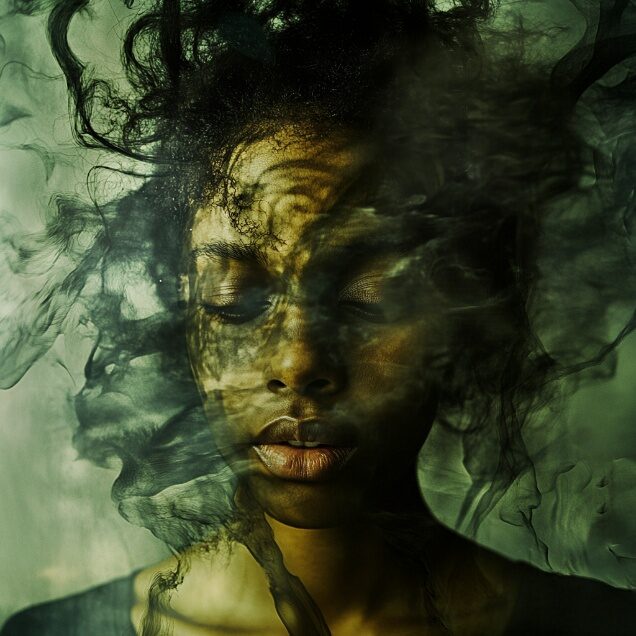
Alexithymia is not the absence of emotion. I want to start there because that's the misunderstanding that does the most damage — the one that leads people to call you cold, robotic, heartless, disconnected. The one that makes you doubt yourself, wonder if something is fundamentally wrong with the way you're built, question whether you actually care about the people you love.
You feel. You feel enormously. What alexithymia disrupts is the bridge between what you feel and what you can name, express, or communicate. The emotion is present in the body. The language for it isn't reliably accessible.
Approximately 10% of the general population experiences some degree of alexithymia. It can occur on its own, or it can co-occur with other conditions — and in autistic individuals and those with ADHD, the rates are significantly higher. Research published in Biological Psychology found that autistic individuals show a specific interoceptive discrepancy: reduced accuracy in detecting their own internal bodily signals alongside what the researchers describe as exaggerated subjective sensitivity to internal sensations. (DOI: 10.1016/j.biopsycho.2015.12.003)
What that means in plain language: you feel more intensely than most people, but the neural pathway that translates that feeling into a nameable emotion is less reliable. You know something is happening inside you. You might not know if it's grief or anger or fear or love. You might not know until hours later, after you've had time alone to sit with it and let your body process what your language centers couldn't access in real time.
A broader review in the Annals of the New York Academy of Sciences confirmed that interoceptive impairments — disruptions in how the body signals its internal state to the brain — are foundational to a cluster of conditions including autism, anxiety, depression, and eating disorders. (DOI: 10.1111/nyas.13915) The body is speaking. The translation is incomplete.
What It Feels Like From the Inside
Let me describe it in a way the clinical language doesn't quite capture.
You're in a situation that should produce a clear emotional response — a disagreement, a loss, a moment of connection or joy — and you know something is happening because you can feel it in your body. Your heart rate changes. Your chest does something. There's a sensation that has weight and texture but no name. And while everyone around you seems to know exactly what they're feeling and can articulate it clearly and respond accordingly, you are standing slightly outside the moment, watching yourself have what you know is a feeling but can't locate on any emotional map you've been given.
Sometimes it comes out sideways. Tears that arrive without a conscious trigger, when someone finally gives you permission to feel something you've been holding without knowing you were holding it. Anger that shows up as physical tension in your body before your mind has registered that you're upset. Exhaustion that is actually grief that has nowhere to go.
And sometimes — for many neurodivergent women, and I am one of them — the sensation is so intense and so unnameable that the only thing you can do with it is discharge it through something the body can do that the mind doesn't have to translate. Movement. Sound. Color. Image. The creative act not as expression but as release — the nervous system finding its exit through the hands when the mouth doesn't have the words.
The Pediatric Surgery Detour — Or Maybe Not a Detour
I want to tell you something I've only recently understood about my own life.
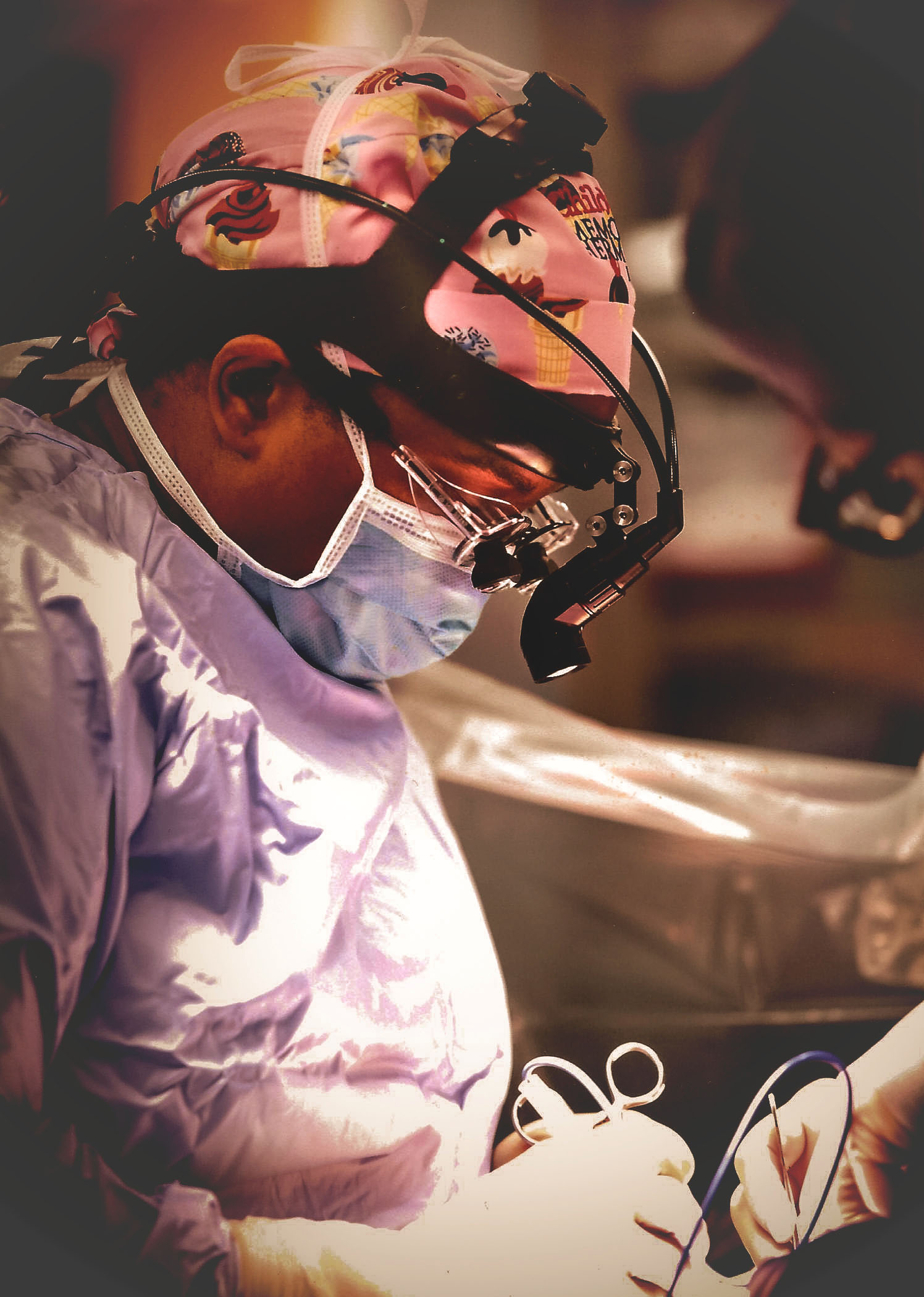
I became a pediatric surgeon. And for a long time, I thought that was incidental to my emotional history. But here's what I know now: children who are ill often can't tell you what's wrong. They don't have the language. They have only the body — its signals, its expressions, its wordless communication of pain and fear and something-is-not-right.
I was extraordinarily good at reading that. At feeling into what a child's body was communicating without needing words to carry the message.
I built an entire clinical skill set around receiving information that couldn't be spoken — around being the person in the room who could sense what wasn't being said. And I built that skill set because I had been practicing it my entire life, without knowing that's what I was doing. I'd been navigating a world of emotional communication I couldn't reliably access through language, which meant I'd developed an extraordinary sensitivity to the somatic channel — to what bodies expressed without words.
That isn't a dysfunction I overcame. That is a capacity I built from necessity. And it made me a better physician than I would have been any other way.
I'm just saying.
Why Art Gets There When Words Don't
This is the clinical piece that matters for anyone reading this who recognizes themselves in what I'm describing.
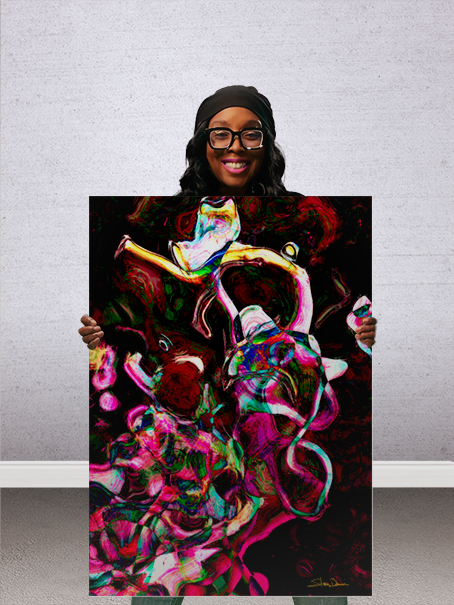
When the prefrontal cortex — the brain's language and executive function center — can't reliably access or translate an emotional state, the creative process offers an alternative pathway. Making art engages the right hemisphere, the sensory cortex, the motor system. It bypasses the linguistic bottleneck entirely. You don't have to name the emotion to make something that holds it.
This is not a compensatory workaround. It's a legitimate neurological pathway to emotional processing. For someone with alexithymia, where the interoceptive signal is present but the language bridge is unreliable or absent, creating visual art is not a second-best option to talking about your feelings. It may be the primary option — the most direct route between what the body is holding and what can be released.
The evidence supports this. The JAMA meta-analysis of 69 randomized clinical trials found that visual art therapy produces measurable improvements in depression, anxiety, quality of life, and self-esteem across diverse patient populations — with the non-verbal, experiential quality of art therapy specifically noted as one of its key advantages over purely verbal approaches. (DOI: 10.1001/jamanetworkopen.2024.28709)
For the woman with alexithymia, art therapy isn't about making something beautiful. It's about making something at all — about giving form to what has been formless, visibility to what has been invisible, release to what has been held in the body without a name.
What This Has to Do With Perimenopause
Here's the connection I want to make explicitly, because I don't hear it made often enough.
Perimenopause compounds alexithymia. Not because it creates new emotional complexity, but because estrogen — which supports interoceptive processing, which buffers the HPA axis, which helps the brain translate somatic signals into accessible emotional information — declines. The already-unreliable bridge between feeling and naming becomes even less reliable when the neurological scaffolding that was helping maintain it begins to thin.
For neurodivergent women who have been managing alexithymia through compensatory strategies, masking, and sheer sustained effort for decades — perimenopause is often the moment when those strategies stop holding. The emotional processing that was already difficult becomes harder. The feelings that were already hard to name become more intense and more difficult to discharge. The nervous system that was already running close to its limits loses its last hormonal buffer.
And the women who were told their whole lives that they were too emotional, or not emotional enough, or confusing, or robotic, or intense, or detached — find themselves in a hormonal chapter that removes the last layer of management they had, without anyone explaining why.
This is why the creative channel matters so much in perimenopause. Not as a hobby. As a clinical intervention. As a nervous system discharge route for a woman whose primary emotional language was never words.
You Don't Have to Have the Words First
If there is one thing I want you to take from this post — from the before version of this post and the after version of this post and the decade of clinical experience and personal excavation between them — it's this:
You don't have to have the words first. You don't have to be able to name what you're feeling before you're allowed to express it. You don't have to wait until you can articulate your internal experience clearly to give it somewhere to go.
The art doesn't need you to explain yourself to it. The color doesn't require a vocabulary. The image will hold what the sentence can't.
Start there. The words sometimes come later. And sometimes they don't need to come at all.
If you want to understand how the Color Archetype framework can help you find the sensory and creative channel that your nervous system actually responds to — the quiz is where we start.
Take the Color Archetype Quiz → quiz.drstaceydenise.com/color-archetype-quiz
The fuller origin story of how this clinical framework was built: I Built a Clinical Framework From What Saved My Life — And I Started With Art →
The interoception science behind why color reaches the body before language does: Pink Is Not a Soft Color. It's a Nervous System Signal. →
For the polyvagal layer: Your Home Is Either Medicine or It Is Making You Sick →
Sources
Garfinkel SN, et al. Discrepancies between dimensions of interoception in autism: implications for emotion and anxiety. Biological Psychology. 2016. DOI: 10.1016/j.biopsycho.2015.12.003
Quadt L, Critchley HD, Garfinkel SN. The neurobiology of interoception in health and disease. Annals of the New York Academy of Sciences. 2018. DOI: 10.1111/nyas.13915
Joschko R, et al. Active visual art therapy and health outcomes: a systematic review and meta-analysis. JAMA Network Open. 2024. DOI: 10.1001/jamanetworkopen.2024.28709
NOTE: This post originated as an educational piece on Ceyise Studios exploring art therapy and alexithymia through a third-person lens — case studies, definitions, research. It has been fully rewritten here on drstaceydenise.com in first person, with the clinical framework, the personal history, and the perimenopause connection now fully named. The original post was written before the author had the words for her own story. This is the version written after.
Originally published on Ceyise Studios. Updated: April 2026.