I Built a Clinical Framework From What Saved My Life — And I Started With Art
Updated: April 2026
I want to tell you something about this work that I've never quite put together in one place before.
Everything I've built — the Neuroaesthetic Reset Method™, the Color Archetype framework, the nervous-system-first approach to perimenopause care, the three pillars, the clinical lens on environment as medicine — all of it started somewhere before I had the language for any of it. It started in a hospital bed in 2014, when a pulmonary embolism nearly killed me, and I lay there understanding for the first time that I had been living someone else's version of my life.
And the thing that found me first, in the space between the crisis and the clarity — before the research, before the framework, before the practice — was art.
This post is about that. It's about what art does when words can't get there. It's about what it means to build a clinical philosophy from your own body's evidence. And it's about the woman I was before I knew I was autistic, before I had a name for alexithymia, before I understood why I felt everything so intensely and could name almost none of it — who pushed through anyway, because that's what we do.
The Child Who Was Seen and Not Heard

I grew up in Ohio in the 1980s in a world where children were meant to be seen and not heard. I took that directive seriously in the way that neurodivergent children often do — not just as a social rule but as an operating system. I learned to watch. I learned to read rooms. I learned to perform whatever version of myself the environment required and to keep everything else somewhere underneath, in a place I didn't have access to.
What I didn't know then — what I wouldn't have the language for until decades later — is that what I was experiencing had a name. Alexithymia. The inability to identify and describe one's own emotions. Not the absence of feeling. The presence of enormous feeling with no reliable pathway to name it, express it, or release it. The emotion is there. The language for it isn't.
I felt everything. I just couldn't tell you what I was feeling. And in a world that equates emotional intelligence with emotional articulation, that gap becomes a kind of invisible disability — one you carry alone, because nobody around you can see it either.
I went to medical school. I became a physician. I built a life that looked, from the outside, like someone who had it together. And underneath all of it, I was managing a nervous system that was always running slightly too hot, always scanning for the next demand, always holding something I couldn't name.
That is what undiagnosed autism and alexithymia look like in a high-achieving woman who learned early that her survival depended on performing competence. You follow what I'm saying?
2014 — When Everything Stopped
In 2014, I had a pulmonary embolism.
I'm saying that plainly because it deserves to be said plainly. A pulmonary embolism is a blood clot in the lungs. It's life-threatening. And lying in that hospital bed, I came face to face with what happens when a body that has been holding everything finally stops being able to hold it.
The PE changed my relationship with time, with medicine, and with my own body in ways I'm still understanding. It also answered a clinical question I'd carry for years afterward: why am I not on hormone therapy for perimenopause? Because estrogen is contraindicated after a history of venous thromboembolism. I tried phytoestrogens later and got chest tightness that stopped me cold. That's not a risk I'm willing to take again.
So the standard first-line intervention for menopausal symptoms wasn't going to be my path. Which meant I had to find another one.
That's not a complaint. That's context. Because the path I found instead is the one that built this practice — and it started with art.
Art Before I Had the Words
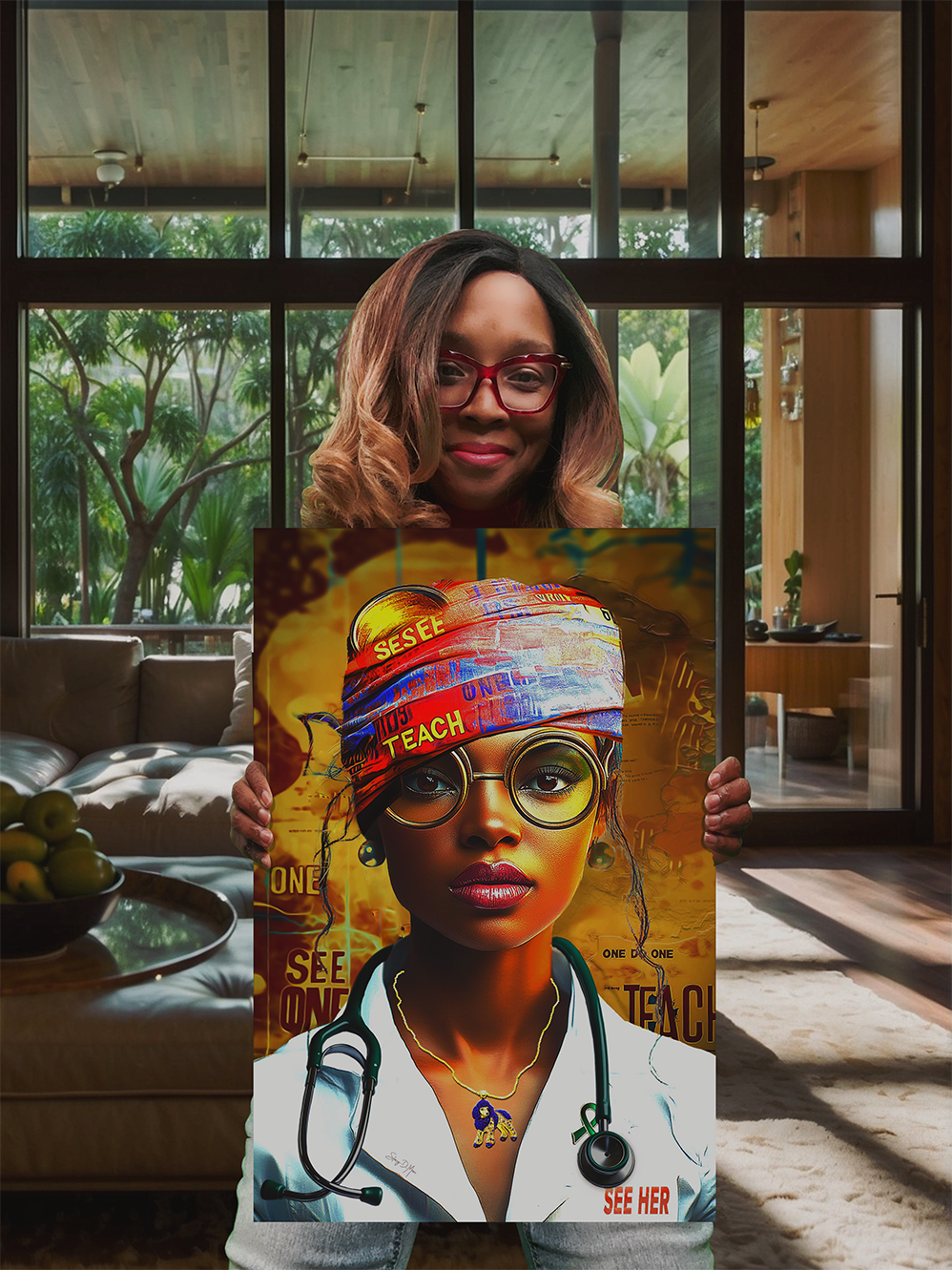
I didn't start making art because I understood what it would do for me. I started because something in my body already knew.
Photography first. A way to capture what I saw when I couldn't describe what I felt. Then digital tools — Photoshop, generative processes — that allowed me to take a captured image and transform it into something that reflected my internal world rather than just the external one. To reimagine rather than just record.
What I found in that process was something I didn't have a clinical name for yet: a channel between what was happening inside me and what could be visible outside me that didn't require language to work. I didn't have to name the emotion to make the art. I could feel my way through the color choices, the composition, the texture, the light — and something that had been compressed inside me could move.
That's not metaphor. That's neurobiology. When the prefrontal cortex — the brain's language center — can't access or articulate an emotional state, the creative process offers an alternative pathway. It engages the right hemisphere, the sensory cortex, the motor system. It lets the body express what the mind can't translate. For someone with alexithymia, where the interoceptive signal is present but the linguistic bridge to it is unreliable, art isn't a hobby. It's a clinical bypass.
A systematic review published in BMJ Open examining trauma-focused art therapy found that patients specifically benefit from its indirect, nonverbal, experiential approach — the thing that makes art therapy different from talk therapy is also the thing that makes it particularly useful for people whose trauma, neurodivergence, or nervous system state has put language temporarily or chronically out of reach. (DOI: 10.1136/bmjopen-2023-081917) And the JAMA meta-analysis of 69 randomized clinical trials confirmed that active visual art therapy produces measurable improvements in depression, anxiety, quality of life, and self-esteem across diverse populations. (DOI: 10.1001/jamanetworkopen.2024.28709)
The research arrived later. The art arrived when I needed it.
What I Was Building Before I Knew What I Was Building
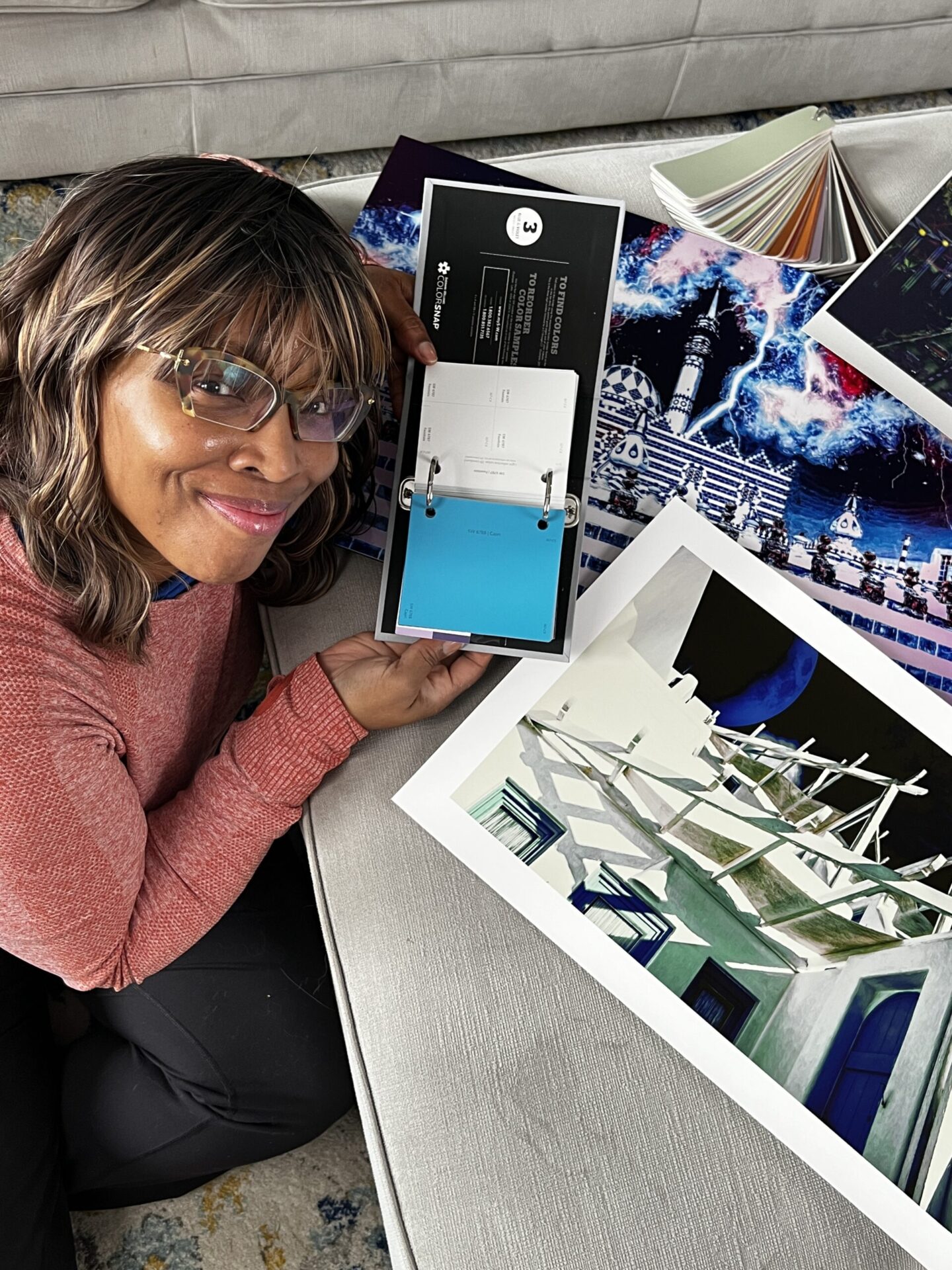
When I founded Ceyise Studios, it was ostensibly a design and art practice. And it was that. But what I understand now — looking back from the other side of a late autism diagnosis, a trauma certification program, a doctoral program in lifestyle medicine, and a clinical practice built on the nervous-system-first principle — is that Ceyise Studios was Dr. Stacey Denise holding space for herself before she had the words for what she was building.
I was writing about color and environment and neuroaesthetics from an interior design lens because that was the language available to me at the time. But the questions I was actually asking were clinical. What does the body need from its environment? What does color do to the nervous system before conscious thought arrives? How does a woman who can't always name her emotions find her way back to herself when language fails? What is the relationship between the space we inhabit and the hormonal and neurological state we're in?
Those aren't design questions. Those are medicine questions. And I was asking them from the inside of my own experience long before I had the clinical framework to name them that way.
This is what happens, I think, when a neurodivergent woman pushes through her confusion and her pain and the social messaging that tells her to be quiet and stay in her lane. She builds something that works before she understands exactly why it works. And then the science catches up, and she finds out that what she built on intuition and necessity was clinically sound all along.
That's all I'm saying.
The Fragments to Fusion Collection — Art as Clinical Record
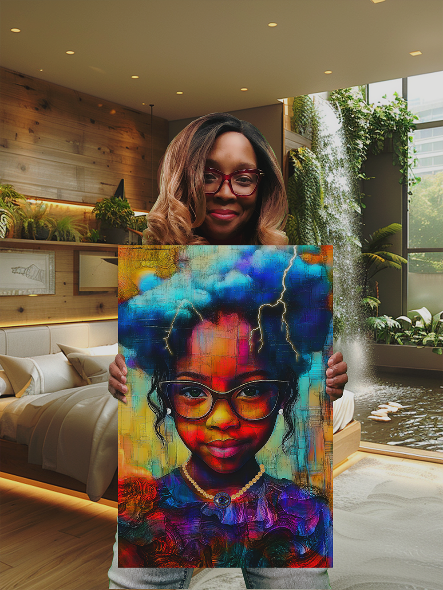
The Fragments to Fusion collection — shown at the Modern Muse exhibition — is not just artwork. It's a clinical record.
Every piece in that collection came from a place in my body where something that had been fragmented was trying to find its form. The colors I chose were not chosen consciously. They were chosen the way the nervous system chooses — by what the body moved toward, what it needed, what it was trying to discharge or hold or express when the language centers were unavailable.
When I made work in the crimson and garnet range — the Liberator's colors, Red — I was working with suppressed mobilization energy, the kind that builds up when you've been holding everything together for too long and your fight response has nowhere to go. When I worked in blush and rose — the Empath's colors — I was working with the tenderness that lives underneath exhaustion, the part of you that still cares about everyone else even when you have nothing left to give.
I didn't know the Color Archetype framework when I made those pieces. The framework came later, from looking back at the work and understanding what it had already known.
This is what art does for the nervous system that can't name its own state: it creates a record of where you actually were, not where you thought you were supposed to be. And for the woman with alexithymia, that record is precious. Because it's evidence that you were feeling something real — even when you couldn't find the word for it.
Why This Matters for Your Menopause Care
Here is the clinical thread I want to make explicit, because it's the reason this personal story lives in a menopause and nervous system practice rather than just in an artist's statement.
I couldn't take estrogen. So I built another way.
And what I found — through art, through color, through understanding the nervous system's relationship to the sensory environment, through my own experience of what it means to be a late-diagnosed autistic woman with alexithymia and CPTSD navigating midlife without the standard hormonal intervention — is that the body has more healing capacity than the standard of care gives it credit for.
Not instead of hormones. Alongside them, beneath them, and for those of us who can't have them — instead of them.
The nervous system is the first system. Environment is medicine. Color is a language the body speaks before language does. Art is a nonverbal pathway to emotional processing when the verbal one is blocked. These aren't alternative wellness claims. They're the conclusion of a physician who used her own body as the research site for a decade before she had the clinical framework to explain the results.
That's what this practice is. And it started in a hospital bed in 2014, with a woman who finally understood that she had been living half a life — and who found her way back, one piece of art at a time.
If you're a neurodivergent woman in perimenopause who has been told that HRT is the answer — or who can't take HRT, or who is looking for what lives underneath the hormone conversation — this is where I work. The nervous system, the environment, the color, the art. The whole person.
Join us in the Auntie Menopause Circle →
The clinical framework this story built: Your Space Isn't Just Decorating You — It's Running Your Biology →
The color work that came from this practice: Every Color You See Is Talking to Your Nervous System →
The interoception science behind alexithymia: Pink Is Not a Soft Color. It's a Nervous System Signal. →
Sources
Heijman J, et al. Effectiveness of trauma-focused art therapy (TFAT) for psychological trauma: study protocol of a multiple-baseline single-case experimental design. BMJ Open. 2024. DOI: 10.1136/bmjopen-2023-081917
Joschko R, et al. Active visual art therapy and health outcomes: a systematic review and meta-analysis. JAMA Network Open. 2024. DOI: 10.1001/jamanetworkopen.2024.28709
NOTE: This post originated as a personal reflection on Ceyise Studios exploring the role of art and neuroaesthetic design in emotional healing and alexithymia. It has been fully rewritten here on drstaceydenise.com as the origin story of the Neuroaesthetic Reset Method™ — honoring what Ceyise Studios was always building toward, and naming it now with the clinical language, the late autism diagnosis, and the perimenopause context that makes it complete.
Originally published on Ceyise Studios. Updated: April 2026.