Your Brain on Abstraction: What Non-Literal Art Does for the Neurodivergent Mind in Perimenopause
Updated:April 2026
Listen. I want to make a distinction before we go anywhere in this post, because the word abstraction gets used in two very different ways and the difference matters clinically.
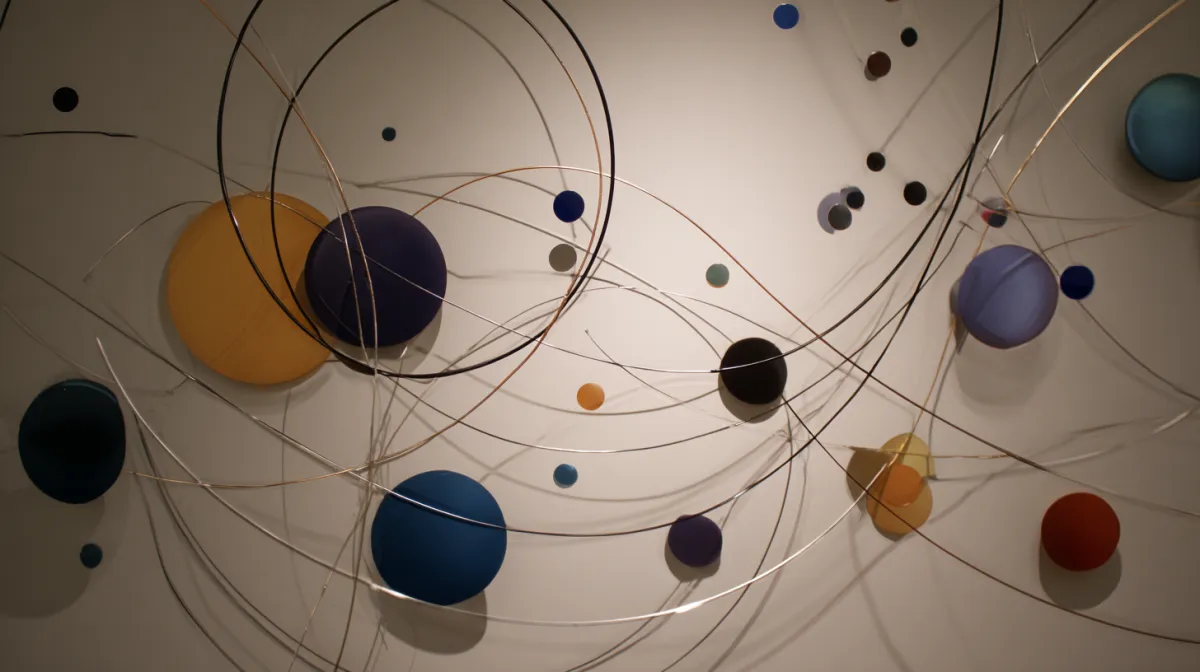
Abstract art is a style. It's the Kandinsky on the wall, the Rothko color field, the piece in the hospital corridor that some patients find unsettling and others find themselves standing in front of for longer than they expected. Abstract art is a visual category — art that doesn't depict the literal world.
Abstraction is a process. It's what the brain does when it encounters something that doesn't have a fixed, pre-assigned meaning and has to generate that meaning from the inside out. Abstraction is the cognitive and emotional act of making sense of the not-yet-named. And it is a process that the neurodivergent brain — the alexithymic brain, the ADHD brain, the autistic brain — already knows intimately, because it has been living inside non-linear, non-literal, not-yet-named experience its entire life.
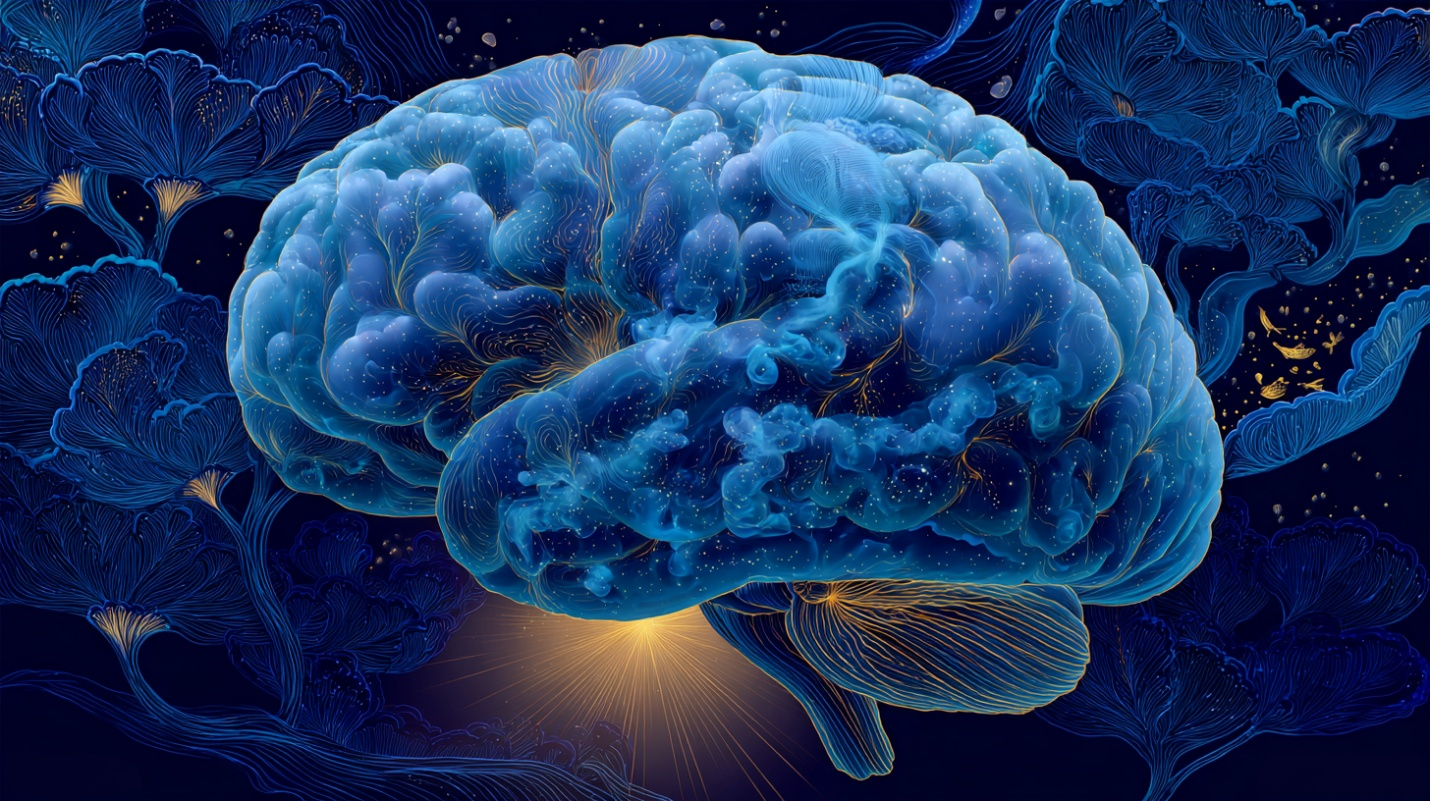
That distinction is the whole clinical argument of this post. And it's one that I couldn't have made in 2022 when I first wrote about abstraction and healing, before I understood my own neurology well enough to see it.
What Brain Fog in Perimenopause Actually Is
Before we talk about what abstraction does for the brain, I want to name what's happening to the brain in perimenopause — because the conversation about cognitive symptoms in this transition is still not happening at the level of clarity that the women experiencing it deserve.
A longitudinal study published in BMC Women's Health followed 2,411 mid-life women through their menopausal transition across three time points, measuring six domains of cognitive function. What they found was that verbal episodic memory — the ability to recall words, names, and language-based information — declined in relation to both reproductive age and the hormonal markers of menopause, specifically rising FSH and LH levels, independent of normal chronological aging. (DOI: 10.1186/s12905-020-01040-3) In plain language: the word-finding difficulty, the name-retrieval failures, the moment when the sentence you were building just — disappears — that is not imagination. That is a documented, measurable, hormonally driven cognitive shift that happens to women in this transition independent of how old they are otherwise.
This matters because word-finding and verbal fluency are the cognitive domains most directly associated with the language centers of the brain — the same centers that alexithymic women have already been working around their entire lives. If you have alexithymia and perimenopause lands on top of it, you are now dealing with a double load on the brain's verbal processing system. The feelings that were already difficult to name become harder to name. The words that were already sometimes elusive become more elusive. And the woman who was already expert at finding non-verbal routes to meaning — through sensation, through color, through the felt sense of an experience before the cognitive label arrives — is now being pushed even further in that direction by her own biology.
Here is what I want you to understand: that push is not a failure. It's a signal. And abstraction is one of the most intelligent responses to it.
The Neurodivergent Brain Already Thinks in Abstraction
This is the part of the argument that conventional wellness content never gets to, and I want to spend real time here.
The neurodivergent brain — and I'm speaking specifically to late-diagnosed autistic women, women with ADHD, women with alexithymia, women whose inner processing has always been pattern-based, associative, non-sequential, and not-yet-nameable — does not primarily process experience in the neat, linear, verbally labeled way that conventional cognitive models assume. It processes in impressions. In patterns. In the felt sense of something before the cognitive label for it arrives. In color and texture and the quality of attention that a particular experience calls up before the mind has organized it into a sentence.
That is abstraction. Not the art style. The cognitive process. The neurodivergent brain has been practicing abstraction as a primary mode of meaning-making since childhood.
This means something important for how art works in this population. A 2024 review published in Neuroscience and Biobehavioral Reviews examined aesthetic processing across neurodivergent populations — autism, ADHD, anxiety, depression, anhedonia — and found that the mesocorticolimbic reward circuit, the frontolimbic connections, and the default mode network all show distinctive patterns of aesthetic engagement in neurodivergent brains compared to neurotypical ones. (DOI: 10.1016/j.neubiorev.2024.105878) The neurodivergent brain doesn't just experience art differently aesthetically. It processes it through different neural pathways — pathways that may actually be more responsive to non-literal, open-ended visual input precisely because that's the kind of input the neurodivergent nervous system is already oriented toward.
Abstract art — art that doesn't tell you what to see or feel, that requires you to generate the meaning from your own interior — may therefore be more neurologically accessible to neurodivergent women than representational art, not less. Because it meets the brain where it already is. It doesn't demand a named, linear, verbal response. It invites a felt, associative, pattern-based one. And that is the response the neurodivergent brain is already capable of producing.
What Abstraction Does for a Foggy Brain
Research published in NeuroImage found that aesthetic experience with pleasing visual art engages the brain's default mode network — the network associated with self-referential thought, internal state regulation, and meaning-making — in a way that is time-locked to the experience itself. (DOI: 10.1016/j.neuroimage.2018.12.017) The brain isn't passively receiving the art. It's actively constructing meaning from it. And abstract art — precisely because it doesn't supply a pre-packaged narrative — requires more of that active meaning-construction than representational art does.
You follow what I'm saying? With a landscape painting, the brain can receive the literal content and file it. With an abstract piece — a field of color, a form that suggests without declaring, a texture that evokes without naming — the brain has to do the meaning-making work itself. It has to reach into its own interior resources, its own pattern recognition, its own felt sense of what this calls up, and generate the interpretation from inside.
For a brain that has been experiencing verbal episodic memory decline and word-finding difficulties — a brain that is foggy at the literal, verbal, sequential level — this is not a demand it can't meet. This is a request that bypasses the compromised channel and goes directly to the networks that are still fully operational. The default mode network. The associative processing pathways. The felt sense of meaning before the word arrives.
Abstract art gives the brain a route to meaning-making that doesn't go through the door that perimenopause has made harder to open. That is not a metaphor. That is neurological strategy.
Abstraction in the NRM Framework
In the Neuroaesthetic Reset Method, we use color and form not as decoration but as biological input. Every color archetype in the framework carries a specific nervous system signature, a specific emotional entry point, and a specific healing invitation. And what I want to name explicitly here is that the healing work of color in the NRM is inherently abstract — it works through impression, through felt sense, through the body's response to a particular frequency of light before the mind has decided what to call it.
When a Liberator archetype woman sits with deep crimson and feels something move in her chest before she can name what it is — that is abstraction doing clinical work. When an Empath archetype woman wraps herself in blush and her nervous system drops a notch without her consciously deciding to relax — that is abstraction doing clinical work. The color is abstract. The response is real. The meaning is made in the body before it arrives in the mind.
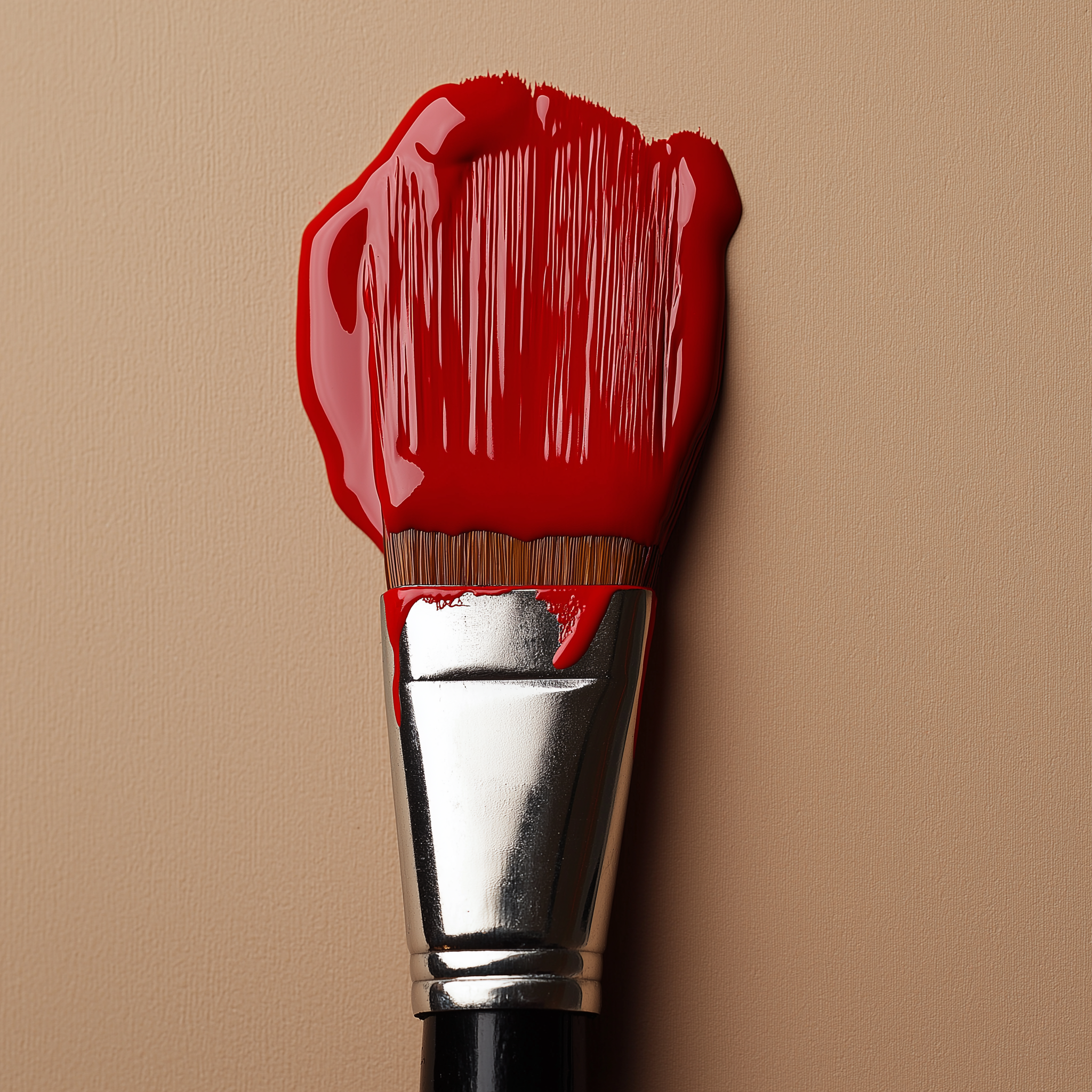
This is why the art-making component of the NRM isn't about producing a finished piece. It's about the process of engaging with non-literal, non-prescribed, open-ended visual input — color, form, texture — and letting the body generate its response without the mind's interference. For a perimenopausal woman whose verbal processing is under hormonal pressure, this is not the consolation prize because language isn't working. It's the direct route to the parts of the brain that are working — the parts that have always been capable of this, the parts that the neurodivergent nervous system has been cultivating since childhood.
What This Looks Like in Practice
I'm not asking you to take an art class. I'm asking you to try one thing before you decide whether any of this applies to you.
Get a piece of paper and something to make marks with — paint, markers, pastels, colored pencils, whatever is available. Don't plan. Don't decide in advance what you're going to make. Start with a color that your hand reaches for without thinking. Put it on the page. Let the next mark come from the first one. Don't name what you're making. Don't evaluate it. Just let the color and the form move without the verbal brain directing.
Five minutes. That's all.
What you're doing in those five minutes is giving your brain's meaning-making networks an input they don't have to struggle to receive — a non-verbal, non-sequential, open-ended experience that engages the default mode network directly and gives the part of your brain that is tired and foggy a chance to rest while the part that has always operated in abstraction gets to do what it knows how to do.
For the woman who has been feeling like her brain isn't working anymore — the woman who forgets words mid-sentence, who reads the same paragraph three times, who walks into a room and loses the thought before she gets there — abstraction isn't asking more of the brain that's struggling. It's inviting a different brain to show up. And that brain has been waiting, fully capable, for someone to finally give it the right kind of task.
The original post that gave birth to this one: Is Abstraction Really Frightening When We Need Healing? →
The brain health layer that connects to this work: Art Isn't Just Good for Your Soul. It's Good for Your Brain. →
The color archetype framework this post connects to: Every Color You See Is Talking to Your Nervous System. Here's What It's Saying. →
Take the Color Archetype Quiz →
Your color archetype is your nervous system's signature. Find yours — and find out what your environment has been doing to your cognitive health, your sleep, and your capacity to make meaning.
Sources
Kilpi F et al. Changes in six domains of cognitive function with reproductive and chronological ageing and sex hormones: a longitudinal study in 2411 UK mid-life women. BMC Women's Health. 2020. DOI: 10.1186/s12905-020-01040-3
Buck Z et al. Aesthetic processing in neurodiverse populations. Neuroscience and Biobehavioral Reviews. 2024. DOI: 10.1016/j.neubiorev.2024.105878
Belfi AM et al. Dynamics of aesthetic experience are reflected in the default-mode network. NeuroImage. 2018. DOI: 10.1016/j.neuroimage.2018.12.017