Wisconsin APRN Law: What It Means for Women's Care
Updated: May 26, 2026
The Writing on the Wall: How Wisconsin's APRN Law Signals the Next Medical Shift
On August 8, 2025, Wisconsin signed legislation giving advanced practice registered nurses — nurse practitioners, clinical nurse specialists, nurse anesthetists, and nurse midwives — the legal right to practice independently. Under the new law, they can evaluate, diagnose, and treat patients without physician oversight once they've completed 3,840 hours of supervised practice. The full text is here.
The framing is rural access. The headline is expanded care for underserved communities. And on its face, that sounds like progress.
But I've been in medicine long enough to know that the framing of a policy and the consequences of a policy are rarely the same sentence.

I've Seen This Movie Before
When I was a medical student and junior resident, I watched another "small" shift happen. MBAs started appearing in hospital administration. The language was efficiency, cost savings, and sustainability. Physicians would still run the clinical show — that part was always implied. Nobody said out loud that clinical decision-making would eventually become subordinate to revenue cycle priorities.
Fast forward twenty years. That's exactly what happened.
Doctors — once the architects of patient care — are now, in many systems, interchangeable labor. The business of medicine routinely overrides the art of medicine. And the patients who lost the most in that trade are rarely the ones who had the most options to begin with.
Wisconsin's APRN law has that same quiet, almost reasonable framing. It's the leading edge of a larger wave. The precedent is set. Expansion beyond rural communities is a matter of time, not if.
What's Actually at Stake
This isn't a debate about whether nurse practitioners are skilled or dedicated. Many are. I've worked alongside excellent ones. This is about what happens systematically when the primary patient relationship shifts away from physicians toward a protocol-driven model of care.
In primary care, that shift carries real consequences. Care risks becoming more transactional than longitudinal. Complex diagnoses that fall outside standard templates can be delayed or missed. The physician role gets narrowed to procedure-based or high-acuity care — valuable, but increasingly disconnected from the everyday patient journey where patterns are built over time.
Here's the uncomfortable truth that doesn't make it into the policy announcements: the last twenty years of expanding prescriptive authority and polypharmacy haven't reduced chronic disease prevalence or brought down healthcare costs. More providers plus more medications has not equaled better health outcomes. If we replicate that formula with expanded autonomy but the same model underneath it, the results will be the same.

The Einstein Problem in American Healthcare
This is what I think of as the Einstein problem in healthcare — repeating the same structural decisions and expecting different outcomes.
On one side, companies like Meta will spend over $100 million to retain a single software engineer because they understand the value of specialized intellectual capital. On the other, our health system treats the most deeply trained clinical minds as overhead to be minimized. We cut corners on expertise in the one field tasked with preserving life.
Million-dollar outcomes. Dollar-store labor model.
I watched this logic play out early in my career when long-term acute care hospitals used residents as cheap labor. At the time, nurse practitioners weren't central to the primary care pipeline. Now, two decades later, they're becoming the default. Each step in that progression felt like a reasonable response to an access problem. Taken together, they represent a structural decision about what medicine is allowed to cost — and who bears the consequences when it costs too little.
Who Feels This First
Scope-of-practice legislation rarely mentions the women navigating midlife health transitions in its policy rationale. But they're the ones who will feel the downstream effects most acutely.
The woman trying to understand why her sleep has changed, why her metabolism isn't responding the way it used to, why her mood shifts in ways that don't match her circumstances, why her body feels unfamiliar — that woman doesn't present with one clean complaint. She presents with a pattern. And pattern recognition across multiple systems, developed over years of training and practice, is precisely what physician-level care is designed to provide.
When a system decides that kind of depth is overhead it can't afford, that woman doesn't disappear from the waiting room. She just arrives there with fewer people qualified to read what her body is saying.
That's not a rural problem. That's a women's health problem.

Where Medicine Has to Go From Here
We can't undo this shift. But we can decide how we exist within it.
That means physicians owning the domains where years of training are genuinely irreplaceable — complex diagnostics, multi-system disease, nuanced pattern recognition across a full clinical picture. It means leading interdisciplinary teams instead of resisting them, functioning as the strategist rather than the service line. It means building care models that address root causes rather than chasing symptoms through a protocol. And it means advocating loudly for the standards that protect patients from the hidden costs of care that looks sufficient on a spreadsheet.
The future of medicine isn't about volume. It's about irreplaceable value. The physicians who understand that will shape what comes next. The ones who don't will be replaced by whatever is cheaper.
The writing is on the wall. It's written in legislative ink.
The question is whether we read it before the consequences land in the exam room.
Take the Next Step
If you're navigating midlife health changes and you've been left with vague answers and standard advice that doesn't explain your body — that's worth paying attention to. The Color Archetype Quiz is a starting point for understanding how your nervous system is actually wired and what it needs right now.
Take the Free Color Archetype Quiz →👇🏽

Sources
Wisconsin Examiner. Evers signs bill that enables nurses with advanced credentials to practice independently. August 8, 2025. https://wisconsinexaminer.com/2025/08/08/evers-signs-bill-that-enables-nurses-with-advanced-credentials-to-practice-independently/
CMS. Advanced Practice Registered Nurses (APRNs). https://www.cms.gov/medicare/payment/fee-schedules/physician-fee-schedule/advanced-practice-nonphysician-practitioners/advanced-practice-registered-nurses-aprns
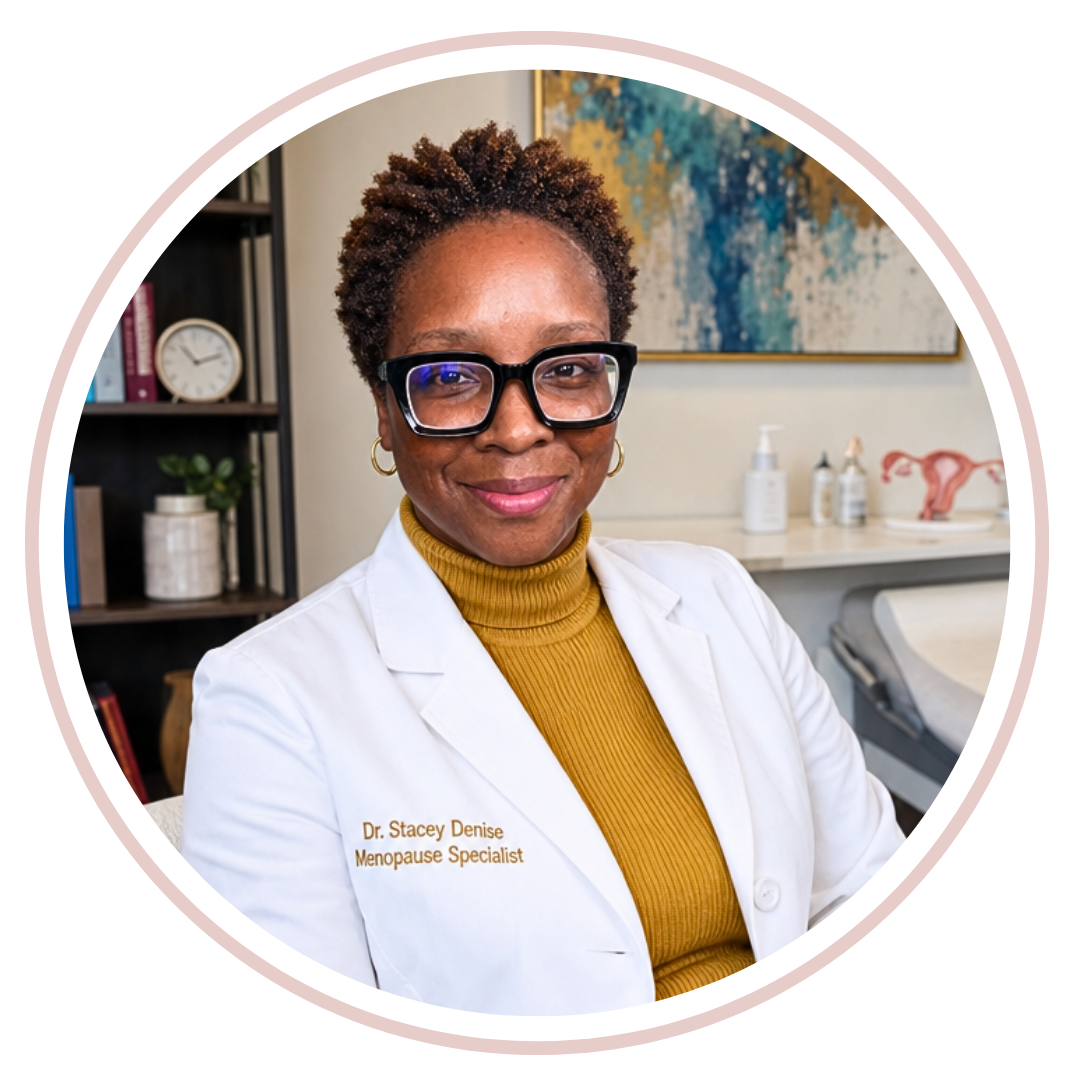
Dr. Stacey Denise is a board-certified surgeon transitioned into lifestyle medicine specializing in the menopause transition. She sees patients in California, Georgia, Kentucky, Maryland, Ohio, Texas, and Virginia.