
Why a Physician Made Binaural Beats for Nervous System Healing
Why I Made Music for Your Nervous System
And why a physician’s binaural beats are different
I want to tell you something I do not usually say in the spaces I move clinically.
I make music.
And I don't mean that as a cute side note or a hobby I just picked up in passing because I needed something to do. This was more than a small wellness project I added to my medical endeavors. I make music because there's a point where the medicine I was studying and applying stopped being something I could only write about. It needed a rhythm and a tone. It needed atmosphere and to be felt in the body before the logical part of our brain could start debating it.
That is the part I want you to sit with for a moment.
Because this music did not come out of nowhere.
I've spent years building the Color Reset™ framework, including the nine archetypes, the nervous system states they map to, and the way color, light, texture, sound and our environment communicate with the body before our conscious mind has formed a full opinion.
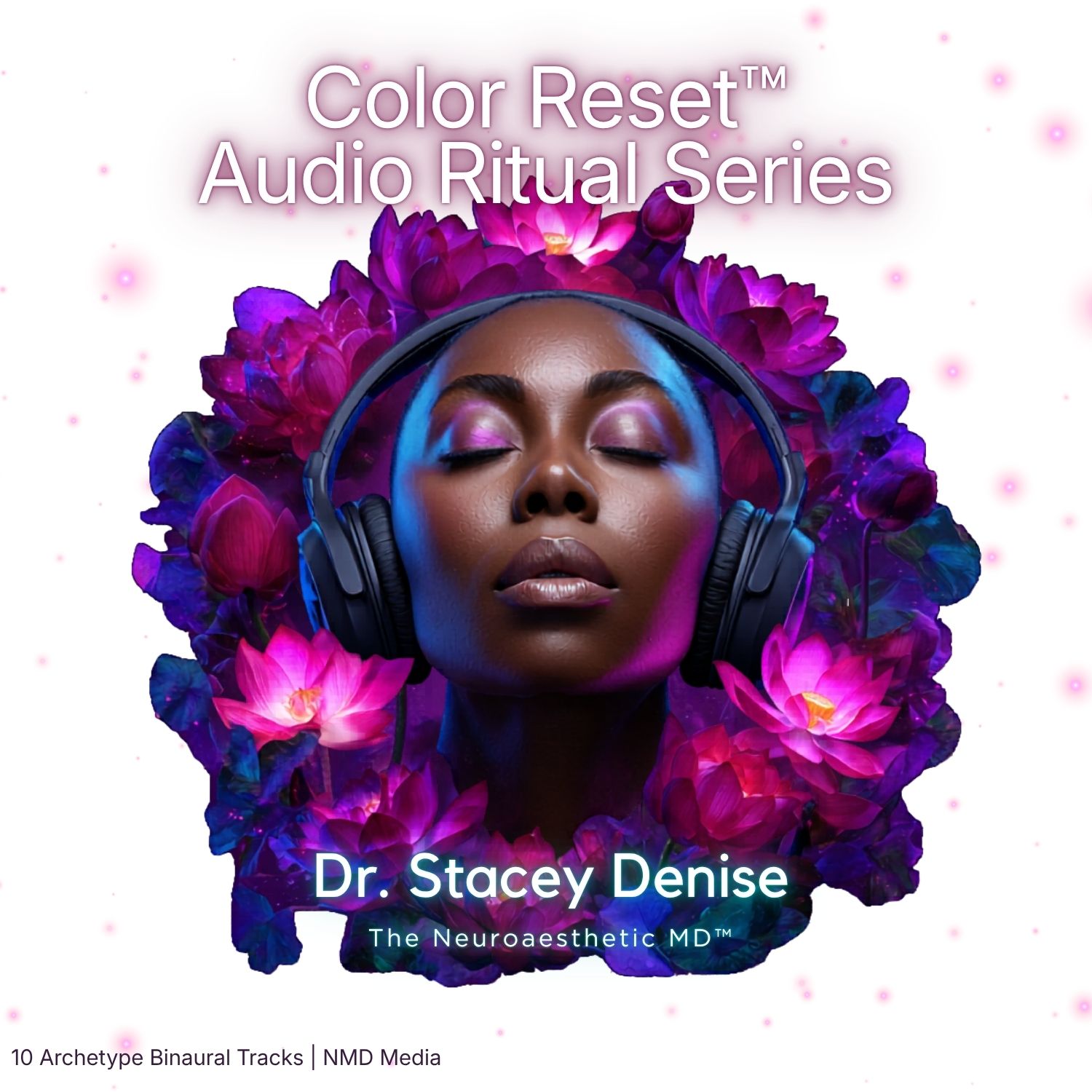
That isn't abstract for me. It's the foundation of my work as The Neuroaesthetic MD™.
I am a board-certified surgeon who has transitioned into functional lifestyle medicine. I'm certified in color and neuroaesthetics, and I work with women in perimenopause and menopause whose bodies are changing in ways that often get minimized, oversimplified or dismissed. Many of them are high-masking. Many are autistic, have ADHD, are alexithymic, or are sensory sensitive, whether they've been formally diagnosed or are just starting to recognize the pattern.
They are women, like you, who've spent years being told their symptoms are anxiety, stress, aging, weight gain, poor discipline or “just hormones.”
And listen, sometimes it is hormones.
But it's almost never only hormones.
It's also the nervous system, sleep and the gut. It's blood sugar, sensory load and chronic stress physiology. It is the way your body has been scanning rooms, managing other people, code-switching, masking, bracing, caregiving and performing calm for 30 or 40 years.
Then perimenopause comes in and changes the hormonal support system that helped you keep it all together.
That's when the body starts telling the truth.

First, the sleep falls apart. Then sound becomes louder and more sensitive. The light feels harsher, and your body feels unfamiliar. The emotions may become harder to name, especially if you're alexithymic. The old coping strategies stop working like they used to, and the advice you're handed often doesn't reach the place where the alarm is coming from.
So I started asking a different question.
If color can reach the nervous system before we form a thought, can sound do the same thing?
The answer is yes, and not in a magical way. In a physical and vibrational way.
That is the doorway this music came through.
It came through my work with color, sound, neuroaesthetics, menopause and the body’s need for safety. It came through my own sensitive nervous system. It came through years of medicine, surgery, clinical pattern recognition and the realization that some women don't need someone else to explain their mood swings, rage or anxiety to them from a distance.
They need something that helps their nervous system recognize itself.
That is why I made the Color Reset™ Audio Ritual Series.
What binaural beats actually are
Here's the simple version.
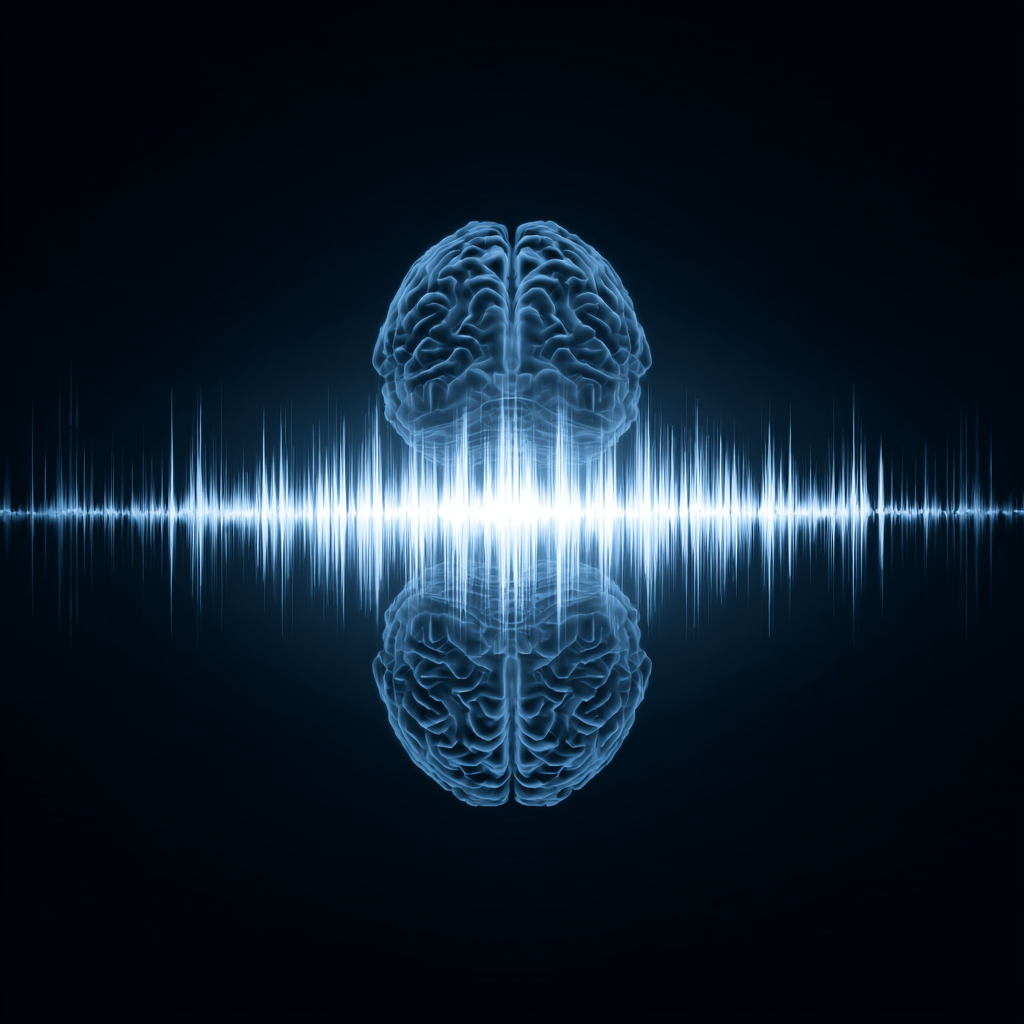
When you listen through headphones, your left ear receives one tone and your right ear can receive a slightly different tone. For instance, your left ear might detect a frequency of 200 Hz, whereas your right ear perceives 208 Hz. Your brain notices the difference between those two tones, which is 8 Hz, and it processes that difference as an internal beat.
That internal beat is called a binaural beat.
Different frequency ranges are associated with different brainwave patterns. Alpha frequencies are often discussed in relation to calm focus. Delta frequencies are associated with deep sleep states. Theta frequencies are often thought about in terms of drowsiness, meditation, memory, and transitional states.
Now, this is where I need to be upfront and transparent because I don't want to make the science prettier than it is.
The research on binaural beats is real, but the results are mixed. This means I won't overstate what we know, even though I believe this work matters. A 2023 systematic review in PLOS One looked at studies on binaural beat stimulation and EEG activity. Some studies showed measurable frequency-following responses, while others were less consistent, and the authors called for better standardization across future research because the results were heterogeneous.
So I'm not going to tell you binaural beats are settled science, because they are not. What I can say is that the brain does process binaural beats as a distinct auditory phenomenon, and researchers are continuing to study how those patterns may influence measurable brain activity, attention, mood and perception. That's enough for me to take the mechanism seriously without turning it into a cure-all.
And this distinction matters for me because selling women another miracle sound, miracle supplement, miracle morning routine, or miracle nervous system hack isn't why I do this work. My interests lie in building sensory tools that are grounded enough to respect the science and humane enough to respect the body.
Why most binaural beats online miss the point
This is where most binaural beats online lose me.
They're usually built around the frequency and nothing else: delta for sleep, theta for creativity, alpha for focus, gamma for cognition. That may be useful as a starting point, but your nervous system isn't a generic frequency chart.
The woman who's been high-masking all day under fluorescent lights while performing calm in a body running threat signals doesn't need the same auditory experience as the woman who's gone flat, foggy and disconnected from herself.
The woman who wakes at 2:47 a.m. with her heart racing does not need the same support as the woman who can't get herself out of bed because her body's been running beyond capacity for too long.
The woman who's been over-attuned to everyone else in the room since childhood doesn't need the same sensory cue as the woman whose fire has been muted by years of shutdown.
This is why I kept coming back to the Color Reset™ framework. The frequency matters, but the state of the nervous system matters even more. A sound can technically be calming and still feel wrong to a body that doesn't need calming at the moment. A sound can be beautiful and still be too much. A sound can be soft and still feel irritating if it does not meet the state honestly.
That's the part I did not see enough of.
So I built it.
How I built the Color Reset™ Audio Ritual Series
The Color Reset™ Audio Ritual Series is not simply a collection of binaural beats. It's a neuroaesthetic sound ritual built around the Color Reset™ archetypes and the nervous system states they represent.
Each track began with a question.
Not “What frequency sounds impressive?”
Not “What will people search for online?”
Not “What can I call relaxing?”
The question was: What is this nervous system state trying to move toward?
That question changed everything, because regulation isn't one generic destination. Some women need softening. Some need grounding. Some need to reenter the body. Some need less internal noise. Some need permission to stop performing. Some need restoration after years of operating beyond their real capacity.
So each archetype was built with a different clinical and sensory intention.
The Blush Empath archetype often carries the exhaustion of over-attunement. This type is the woman who has been reading every room, tracking every mood shift and sensing every microchange in other people for so long that her signals have become hard to hear. She doesn't need more stimulation. She needs permission to come down from the invisible alert state she has been carrying all day.
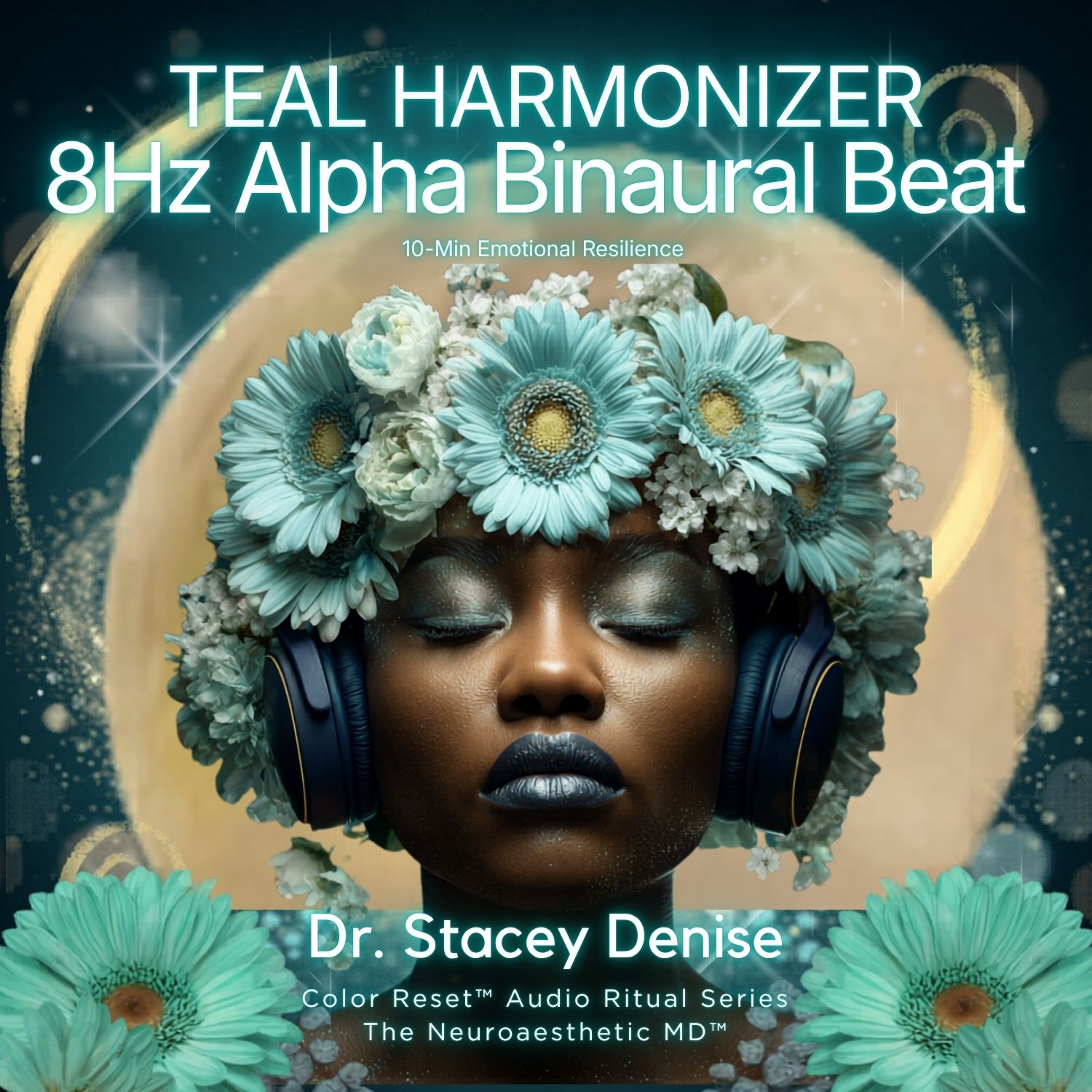
The Teal Harmonizer may look regulated from the outside, but internally she may feel flat, disconnected or over-curated. The room is beautiful. The face is composed. The schedule is managed. But the body may not actually be restored. There is a difference between looking calm and being regulated, and high-masking women know that difference in their bones.
The Navy Conductor tends to live in cognition. She thinks instead of feels. She manages instead of metabolizes. She makes the plan because the plan feels safer than the body. I know that pattern well, and many women in midlife recognize it once they stop mistaking constant analysis for actual safety.
The Black Mystic knows shutdown. Not rest, but shutdown. There is a difference. Rest has softness in it. Shutdown is the body closing doors because too much has been too much for too long.
The Red Liberator carries interrupted fire. She holds the fight response that never got to complete, the embodied signal that says, “I am still here, and I am allowed to take up space.” Red is not about aggression. Red is about return.

These are not aesthetic labels for marketing. They're nervous system states translated into color, sound, and ritual.
That's the work.
Why Track 10 is personal
Track 10 is the Sleep Meditation track, and this one is personal.
It's 30 minutes of delta-theta layering built for the woman whose sleep changed in perimenopause and never quite came back. She can often fall asleep, but then she wakes between 2 and 4 a.m. like her body has an appointment with the ceiling. Her heart may be racing. Her mind may be running. Her body may feel hot, itchy, restless, alert or strangely wide awake.
She's usually tried all the things.
Magnesium. Melatonin. Sleep hygiene. Gummies. Wine. Meditation apps. White noise. Bedtime routines. Maybe HRT helped the hot flashes but did not fully touch the sleep. Maybe her labs were called normal even though her body felt anything but normal.
Maybe she was told to reduce stress, which is one of those pieces of advice that sounds reasonable until you realize it gives a woman no actual map.
So I want to be very clear.
The Sleep Meditation track does not diagnose your 2 a.m. waking, and it doesn't treat it.
That waking pattern may involve cortisol, blood sugar, histamine, progesterone changes, trauma-related hypervigilance, sleep apnea, alcohol rebound, under-fueling, overtraining, stress physiology or some combination of all of the above. If you are waking repeatedly, gasping, having chest pain, having severe mood changes or feeling unsafe in your body, that deserves appropriate clinical evaluation.
The track is not a substitute for that.
What it does offer is a structured auditory cue for the part of the nervous system that may need repetition, rhythm and safety signals at night. It is not a command to sleep. It is an invitation for the body to practice coming down.
And for some women, that distinction is everything.
What these tracks are and what they are not
I want to slow down here because this part matters.
The Color Reset™ Audio Ritual Series isn't medical treatment. It is not a substitute for hormone evaluation, sleep medicine, trauma-informed care, metabolic work, nutrition, labs or clinical care if that's what your body needs.
I am a physician. How I practice matters. Your safety matters. Your autonomy matters.
So I'm not going to promise that a track will fix your sleep, regulate your hormones or heal your nervous system. That's not what this is, and making that kind of claim would not be ethical or accurate.
This is a sensory tool.
It is a ritual.
It's neuroaesthetic support.
It's a way to give your body a repeated cue through sound, frequency, pacing and intentional design.
For some women, that may be deeply supportive. For others, it may be neutral. For a few, certain sounds may feel irritating, emotional or activating, and that does not mean you failed or did it wrong. It means your nervous system gave you data, and data is useful.
One of the biggest mistakes in wellness culture is pretending that every calming tool should calm every body.
That's not how sensory systems work.
Why a physician making music makes sense to me
I know a physician making music may be easy for some people to dismiss because people like their categories clean.
Doctors go in one box. Artists go in another. Music goes over there. Medicine goes over here. Clinical care is supposed to sound a certain way, and sensory care is often treated as something soft, decorative or optional.
But my whole life has taught me that the body does not care about our categories.
In surgery, you learn very quickly that the body is one system. You can separate organs in textbooks, but in real life nothing is separate. The gut affects the brain. Sleep affects pain. Stress affects healing. Hormones affect metabolism. Environment affects physiology. A room can raise your blood pressure before anyone says a word.
That's not poetry pretending to be science.
That is biology.
So when I say music can be part of nervous system support, I'm not saying sound replaces medicine. I'm saying medicine has been too narrow about what counts as an intervention.
Light is an intervention.
Color is an intervention.
Sound is an intervention.
Texture, temperature, rhythm, scent, silence, pacing and spatial design are all inputs into the nervous system.
And when you work with women who have spent decades being medically dismissed, especially Black women, autistic women, alexithymic women and sensory-sensitive women, you learn that generic advice does not hold enough nuance for the lives they are actually living.
They do not need someone to flatten the pattern.
They need someone to map it.
That's what I am doing here.
Why I am releasing this now
The Color Reset™ Audio Ritual Series releases May 29 on SoundCloud.
I've been sitting with this for a while, not because I doubted the work, but because I wanted to explain it without overexplaining it. I wanted to honor the science without flattening the experience. I wanted to make sure this did not become another wellness product floating around the internet making big claims and giving women one more thing to blame themselves for if it does not work.
I'm not interested in that.
The nervous system is not a performance project.
You don't have to become a meditation person. You don't have to perform wellness for me. You don't have to light a candle, understand EEG research or know your entire trauma history before listening.
You can start where you are.
That's enough.
How to use the tracks
You'll need headphones if you want the binaural beat effect, because each ear needs to receive a slightly different tone.
Start with 10 minutes.
Not an hour. Not a whole life overhaul. Not a dramatic promise to become a completely different person by Monday morning.
Ten minutes is enough to gather information.
Choose the track that matches where your nervous system actually is, not where you wish it were. That matters because the nervous system responds better to honesty, rather than performance.
If you're in shutdown, don't force yourself into bright, energizing sound just because you think you should be more productive.
If you're overstimulated, don't choose intensity because you're used to pushing through.
If you're flat, foggy or disconnected, don't shame your body for asking for a different entry point.
Meet the state you're in, because that's where regulation starts.
Not by arguing with the body, but by listening to it.
Start with your Color Archetype
If you don'tt know where to start, take the Color Archetype Quiz.
It takes a few minutes and helps you identify the nervous system pattern you may be moving through right now. Your result will give you a starting point for the audio series, but it's not a box and it's not a label. It is a map.
And maps matter when you have spent years being told you are just anxious, too sensitive, too complicated or too much.
You're not too much.
You're a woman in transition, and your body is speaking in signals.
Color is one language.
Sound is another.
This series is where they meet.
Take the Color Archetype Quiz:👇🏽

The Color Reset™ Audio Ritual Series releases May 29.
Bring headphones. Bring honesty. Start with the color your nervous system already knows.
Sources
Ingendoh RM, Posny ES, Heine A. Binaural beats to entrain the brain? A systematic review of the effects of binaural beat stimulation on brain oscillatory activity, and the implications for psychological research and intervention. PLOS One. 2023. https://doi.org/10.1371/journal.pone.0286023
Ioannou CI, Pereda E, Lindsen JP, Bhattacharya J. Electrical brain responses to an auditory illusion and the impact of musical expertise. PLOS One. 2015. https://doi.org/10.1371/journal.pone.0129486
Published: May 2026 | Dr. Stacey Denise | The Neuroaesthetic MD™ | drstaceydenise.com