When the Explore Page Becomes Urgent Care: How Black Women Are Using Social Media to Triage Their Health
Opening: The Late Night Scroll that Feels like Triage
It is 11:47 p.m.
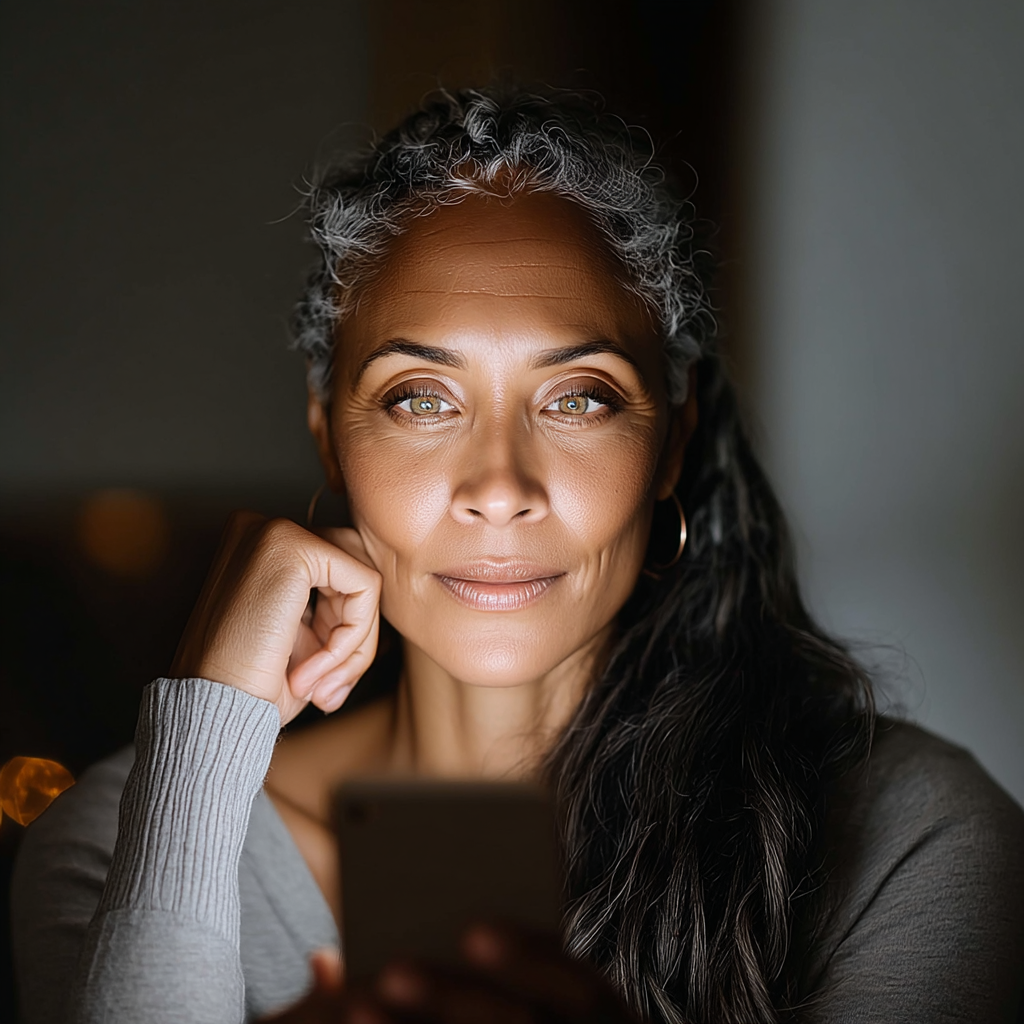
A midlife Black woman is on her couch, wrapped in a blanket, phone lighting her face. Her heart is racing again. The hot flash she had twenty minutes ago still feels like a small electrical storm under her skin. She has a full-time job, aging parents, maybe a partner, maybe kids. What she does not have is a doctor’s appointment this week.
So she does what millions of women are doing.
She opens Instagram. She searches TikTok. She scrolls through Reels and carousels that promise “hormone hacks,” “thyroid resets,” and “the one supplement your doctor will never tell you about.”
For her, this is not entertainment.
It is triage.
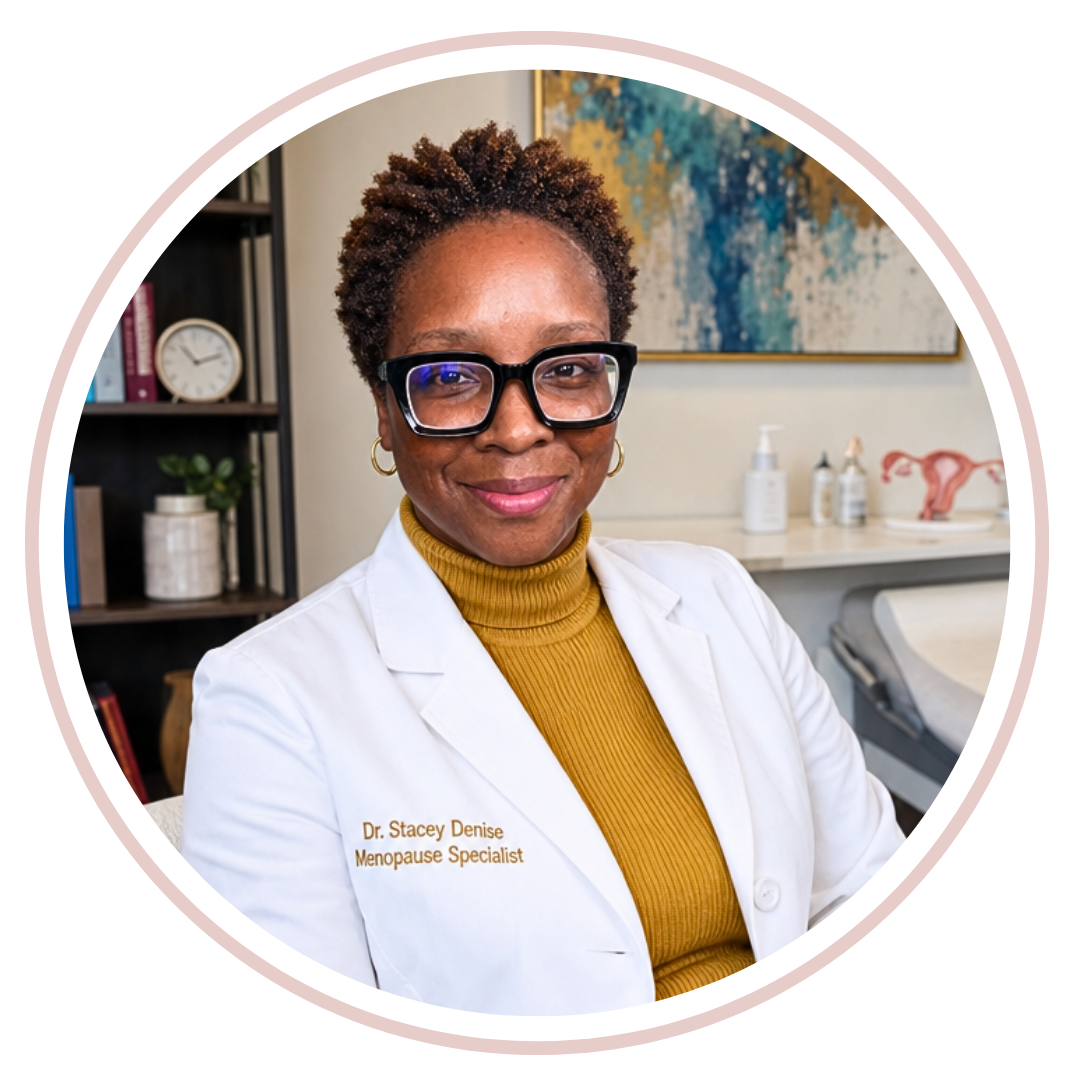
As a Black, board-certified surgeon turned menopause physician and Certified AI Consultant, I am watching more of my patients and community use social media as a first pass for health decisions. By the time they land in my practice or in my inbox, they have already:
tried protocols from strangers online
bought supplements from influencers
stitched together their own explanations for complex symptoms
In my recent posts on AI and representation, I wrote about how avatar tools and visual libraries erase midlife Black women from the frame while still accepting their subscription dollars. In Mosseri’s carousel, we heard concern about “AI slop” and the need to fingerprint authenticity.
Both conversations miss a quieter emergency.
Before we get to “AI slop,” we have to talk about people slop: unregulated health advice, wrapped in polished aesthetics, flowing directly into the nervous systems of Black women who are already medically underserved.
1. Black Women are already Self-triaging in the Feed
For many Black women, especially in midlife, social media is not just a distraction. It is:
a virtual waiting room when they cannot get into clinic
a group chat of “aunties” and “sis, have you tried…”
a search engine for symptoms that have been dismissed for years
They are not imagining this lack of care.
Black women are more likely to experience:
delayed diagnosis
undertreated pain
dismissal of perimenopause and menopause symptoms
fragmented care across multiple specialists
So when a woman like my patient opens her phone at midnight, she is not being “irresponsible” by looking for answers online. She is responding to a system that often does not respond to her.
What worries me is not that she is looking.
It is what is looking back at her.
2. The Real Risk is Not AI slop. It is Unregulated Human Confusion with an Algorithmic Megaphone
When platform leaders talk about “AI slop,” they are mostly focused on:
low-effort generated images
spammy videos
content farms using AI to flood the feed
That is one layer.
The deeper risk for Black women in health spaces looks like this:
Human beings with no clinical training making strong medical claims.
Algorithms rewarding certainty, speed, and novelty over nuance.
AI tools helping those same humans scale their content faster, in prettier packages.
AI is not waking up and deciding to deceive people. Humans are.
AI simply accelerates whatever is already there.
If the underlying behavior is confusion, ego, or profit at any cost, AI will amplify that. If the underlying behavior is care, humility, and evidence, AI can support that too.
Right now, when a midlife Black woman types “night sweats at 47” into a social search bar, the feed does not distinguish between those two value systems.
Everything is flattened into “content.”
2b. The Algorithm Is Not Neutral -- It Is a Closed Loop
Here is the mechanism nobody is talking about clearly enough.
When she opens Instagram at 11:47pm and clicks on a video about "hormone hacks," she does not just consume that content once. She teaches the algorithm something. The platform reads her engagement -- how long she watched, whether she saved it, whether she followed the creator -- and files that away as a preference signal.
The next time she opens the app, the algorithm serves her more of the same. Not because it is malicious. Because that is exactly what it was designed to do. Engagement signals interest. Interest signals more of the same.
This is the feedback loop nobody warned her about.
Based on articles retrieved from PubMed, research published in Psychiatriki on health misinformation and cognitive bias confirmed what platform engineers already know: repeated exposure to any claim -- accurate or not -- increases people's perception of its accuracy. The researchers described this as the Illusory Truth Effect. The more you see something, the more believable it becomes. And in social media environments, false information has been documented to spread significantly farther, faster, and more broadly than accurate information. (DOI: 10.22365/jpsych.2022.087)
A longitudinal study published in Health Communication found that social media engagement with health content -- not just passive exposure, but active engagement like saving, sharing, or following -- predicted future health behavior one year later. The researchers confirmed that engagement-driven recommendation systems create bidirectional reinforcement: the content you engage with shapes what the algorithm shows you, and what the algorithm shows you shapes what you engage with next. (DOI: 10.1080/10410236.2021.1930671)
For my patients, this means the following:
She searches "night sweats at 47." The algorithm notes her search. It surfaces a video from an unregulated wellness influencer promising a "cortisol reset protocol." She watches half of it. The algorithm notes the watch time. It surfaces three more videos from similar creators. She follows one. The algorithm notes the follow. Within two weeks, her entire health feed is populated by people who have no clinical training, no regulatory accountability, and no obligation to refer her to someone who does -- all telling her with complete confidence that they have the answer her doctor missed.
She is not being irresponsible. She is being algorithmically shaped.
And the creators populating her feed are not necessarily malicious. Many of them genuinely believe what they are sharing. But the platform's recommendation system does not distinguish between a board-certified physician and a charismatic person with a ring light and a confident tone. Both get rewarded for engagement. Both get amplified based on clicks, not credentials.
3. Two Rulebooks, One feed: Clinicians and Influencers Do Not Live Under the Same Consequences
Here is the tension I keep coming back to.
I practice under a medical license. Many of my colleagues do too. That means:
I am accountable to boards and governing bodies.
I can lose my license for harmful or fraudulent claims.
I am held to standards of informed consent, documentation, and transparency.
Influencers, even well-meaning ones, are not playing by that rulebook.
They may face platform bans or reputation hits, but there is no consistent, external structure that says, “You cannot tell a million women that this untested protocol will reverse their autoimmune disease.”
So we currently have:
Regulated clinicians, who are cautious, bound by evidence, and aware of risk.
Unregulated influencers, who can move fast, speak in absolutes, and rarely show their sources.
Both sets of voices are now using the same tools:
AI video generators
polished templates
trending audio and hooks
To a woman scrolling at midnight, they can look identical.
That is the problem.
4. The Credibility Signal Problem
Here is what makes this particularly dangerous for Black women specifically.
When midlife Black women are already underrepresented in health media -- missing from the faces of authority, absent from the stock imagery, erased from the "expert" accounts the algorithm surfaces -- they are also less likely to encounter credentialed clinicians who look like them in the feed.
What they encounter instead is a wellness space that has learned to speak their language aesthetically while operating completely outside the regulatory framework that protects them clinically.
The feed cannot tell the difference between a board-certified physician and a charismatic stranger with a ring light. And when the faces of clinical authority have historically looked nothing like you -- the charismatic stranger who does look like you carries a trust that regulation cannot manufacture.
That is not a failure of judgment. That is a representation gap with clinical consequences.
5. What Tech and Social Platforms can do to Protect Women Who are Already Self-Triaging
If you build products, moderate platforms, or shape algorithms, here is where I would start.
a. Elevate credential clarity, not just “authenticity”
Authenticity is not a credential. It is an aesthetic.
Give users fast, non-confusing signals about:
who is licensed
what kind of license they hold
what scope they are practicing in
Make it easy to see the difference between:
a physician explaining treatment options
a health coach discussing lifestyle support
a wellness influencer sharing personal experience
Do not flatten that into one “creator” category.
b. Introduce Friction for High-Risk Claims
If a post mentions curing diseases, reversing long-term conditions, or discontinuing medications, that content should not have the same glide path to virality as a dance trend.
Friction is not censorship. Friction is care.
That can look like:
additional review
context labels
linking to evidence-based resources alongside the content
c. Build for Representation Integrity in Health Verticals
The same representation problems I documented in AI avatar tools show up in stock imagery, recommended accounts, and “suggested for you” health content.
If Black women primarily see:
thin, young, white bodies as the face of hormone balance
one or two “diverse” creators carrying all the visible load
then the platform is not neutral. It is teaching who deserves to be centered.
Representation integrity should be a baseline requirement for any health or wellness vertical, not a campaign in February.
6. What Clinicians and Health Organizations Can Do Inside this Messy Landscape
We cannot wait for platforms to evolve perfectly before we step in. There are moves regulated clinicians and health organizations can make now.
a. Show Up Where Your Patients Already Are
If your patients are learning about menopause on social media, pretending those platforms do not exist does not protect them. It leaves them in the waiting room without you.
You do not have to become an influencer.
You can:
publish steady, clear explainer content
answer common questions without overpromising
collaborate with trusted creators who already have their audience’s nervous system
b. Be Explicit About What You Can and Cannot Do Online
Part of neuroaffirming, trauma-aware communication is clarity.
Tell people:
“This is educational, not individual medical advice.”
“Here is when you absolutely need to see someone in person.”
“Here is how to find a qualified clinician if I am not in your state or your lane.”
Many women are not trying to avoid clinic entirely. They are trying to decide whether their symptoms are “serious enough” to justify the cost, the time off, and the emotional labor of being believed.
Help them make that call with more information and less fear.
c. Build Credentialed, Culturally Grounded Health Content - And Make It Findable
The answer is not for clinicians to become influencers. The answer is for credentialed, culturally competent health content to be as easy to find as the content that is not.
That means:
Regulated clinicians showing up consistently in the spaces where patients are already searching -- not to go viral, but to be present and accurate when the algorithm surfaces health content in their specialty.
Health systems and academic medical centers partnering with creators who already have the trust of underserved communities -- not to replace cultural authority, but to add clinical depth to it.
Content that honors both the science and the lived experience of BIPOC women -- that does not force a choice between "feeling seen" and "getting accurate information."
For too long, the medical establishment has assumed that patients who seek health information outside of clinical settings are doing something wrong. But when the clinical setting has historically dismissed your pain, doubted your symptoms, and sent you home without answers -- turning to the feed is not irresponsible. It is adaptive.
The responsibility belongs to the system that created the gap, not the woman trying to navigate it at midnight.
7. A Closing Word to Product Teams, Platform Leaders, and Fellow Clinicians
I am not afraid of AI.
I am wary of any system, human or machine, that treats Black women’s bodies as afterthoughts while still counting their clicks, their data, and their dollars.
Black women are already using your platforms to make real decisions about their sleep, their hormones, their metabolism, and their mental health. They are scrolling while their kids sleep, while their partners snore, while their chest feels tight and they wonder if they can wait one more day.
They deserve better than a feed that cannot tell the difference between regulation and vibes.
If you build tools, design feeds, or wear a white coat, you are already in that room with them, whether you know it or not.
The question is not whether AI will replace authenticity.
The question is whether we will use these tools to deepen care or to automate the same old exclusions at a faster frame rate.
She is watching.
So am I.
This post sits alongside a clinical companion piece that explains what is actually happening in my patient's body during perimenopause -- and why her symptoms are more complex than her doctor's framework can hold: Why Trauma, Neurodivergence, and Menopause Collide -- And Why Your Doctor Keeps Missing It →
And if you want to understand the nervous system science behind why her environment -- including her social media feed -- affects her hormones and her sleep: What Is Neuroaesthetics? The Gentle Science of How Beauty Heals Your Brain →
Sources (via PubMed)
Giotakos O. Fake news in the age of COVID-19: evolutional and psychobiological considerations. Psychiatriki. 2022. DOI: 10.22365/jpsych.2022.087
Yang Q et al. How Does Social Media Exposure and Engagement Influence College Students' Use of ENDS Products? Health Commun. 2021. DOI: 10.1080/10410236.2021.1930671
Adjei NK et al. Ethnic differences in metabolic syndrome. Rev Endocr Metab Disord. 2024. DOI: 10.1007/s11154-024-09879-9
Moore JX et al. Metabolic Syndrome Prevalence by Race/Ethnicity. CDC PCD. 2017.
Go Red for Women. Heart disease in Black women. AHA. 2024.