Boosting Brain Power: How Art Soothes the Perimenopausal and Menopausal Brain
Updated: April 15, 2026
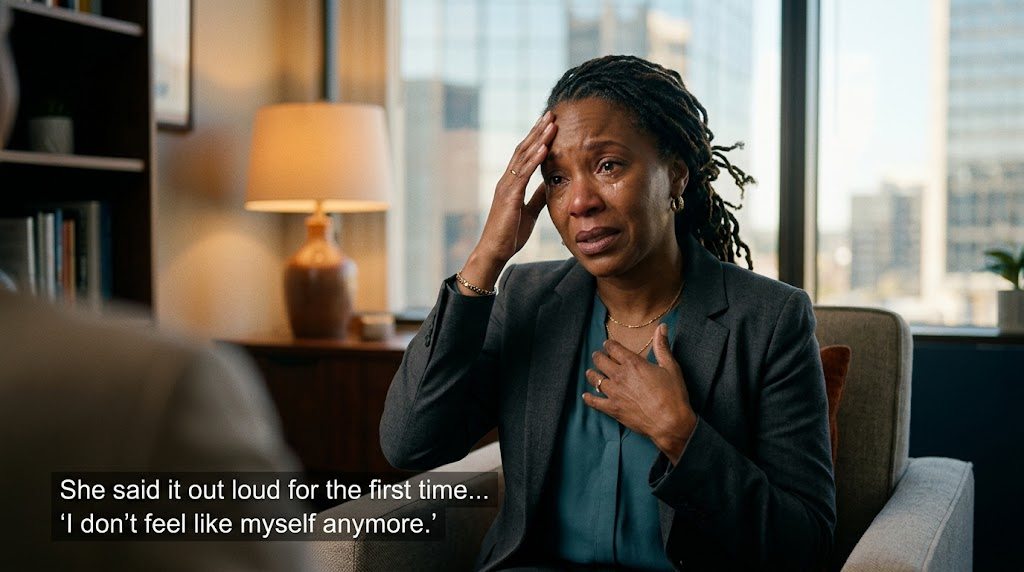
She said it out loud for the first time in my office.
"I don't feel like myself anymore."
She was a 47 year-old senior engineer and had the kind of mind that could hold five conversations at once and not drop one. And her firm had been throwing impossible problems at her for fifteen years because she was the one who could produce results flawlessly.
Until she couldn't.
The words she kept reaching for in the middle of sentences weren't there. The email she had just read ten minutes ago had evaporated. She was walking into rooms and forgetting why. And the anxiety—this low, persistent hum underneath everything that she couldn't turn down no matter what she tried, was the part nobody in her life could see.
Her OB-GYN ran her FSH, and everything looked normal.
And she sat across from me and said the thing women are saying all over this country right now—I don't feel like myself—and she was looking at me to tell her she wasn't losing her mind.
Well, she wasn't.
She was in perimenopause. And what was happening to her brain had a name and this is the part I share with you today—a set of tools that conventional medicine almost never mentions.
One of them is art.
Not art as decoration, and definitely not art as a pretty thing you hang on a wall to match your couch. But art is nervous-system medicine, and there's real data behind it. Measurable cortisol changes and a pathway into the exact symptom cluster that is stealing the hours of women in midlife.
Let me show you what the research actually says.
"I Don't Feel Like Myself" Has a Name
When my patient said that to me, I didn't rush her through the appointment because I already knew where this conversation was going, and I wanted her to sit with her thoughts for a moment. Why? Women have been handing this exact sentence to their doctors for quite some time and walking out with just a prescription for something that wasn't the root cause of what was actually happening to them.
Now, this is what caused me to want to dig deeper into what was actually going on with her and with women like her. When I did, I came across a study in the journal Menopause from 2022 called the Women Living Better Survey, and what the researchers did was simple yet powerful: they took more than fifteen hundred women between the ages of 35 and 60 and asked about their symptoms before they ever asked about hot flashes, because what they really wanted to understand was which symptoms were interfering with daily life and relationships and with a woman's sense of who she actually was. (DOI: 10.1097/GME.0000000000002090)
And the answer was not the hot flash.
The symptoms these women associated with "not feeling like myself" included brain fog, mood swings, persistent anxiety, and deep fatigue, along with vasomotor symptoms, which your doctor is actually screening for and which the pharmaceutical industry is spending its marketing budgets on, did not show up on the list of what was stealing women from themselves at all.
So you see, the thing that is making you feel like a stranger inside your own body is not what the medical system is paying attention to, and every woman who has walked out of her doctor's office with normal labs and a sympathetic hand on her shoulder already knew this before she ever left the parking lot; she just didn't have the research to put in front of anybody.
Well, now she does.
And there is more, because there is also an International Menopause Society white paper from that same year in the journal Climacteric where the authors walked clinicians through exactly what women are experiencing cognitively at this stage of life, and they were very careful to say that what women are describing is real, it is trackable across longitudinal studies, and you cannot explain it away by pointing at age. (DOI: 10.1080/13697137.2022.2122792)
And then there is a 2023 study out of the HER Centre in Australia, also in Menopause, where researchers actually built a measurement tool for what women have been trying to find words for, and they worked with over four hundred women across the three stages of this transition, which are premenopausal, perimenopausal, and early postmenopausal, and what they found was that the women in perimenopause specifically had the hardest time pulling words and memories up on demand compared to women in either the stage before or the stage after, which means the word on the tip of your tongue and the name you swear you know and the thread of the story you just lost halfway through telling it, that is not carelessness and it is not aging and it is not you, that is a transition-related dysfunction in your memory retrieval network and it has been measured and documented in a peer-reviewed journal. (DOI: 10.1097/GME.0000000000002256)
So when my patient sat across from me and said she didn't feel like herself anymore, she was not being dramatic and she was not exaggerating, she was describing a clinical phenomenon, and the medical system had nothing to offer her except an SSRI and a shrug.
That is the gap I am standing in, and that is exactly why I am telling you about art.
What Art Actually Does to a Stressed Brain
There is a study from 2016 in the Journal of the American Art Therapy Association that I keep coming back to because it is so elegant in how simple it is, and what the researchers did was take thirty-nine adults and collect their saliva before and after forty-five minutes of art making to measure their cortisol levels, and when they compared the before and after, the cortisol had gone down, measurably, across the whole group. (DOI: 10.1080/07421656.2016.1166832)
And here is the part I want you to actually hold onto, because this is the part that answers every woman who has ever told me she doesn't have a creative bone in her body — the researchers went back and asked whether having prior experience with art made any difference in the outcome, whether the medium somebody chose mattered, whether men responded differently from women, and the answer across every one of those questions was no, because the cortisol went down whether you thought you were good at it or not, whether you picked up a paintbrush or a lump of clay or just some markers and a plain notepad, and it went down because your body was engaged in something your own hands were making and nobody in the room was grading you on it.
I'm just saying.
Your nervous system does not care if you can draw, what it cares about is that you are present in your own body with your hands doing something creative for forty-five minutes without a performance attached to it, and that is the clinical dose.
And the reason this matters specifically during perimenopause and not just in general is because estrogen is not just a reproductive hormone, and I will keep saying this in every piece I write until every woman in midlife understands it in her bones, because estrogen buffers the axis that runs your stress response, and when estrogen starts declining your cortisol gets more reactive, your body takes longer to come down off of anything that triggered it, and your nervous system ends up spending more and more of its day in a sympathetic activation it can no longer find its way out of as easily as it used to — which means the question is not whether you need to be actively reducing your cortisol load during perimenopause, because you do, the question is how, and a forty-five minute art session with a documented cortisol drop is not a luxury or a self-care trend, it is one of the most accessible, barrier-free, no-prescription-required interventions available for a biological problem most of your doctors are not even asking about.
And this finding doesn't stand alone, because there is a 2020 study in Stress and Health where researchers put people under a formal mindfulness-based art therapy program on one side and just handed another group some clay to work with on the other side, and they tracked the salivary cortisol and the self-reported anxiety from beginning to end, and what came back was that both groups came down — the formal therapy group and the plain hands-in-clay group — which tells us that the biological signal is coming from the engagement itself and not from having a professional in the room, meaning you do not need a therapist and you do not need a curriculum, you need your hands in the work and the space to let them move. (DOI: 10.1002/smi.2937)
And for the neurodivergent woman whose sensory system has been quietly begging for exactly this kind of input for years — the tactile, the repetitive, the creative, the thing that does not require her to put language around what she's feeling — this is not a discovery, this is just science finally catching up to something her hands have known for a very long time, because listen, your nervous system has been doing art therapy on itself for years and it just didn't have the clinical language to say so.
Why This Matters More Now Than It Ever Did Before
I want to bring this all the way home to perimenopause specifically, because art as a general wellness idea is one thing and art as medicine for the exact neurobiology that is coming undone in midlife is something else entirely, and I want to walk you through why these two things fit together the way they do.
The first piece of this you already know from what I just shared, which is that your cortisol response is getting more reactive because the estrogen that used to buffer it is pulling back, and so your body is sitting in that activated state longer and coming down from it slower, and the 2016 cortisol study is basically a prescription written in a language your body was already fluent in before you ever picked up a paintbrush.
The second piece is that your attention and your working memory are fluctuating in ways that the Australian research confirmed are real and measurable and specific to this window of transition, and what is remarkable about art making is that it asks for a kind of sustained, present-moment attention that does not lean on the executive function you are already running short on, because it is not asking you to read something complicated or produce something coherent, it is asking your hands to take the lead and letting your brain follow them for once.
And the third piece is the one I sit with longest when I think about my patient and about the woman reading this right now, which is that your sense of who you are is shifting, and that is the real clinical meaning underneath the phrase not feeling like myself, because the Women Living Better data showed us that what women are pointing at when they say that is the brain fog and the mood and the anxiety, not the physical body, and what they are grieving is who they used to be able to be.
The art therapy research has a specific phrase for what gets rebuilt when you put your hands into creative work, and they call it creative agency, which is the felt experience of being the author of your own life and not just a passenger in it.
Creative agency. Say it out loud and let it sit there for a second.
That is exactly what the perimenopause identity crisis is quietly taking from you, and art — in a way that is specific and measurable and not abstract at all — is one of the few things that gives it back. That's all I'm saying.
What This Looks Like — The Neuroaesthetic Reset Method™ Approach
I am not asking you to become a painter and I am not asking you to sign up for a class where you are going to spend the whole time feeling watched, I am asking you to bring art into your environment and into your hands in a way that speaks directly to your nervous system during this transition, and there are two pieces of this I want to walk through with you, the art you see and the art you make, and both of them matter.
The art you see.
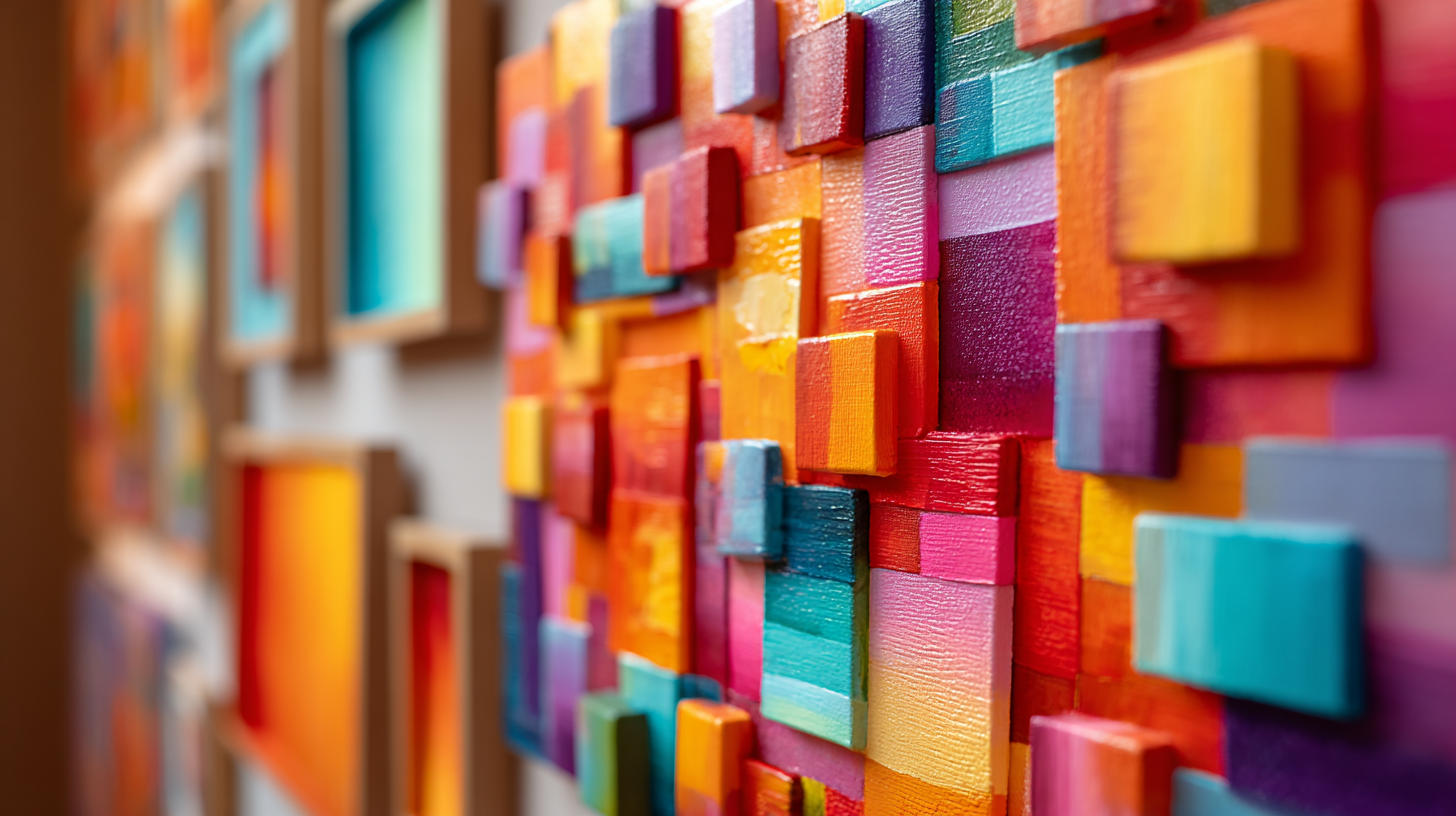
The work you hang on your walls is not decoration, it is information your brain is processing every single time your eyes land on it, and it is either telling your nervous system that this environment is safe and tended and yours, or it is adding to the noise, and your nervous system is reading that signal continuously whether you are consciously aware of it or not, which means that choosing what you put on your walls is not an aesthetic decision, it is a clinical one.
So I want you to think about one piece that your body exhales when it sees it — and I don't mean the piece that is trending, I don't mean the piece the designer chose because it matched the couch, I mean the piece that makes your shoulders drop when your eyes land on it — and then I want you to put that piece somewhere your eyes naturally fall when you are at rest, which might be across from your bed or at eye level from where you sit to work or in the kitchen where you pause throughout the day, and know that that piece is doing something to your amygdala every time you walk past it even when your conscious mind is somewhere else entirely.
For women in perimenopause especially, soft edges tend to do more regulating work than hard geometric ones, organic curves calm faster than sharp angles, and warm or muted tones carry a different signal than high contrast pieces, because your sensory threshold is lower now than it was at thirty-five and your home environment is supposed to be resting you, not performing for someone else.
The art you make.
Forty-five minutes — that is the dose the 2016 study gave us — and it does not have to be good, it does not have to be shown to anyone, it does not have to be anything except you and your hands and a medium that doesn't overwhelm your sensory system and one window of time you are protecting for your own nervous system, and I'll tell you what that looks like depending on who you are.
If you are the woman who is certain she cannot draw, watercolor on wet paper does most of the drawing for you because the water moves and you follow it and there is genuinely no way to be precise, which removes the performance before you even begin. If you are the woman who needs structure to feel safe enough to relax, adult coloring pages are validated in the clinical stress research and do not let anyone make you feel like that doesn't count, because it does. If you are the woman who needs to move her hands without facing a blank canvas, collage gives you scissors and paper and images you can pull together until something on the page starts to look like you. And if you are the woman who needs her hands in something with weight to it, clay is exactly what the 2020 researchers put in people's hands, because the pressure and the resistance of it meets a neurodivergent sensory system right where it actually lives.
The medium is not the medicine. The engagement is.
And then there is a third piece of this that I can't quite fit inside the research citations but I believe in completely, which is that when you walk into your own home and what is hanging on the wall is something you chose — not because it matched anything, not because the market told you to, not because someone else approved of it — that is an act of self-authorship during a phase of life when so much of what is happening feels like it is happening to you and not with you, and for the woman navigating perimenopause who has spent years tending to everyone else's environments while her own went untended, choosing what goes on her walls is not interior design, it is a declaration, and every morning when she walks past it her nervous system receives the same message: I am still here, I am still becoming, and this space is mine.
For the Woman Whose Doctor Offered Her Nothing
I want to speak directly to you now, and I mean you specifically.
If you have walked out of a doctor's office with normal labs and no plan, and you have been told that what you are experiencing is just aging or just stress or just life and you need to manage your expectations, and you know in your body that it is more than that and you have been made to feel dramatic or difficult for saying so — I want you to know that everything I've shared with you today exists because women like you kept saying so anyway.
Art is not a replacement for clinical care, and I want to be honest about that, because comprehensive labs and proper hormone evaluation when it is indicated and a provider who actually listens are things that matter, and I practice this kind of medicine because I believe it makes a real difference in real women's lives.
But for the woman who cannot access that right now — whether that is a financial reality or a geographic one or simply the result of being dismissed so many times that she cannot make herself walk into one more waiting room — art is medicine that belongs to her, because it has no contraindications, it requires no insurance, it works on the biological systems that are most disrupted during this transition, which are her cortisol rhythm and her autonomic nervous system and her capacity to feel present to her own life, and nobody can take it away from her.
The canvas on her wall. The forty-five minutes on a Sunday morning with her hands in paint and nobody watching. The museum she goes to alone because the moment she walks through the door something in her nervous system exhales.
That is healing. It has always been about the healing. And it is hers.
Join the Conversation
If you are navigating perimenopause or menopause and you are looking for a community of women who understand that brain fog and anxiety and that not feeling like myself experience are not character flaws but documented clinical symptoms with real tools behind them, the Auntie Menopause Circle is where we have these conversations every week.
Come join us.
Join the Auntie Menopause Circle →
Want to understand the science behind why your environment matters so much during menopause? Start here: What Is Neuroaesthetics? The Gentle Science of How Beauty Heals Your Brain →
And read this next because color is the other half of this conversation: Your Color Hue Is a Nervous System Signal: The Ayurvedic Approach to Color Therapy for Neurodivergent Women in Perimenopause →
For the environment version of this work: 5 Ways to Bring Nature Indoors for the Neurodivergent Perimenopausal Brain →
Sources
Kaimal G, Ray K, Muniz J. Reduction of Cortisol Levels and Participants' Responses Following Art Making. Art Therapy. 2016. DOI: 10.1080/07421656.2016.1166832
Abbott R, Chang DD, Eyre HA, Bousman CA, Merrill DA, Lavretsky H. Therapeutic psychological and biological responses to mindfulness-based art therapy. Stress and Health. 2020. DOI: 10.1002/smi.2937
Maki PM, Jaff NG. Brain fog in menopause: a health-care professional's guide for decision-making and counseling on cognition. Climacteric. 2022. DOI: 10.1080/13697137.2022.2122792
Zhu C, Thomas EH, Li Q, Arunogiri S, Thomas N, Gurvich C. Evaluation of the Everyday Memory Questionnaire-Revised in a menopausal population. Menopause. 2023. DOI: 10.1097/GME.0000000000002256
Woods NF, Coslov N, Richardson MK. Effects of bothersome symptoms during the late reproductive stage and menopausal transition: observations from the Women Living Better Survey. Menopause. 2022. DOI: 10.1097/GME.0000000000002090
NOTE: This post was originally published on Ceyise Studios, my design and neuroaesthetics platform, and has been brought here to drstaceydenise.com because it is foundational to the clinical work I now do with neurodivergent women navigating perimenopause and menopause. Some of those original posts have been retired. Others have been expanded into updated companion pieces that go further than the original could. Where a newer version exists, you will find a link to it at the top or bottom of this post.