Your Color Hue Is a Nervous System Signal: The Ayurvedic Approach to Color Therapy for Neurodivergent Women in Perimenopause
Updated: April 13, 2026
She has tried everything.
She went to her OB-GYN and was told her labs were normal. She went to a functional medicine doctor who gave her a supplement protocol she couldn't afford. She read every perimenopause book she could find and recognized herself in some of it but not all of it—because the books kept describing a woman who was just tired and hot, and she was so much more than that.
She was dysregulated. She was sensory-overwhelmed. She was losing words mid-sentence and crying in parking lots and waking at 3am with her heart pounding and her nervous system convinced something was wrong.
And then she walked into a room painted the wrong color and felt it in her chest before she understood why.
That moment—that involuntary physical response to color—is not a personality quirk. It is your nervous system doing exactly what it was designed to do. Reading your environment for safety cues. Processing wavelengths of light before your conscious brain has registered anything at all.
That's what I want to talk about today. Because for women like her—like you—color is not a design preference. It is medicine. And Ayurveda figured that out 3,000 years before we had the neuroscience to explain why.
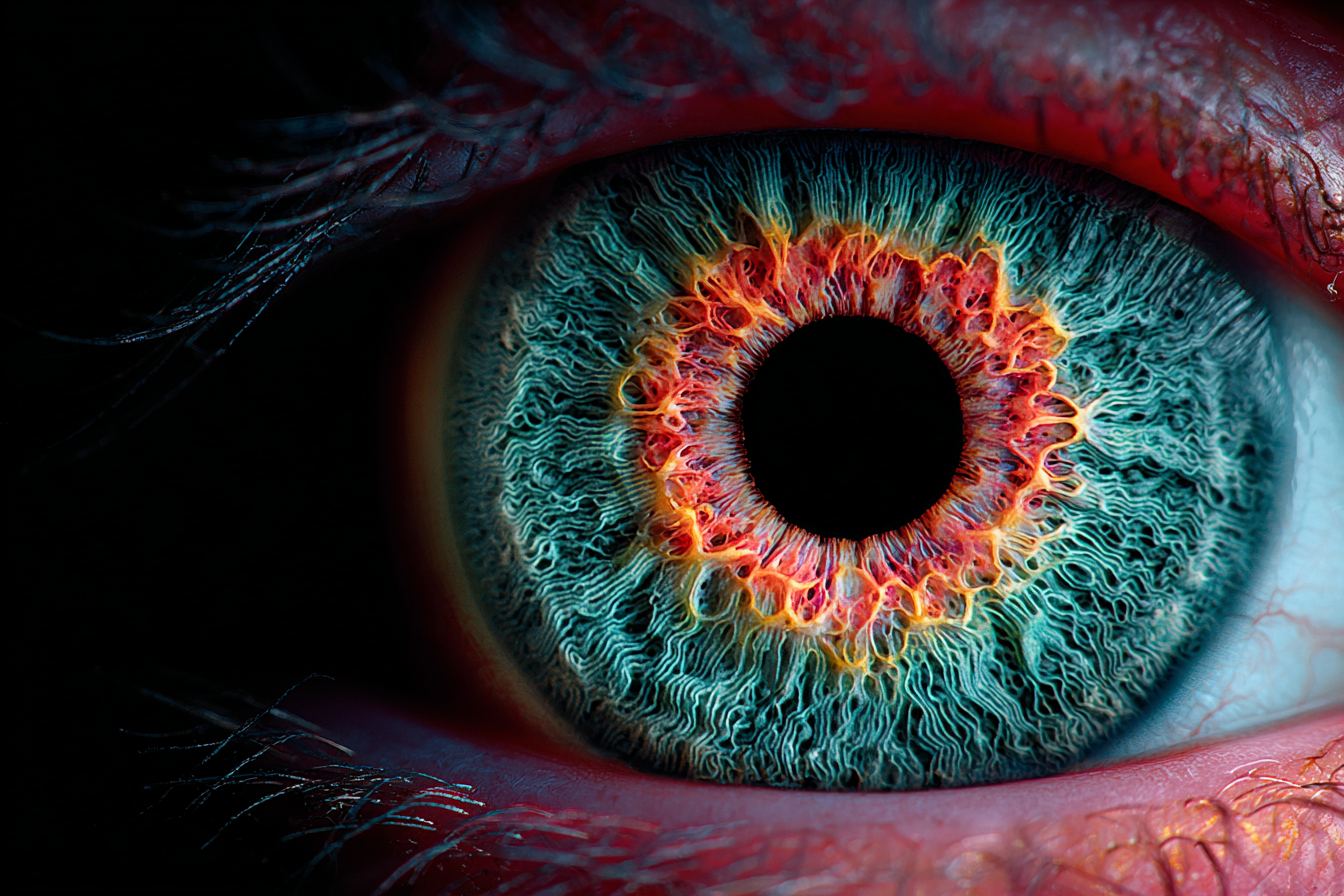
Why Color Is Biology Before It Is Aesthetics
Let me tell you what actually happens when you see a color.
Light enters your eye as wavelengths. Those wavelengths are processed by specialized retinal cells—including melanopsin-containing cells that connect directly to the suprachiasmatic nucleus in your hypothalamus, your brain's master clock. This is the same clock that regulates your circadian rhythm, your cortisol curve, your melatonin production, and your core body temperature.
Color—specifically the wavelength of light you are exposed to—is the primary signal your brain uses to know what time it is and how your body should be responding.
Based on articles retrieved from PubMed, a 2019 review published in the Journal of Biophotonics confirmed that short wavelengths perceived as blue are the strongest synchronizing agent for the entire circadian system—directly suppressing melatonin secretion and keeping the nervous system in an alert, activated state. (DOI: 10.1002/jbio.201900102)
A 2022 study in IJERPH further confirmed that chronic exposure to blue-spectrum artificial light at night disrupts pineal melatonin production—a condition the researchers called chronodisruption -- which is associated with a cascade of downstream health effects. (DOI: 10.3390/ijerph19031849)
This is why the color temperature of your bedroom light at 9pm is a clinical decision, not a decorating one. This is why the warm amber tones of sunset reliably make most people feel sleepy. This is why the harsh blue-white lighting in most hospitals and offices keeps your nervous system in a state of low-grade alert even when nothing is wrong.
Color is not ambiance. Color is information. And your nervous system is reading it constantly whether you are aware of it or not.
This is the scientific foundation inside The Neuroaesthetic Reset Method™—and it is exactly what Ayurveda encoded in its ancient framework of doshas and color thousands of years ago.
What Perimenopause Does to Your Color Sensitivity
Before we get to Ayurveda, I need to say something that most menopause providers skip.
When estrogen declines, your autonomic nervous system becomes less regulated. Hot flashes are not just a hormonal event—they are a sympathetic nervous system firing event. Based on articles I came across on PubMed, a 2021 review in the Annals of Internal Medicine confirmed that vasomotor symptoms like hot flashes are driven by sympathetic nervous system activation in the context of falling estrogen, which narrows the thermoneutral zone and makes the body more reactive to smaller triggers. (DOI: 10.7326/AITC202107200)
What this means in practical terms: your nervous system is already running closer to its threshold. The sensory inputs that you could filter before—the flickering light, the jarring color, the harsh overhead fluorescent—are now much harder to ignore. You are not more sensitive than you used to be as a character flaw. You are more sensitive because your biological buffering capacity has changed.
For neurodivergent women, this is not a gradual shift. This is a cliff.
If you have been masking your sensory sensitivities for decades—managing environments that were never built for your nervous system—perimenopause removes the hormonal scaffolding that was helping you cope. What felt manageable before now feels unbearable. What felt like quirks now feel like emergencies.
And conventional medicine responds by checking your FSH and telling you everything looks normal.
This is why color regulation—intentional, personalized, nervous-system-informed color choices—matters more during perimenopause than at any other time in your life. And this is where Ayurveda has something remarkable to offer.

What Ayurveda Actually Got Right
Ayurveda is the world's oldest documented system of individualized medicine. More than 3,000 years old, it is built on a core insight that resonates deeply with modern polyvagal theory and nervous system science: not every body is the same, not every nervous system responds the same way, and healing must be individualized to the person in front of you.
The Ayurvedic framework of doshas describes three fundamental constitutional types—Vata, Pitta, and Kapha—each reflecting a different combination of elemental energy and a different nervous system signature.
I am not asking you to adopt Ayurveda as a complete system. I am asking you to look at these three profiles and see what they have been trying to tell us about nervous system types—because when I read them through the lens of The Neuroaesthetic Reset Method™ and my Color Archetype framework, the mapping is remarkable.
Vata: Space and Air -- The Scattered, Sensitive Nervous System
The Vata constitution in Ayurveda is described as creative, quick to learn, easily distracted, prone to anxiety, and chronically cold. Vata types struggle with sleep. They scatter easily. They are often gifted but overwhelmed.
In nervous system language: Vata describes a person who lives in a chronically activated, dysregulated sympathetic state that tips easily into freeze. In my Color Archetype framework, Vata maps most closely to the Blush Empath and Lavender Oracle archetypes—women in shutdown, masking fatigue, and intuitive overwhelm. The Silent Suppressor who carries everything internally until the system collapses.
Ayurveda prescribes earthy, warm, grounding colors for Vata types—deep reds, warm browns, soft greens, rich beiges. Not because these colors are fashionable but because they provide the nervous system with the opposite signal of what keeps it dysregulated. Warmth over coolness. Weight over lightness. Rootedness over scatter.
For perimenopausal Vata women: Your hot flashes may actually be less frequent than Pitta women but your anxiety and sleep fragmentation will be significant. You need colors that ground you—warm amber lighting in the evening, earth tones in your bedroom, and the deliberate removal of cool blue-white light sources after 7pm.
Pitta: Fire and Water -- The Overheated, Reactive Nervous System
Pitta in Ayurveda is described as fiery, passionate, athletic, goal-driven, intensely competitive, and prone to inflammation and heat. Pitta types run hot—literally and figuratively. They are prone to skin flare-ups, digestive intensity, and the kind of mood that arrives sharp and fast.
In nervous system language: Pitta describes a person with a chronically activated sympathetic state that expresses as fight rather than freeze. In my Color Archetype framework, Pitta maps to the Yellow Radiant and Red Liberator archetypes—the Overstimulated Seeker in hyper-vigilance and expressive burnout. She moves fast, feels deeply, and has no idea how to turn it off.
Ayurveda prescribes cooling, soft, muted colors for Pitta types—soft blues, lilacs, pinks, silver, white. These are the colors that tell an overheated nervous system to exhale. Not stimulate—soothe.
For perimenopausal Pitta women: This is you if hot flashes are your dominant symptom. Your sympathetic nervous system is already running hot and falling estrogen is narrowing your thermoneutral zone further. Cool tones in your sleep environment are not an aesthetic choice. They are a physiological intervention. Replace warm-orange nightlights with soft blue-green night lighting. Bring cooler textiles into your bedroom. Remove red and orange from the spaces where you are trying to rest.
Kapha: Earth and Water—The Heavy, Withdrawn Nervous System
Kapha in Ayurveda is described as steady, empathic, peaceful, slow to anger, and prone to withdrawal, heaviness, oversleeping, and emotional flatness. Kapha types are the ones who seem fine to everyone around them—and who are quietly disappearing inside.
In nervous system language: Kapha describes a person in dorsal vagal dominance—the most evolutionarily primitive shutdown state, characterized by low arousal, emotional numbing, and disconnection from the body. In my Color Archetype framework, Kapha maps to the Sage Grounded and Teal Harmonizer archetypes—the Grounded Visionary in performance calm or emotional flatness. She overfunctions with a still face and an exhausted interior.
Ayurveda prescribes activating, bright, warm colors for Kapha types—emerald green, gold, bright yellow, orange, vivid purple. Colors that say: come back. You are still here.
For perimenopausal Kapha women: Your perimenopause may look like depression because that is how dorsal vagal shutdown presents. You are sleeping more than usual but waking unrefreshed. You are withdrawing socially. You have stopped caring about things you used to love. Conventional medicine will offer you an antidepressant. I am also asking you to look at your visual environment—because if you are surrounded by muted, grey, low-contrast colors, your nervous system has no activation signal. Bring in one vivid color. It matters.
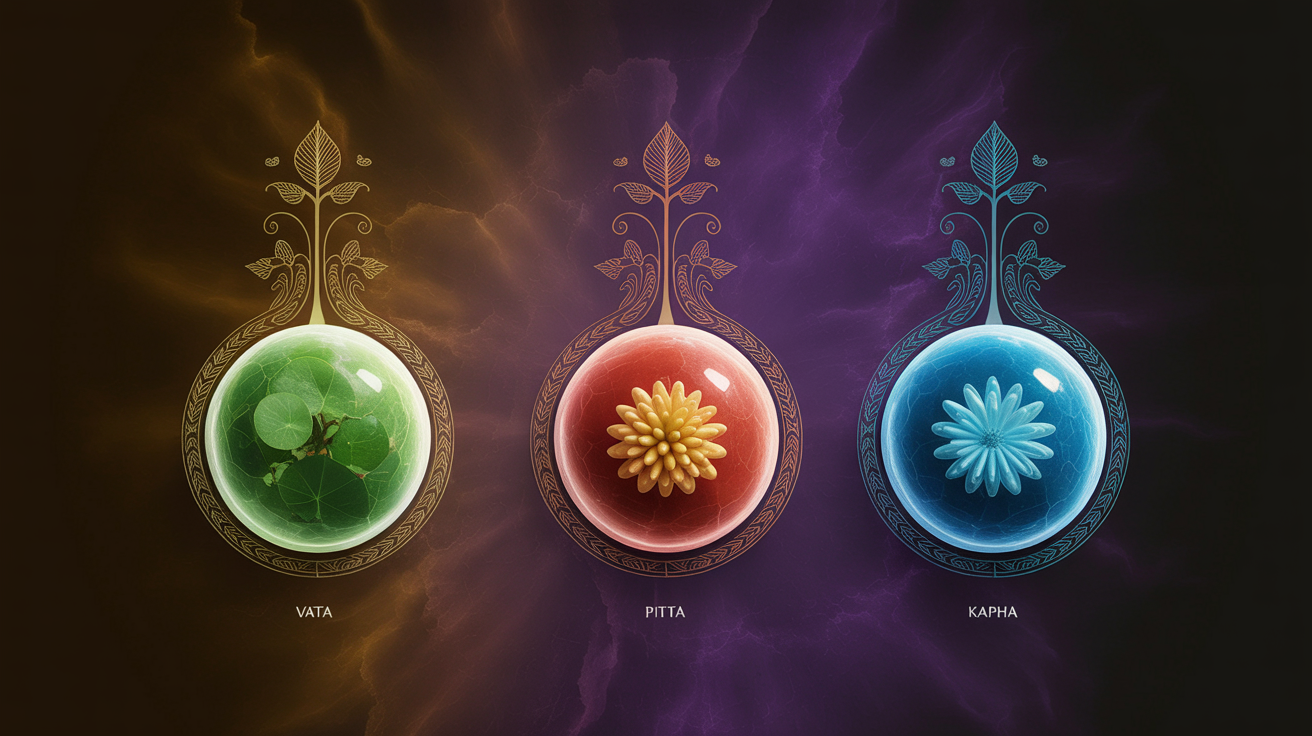
The Color Archetype Quiz—Find Your Hue
The three doshas are not diagnoses. They are entry points into self-recognition. And for women who have spent their lives being told their nervous systems are too much—Ayurveda's 3,000-year-old insistence that different bodies need different things is a form of validation that modern medicine is still struggling to offer.
In The Neuroaesthetic Reset Method™, I extended this framework into nine Color Archetypes, each mapped to a nervous system profile, a menopause symptom constellation, and a set of color, texture, scent, and ritual cues designed to support regulation.
The Color Archetype Quiz 3.0 helps you identify which archetype reflects your current nervous system state—not your personality, not your favorite color, but the state your body is operating from right now, during this transition.
Because perimenopause changes things. The dosha you identified with at 35 may not be the same as the one that needs support at 48.
[Take the Color Archetype Quiz 3.0 →] (coming soon—join the Auntie Menopause Circle to be the first to know when it launches)
For the Woman Who Cannot Take HRT
I want to speak directly to you.
If you have significant fibroids, a family history of hormone-sensitive cancer, or a clotting disorder, or if you have simply been so dismissed by the medical system that you are done walking into doctors' offices with hope—this is for you.
Hormone therapy is a legitimate and often life-changing intervention for many women in perimenopause. I support it. I prescribe it when it is appropriate and safe. But it is not appropriate or safe for everyone. And for the women it does not fit, the medical system has historically had very little else to offer.
Nervous system regulation through color, light, texture, sound, and scent is not alternative medicine. It is not a replacement for clinical care. But it is medicine that is always available to you, has no contraindications, requires no prescription, and works directly on the biological systems that are most disrupted during perimenopause—your autonomic nervous system, your circadian rhythm, and your sensory processing capacity.
Your environment is not neutral. It is either working with your nervous system or against it. Choosing that intentionally—starting with something as simple as the color of the light in your bedroom—is a clinical act.
I'm just saying.
Join the Conversation
If you are navigating perimenopause without HRT and looking for women who understand the intersection of hormones, nervous system health, and sensory experience—the Auntie Menopause Circle is where we go deeper.
Come join us.
Join the Auntie Menopause Circle →
Want to understand how color connects to your nervous system in your physical environment? Read this: 5 Ways to Bring Nature Indoors for the Neurodivergent Perimenopausal Brain →
And start here if you haven't already: What Is Neuroaesthetics? The Gentle Science of How Beauty Heals Your Brain →
Sources (via PubMed)
Wahl S et al. The inner clock -- Blue light sets the human rhythm. J Biophotonics. 2019. DOI: 10.1002/jbio.201900102
Menendez-Velazquez A et al. Light Pollution and Circadian Misalignment. Int J Environ Res Public Health. 2022. DOI: 10.3390/ijerph19031849
McNeil MA, Merriam SB. Menopause. Ann Intern Med. 2021. DOI: 10.7326/AITC202107200
NOTE: This post was originally published on Ceyise Studios, my design and neuroaesthetics platform, and has been brought here to drstaceydenise.com because it is foundational to the clinical work I now do with neurodivergent women navigating perimenopause and menopause. Some of those original posts have been retired. Others have been expanded into updated companion pieces that go further than the original could. Where a newer version exists, you will find a link to it at the top or bottom of this post.