Sleep Architecture In Menopause: 3 Essential Tools to Block Light and Sleep Deeper
Affiliate Disclosure: Some links in this article are affiliate links. This means I may earn a small commission if you choose to purchase through them, at no additional cost to you. I only recommend tools I personally use with patients or in my own life, and all opinions are my own.
The Hyundai dealership
Sleep architecture in menopause is fragile, and light at night can disrupt it more than most women realize.
I live behind a car dealership.
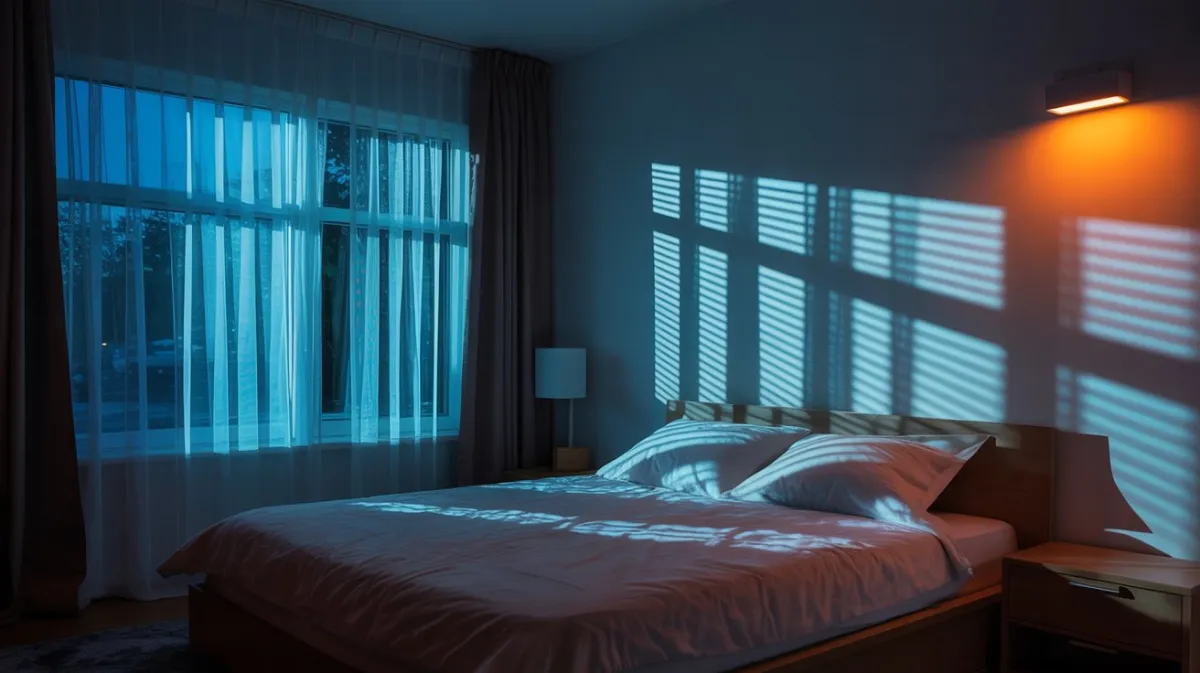
Every night, their floodlights blast through my bedroom window. My neighbors have security lights that never turn off. The streetlamps are that harsh, sodium-vapor orange.
For years, I thought this light was just annoying. I treated it like a nuisance—something to complain about, but not something to fear.
I was wrong.
New research on 89,000 adults has changed how I look at my window. The data found that people sleeping in the brightest bedrooms had a 56% higher risk of heart failure and a 47% higher risk of heart attack than those sleeping in darkness
Let that sink in.
Even after controlling for smoking, blood pressure, and sleep duration, light at night was an independent cardiovascular risk factor.
If you are a woman in perimenopause, your sleep architecture is already fragile. Your melatonin is dropping. Your sympathetic nervous system (fight-or-flight) is twitchy. When you add light pollution to that mix, you aren’t just losing sleep. You might be risking your heart.
Here is why darkness matters more than you realize—and the specific tools I use to reclaim it.
Transparency Note: This post contains affiliate links to the tools I personally use and trust. If you purchase through them, I may earn a small commission at no extra cost to you. This is educational, not personal medical advice. Always talk with your clinician about what is right for you.
Insight 1: Sleep Architecture In Menopause and Light as a Drug
We think of light as neutral. It’s not. Light is a biological signal.
When your skin and retinas sense light at night—even while your eyes are closed—your brain gets a mixed message. It thinks the sun is rising.
This triggers your sympathetic nervous system to rev up. Your heart rate stays elevated. Your heart rate variability (HRV) drops. Your glucose metabolism shifts.
In a lab study, even moderate room light (100 lux) during sleep was enough to increase insulin resistance the next morning compared to sleeping in dim light (<3 lux).
You are lying in bed trying to rest, but your autonomic nervous system is running a marathon because the streetlamp outside is telling it to go.
Insight 2: The Perimenopause Pile-On
If you were 25, you might sleep through the streetlamp. But you are not 25. You are Vivienne.
You are navigating perimenopause, which means:
- Your melatonin is lower: The hormone that protects your sleep architecture is naturally declining.
- Your cortisol is higher: You are more prone to "micro-arousals" (waking up briefly) throughout the night.
- You are heat-sensitive: Hot flashes disrupt your deep sleep cycles.
When you add light pollution to this, it’s like pouring gasoline on a fire. The blue light from your neighbors’ security system suppresses what little melatonin you have left. The result is "fragmented sleep architecture"—you might be in bed for 8 hours, but you aren’t getting the deep, restorative waves your brain needs to clean itself.
Insight 3: Sleep Architecture Includes Your Gear
We spend so much time talking about supplements (the melatonin gummies, the magnesium). We spend almost no time talking about the neuroaesthetics of our bedroom.
As I recently shared in Livingetc, the bedroom environment isn’t just about aesthetics. Light exposure, temperature, and material choices directly influence how protected your sleep architecture is throughout the night.
You cannot control the car dealership. You cannot shoot out the streetlights (tempting as it may be).
But you can control what touches your face and body.
Optimizing your environment isn’t vanity. It is a legitimate medical intervention. Here is my "Environmental Triage" kit for protecting your heart and your sleep.
Solution A: The Portable Blackout Curtain
If your room isn’t pitch black—and I mean "can’t see your hand in front of your face" black—your brain is sensing light.
I don’t travel without my Manta Sleep Mask.
Unlike the flimsy airline masks that press on your eyelids, this one has deep eye cups. You can blink freely. It creates a complete seal, blocking 100% of the light without smashing your lashes.
It is basically a portable cave. When I put it on, my nervous system immediately gets the signal: It is safe to power down.
Shop the Manta Sleep Mask Here
Solution B: Thermoregulation is Sleep Preservation
You wake up at 3 a.m. sweating. You throw the covers off. Ten minutes later, you’re freezing. This "cover dance" destroys your REM cycles.
Cotton sheets get wet and stay wet. You need fabric that actively pulls heat away from your body.
I switched to Bamboo Viscose Pajamas and never looked back. Bamboo is naturally temperature-regulating and moisture-wicking. It feels cooler to the touch than cotton and doesn’t trap the heat from a hot flash against your skin.
Shop My Favorite Cooling Bamboo PJs
Solution C: Track Patterns, Not Failures
I use my Oura Ring not to judge myself, but to be a scientist.
I used to think I slept "fine" with the blinds open. The data told a different story. I saw my Deep Sleep scores tank on nights when the room was brighter or hotter.
Data is just a feedback loop. It helps you see if the mask is working. It helps you see if the cooling PJs actually kept your heart rate down.
You Can’t Fix the World, But You Can Fix Your Room
Your bedroom is your sanctuary. It is the one place where your nervous system should not have to be on guard.
If you are sleeping in a room that glows orange from streetlights, you are asking your body to do the impossible. You are asking it to rest while screaming at it to wake up.
Protect your eyes. Cool your skin. Darken your cave.
Your heart will thank you.
Ready to build your sleep sanctuary?
If you’re ready to stop guessing what’s waking you up, take my Sleep Pattern Decoder Quiz. We’ll map your chronotype and give you a personalized plan to reclaim your nights.
Sources:
- JAMA Network Open (Light at Night & Heart Health)
- PNAS (Light Exposure & Insulin Resistance)
- Study Finds (Bedroom Light Risks)