Why Skincare Stopped Working in Perimenopause — Gut Connection
Why Nothing You Put On Your Skin Is Working Anymore
You haven't changed your skincare routine. You might have even upgraded it—buying better serums, more targeted ingredients, and higher price points.
And your skin tone looks dull. It still feels reactive. It still has a deep, underlying dryness that absolutely nothing topical seems to touch.
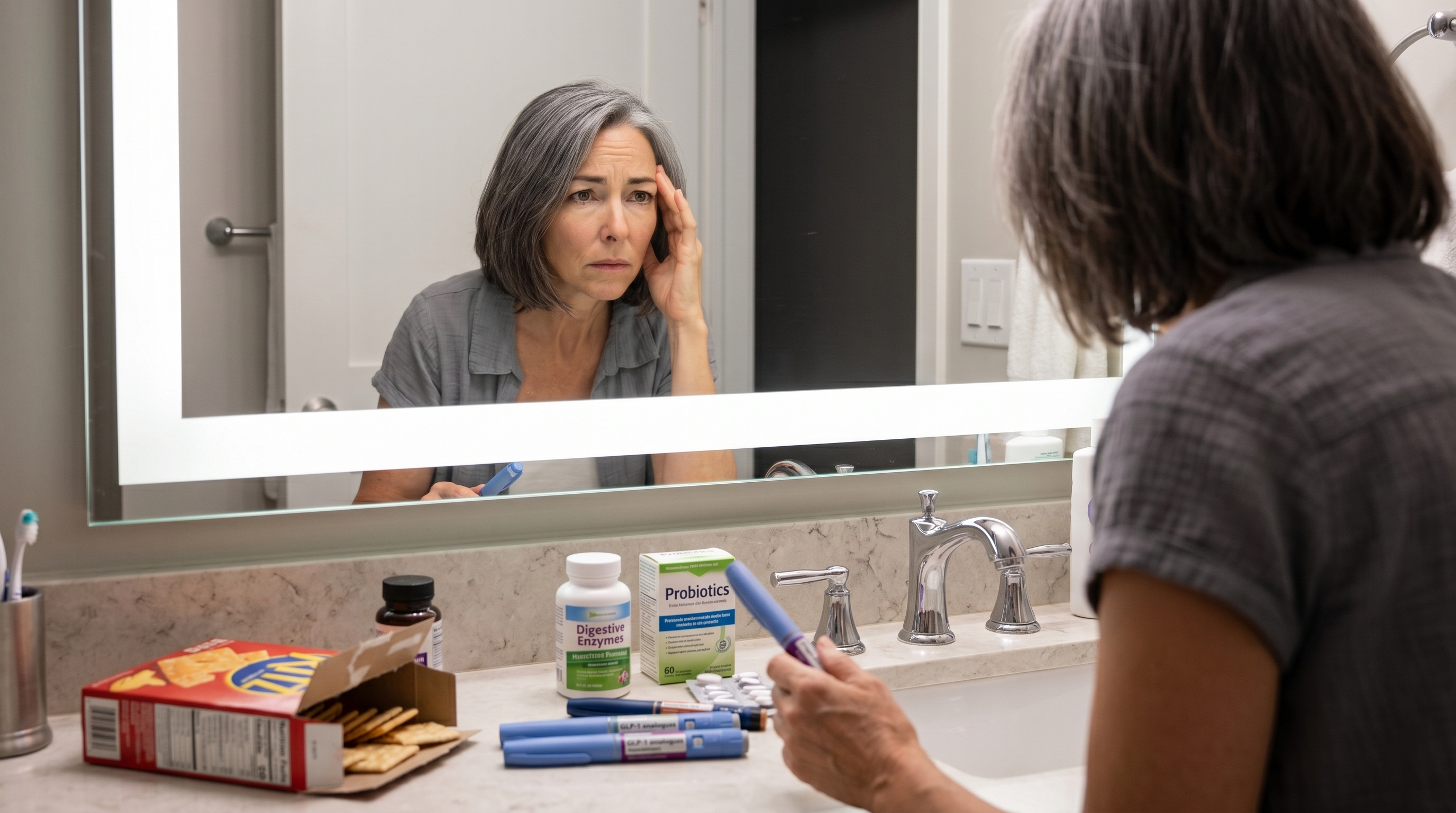
If sudden perimenopause skin changes have you confused and frustrated about why your expensive routine stopped working, the answer probably isn't on your face.
It's in your gut.
Why Topical Products Can't Fix an Internal Problem
Your skin barrier and your gut lining are structurally related. Both are single-cell-layer barriers designed to keep what belongs inside from leaking out. Both depend on "tight junctions"—the vital connections between cells that maintain their integrity.
And crucially,both are directly influenced by estrogen.
When estrogen declines in perimenopause, two massive changes happen simultaneously that your serum can't fix:
In your skin:Collagen production slows down. Fibroblasts—the specific cells that manufacture collagen and elastin—become less active. Your skin loses its moisture-binding capacity at the cellular level. The light stops bouncing off it the same way.That is the sheen going quiet.
In your gut: Tight junctions loosen. The gut lining becomes permeable. Inflammatory signals that should stay safely inside your intestine cross into the bloodstream. They show up on your skin as sudden dryness, reactivity, and dullness that doesn't respond to anything you apply externally.
"A serum can't repair tight junctions. Only food can do that."

3 Foods That Repair Both Systems at Once
To get your glow back, you have to feed the cellular structure of both your gut and your skin. Here are the three most powerful foods that do both simultaneously:
1. Bone Broth (The Building Block)
Bone broth is the most direct source of glycine and proline—the exact amino acid precursors your body uses to build new collagen in your skinandrepair the tight junctions in your gut lining.Use it anywhere you'd normally use water or stock.
2. Vitamin C Paired with Protein (The Catalyst)
Vitamin C is the non-negotiable cofactor your body requires to convert amino acids into collagen.Without it, the conversion stalls.Most women in perimenopause are getting far less Vitamin C than they need because it rapidly depletes under chronic stress. Pair bell peppers, kiwi, or broccoli with your protein at every single meal.
3. Omega-3 Fatty Acids (The Fire Extinguisher)
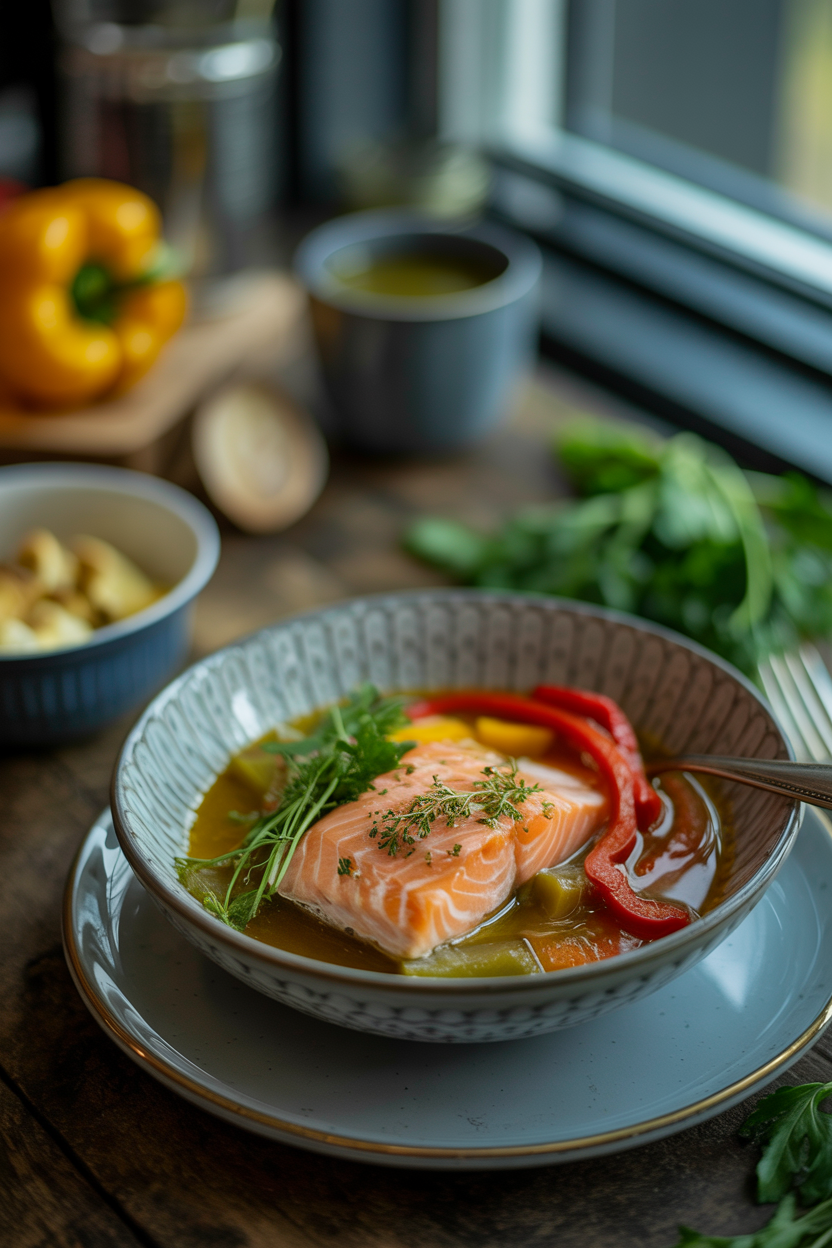
Omega-3s from wild salmon, sardines, or walnuts reduce the systemic inflammation that drives both gut permeability and skin reactivity at the same time.Two servings of fatty fish a week is the whole protocol.
What to Try This Week
You don't need a complicated new routine. Start with these two simple swaps:
One Swap:Use bone broth instead of water the next time you cook rice, quinoa, or roasted vegetables. It takes zero additional effort, but it is actively working on your gut lining and your skin matrix at the same time.
One Addition:Eat a half cup of bell pepper with your next protein meal. That is your Vitamin C paired perfectly with your collagen precursors. Your skin needs both of them together to build anything.
One More Thing About Hydration
Estrogen-deficient skin loses its moisture-binding capacity at the cellular level. This means your topical moisturizers are actively working against a cellular deficit.Hydration has to come from inside.
Herbal teas count. Cucumber water counts. Warm lemon water counts. Anything consistent and without caffeine counts.If your lips are dry, your skin is already behind.
The Key Takeaway
Your skin barrier and gut lining share the exact same structural needs. When estrogen drops in perimenopause, both barriers become compromised. Instead of relying solely on topical skincare, focus on internal hydration, collagen-building amino acids, and Vitamin C to repair your skin from the inside out.
Want to See What's Driving the Skin and Gut Connection?
The GI-MAP at my lab shop shows exactly what's living in your gut microbiome—the bacteria, the diversity, the inflammation markers—so you're not guessing at what your skin is trying to tell you.
Take the Next Step
Find out if the Skin Alarm is your specific gut pattern.
If your skin is showing up as your loudest, most frustrating perimenopause symptom, the Gut Saboteur Quiz will confirm whether the Skin Alarm profile matches what is actually happening inside your gut.
Take the Free 2-Minute Gut Saboteur Quiz →
Sources:
Lephart ED, Naftolin F. Menopause and the Skin. Dermatol Ther (Heidelb). 2020.DOI: 10.1007/s13555-020-00468-7
Viscomi B et al. Managing Menopausal Skin Changes. J Cosmet Dermatol. 2025.DOI: 10.1111/jocd.70393
Affiliate Disclosure: Dr. Stacey Denise is a participant in the Amazon Services LLC Associates Program. I may earn a small commission if you purchase through my links at no extra cost to you. I only recommend products I personally use or would recommend to my patients.
Disclaimer: This article is for educational purposes only and does not constitute medical advice or establish a doctor-patient relationship.
Published: April 2026 | Dr. Stacey Denise | The Neuroaesthetic MD™