
When Winter Feels Like More Than Just the Cold: The Neuroaesthetic Medicine of Seasonal Affective Disorder
Updated: April, 2026
There is a particular kind of exhaustion that shows up in November and does not leave until March.
It's not the tired you get from a long week or a bad night of sleep, it's something heavier and quieter than that, and it settles in behind your eyes and sits on your chest and makes the things you love feel very far away. The motivation disappears. The joy is somewhere in there but you cannot get to it. You are doing all the same things you were doing in September and somehow they are costing you twice as much and returning half as much back.
If that sounds familiar, I want you to know something before we go any further.
This is not a character flaw. This is not you being weak or ungrateful or failing at adulting in the winter. What you are describing has a name, it is called Seasonal Affective Disorder, and for women navigating perimenopause and menopause — and especially for Black women and neurodivergent women whose nervous systems have been running on high alert for decades — it's not just a mood problem. It's a nervous system problem. It's a circadian problem. And for many of you, it's a problem that conventional medicine has been calling something else, or calling nothing at all.
Let me show you what is actually going on.

This Is Bigger Than You Think It Is
A 2024 review marking forty years of seasonal affective disorder research, published in Psychiatria Polska, confirmed what we have been seeing clinically for a long time — that SAD is more common in women than in men, that it is caused by circannual changes in the central nervous system involving melatonin, serotonin, dopamine, and the hypothalamic-pituitary-adrenal axis, and that the current gold standard treatment is bright light therapy, specifically because it corrects the circadian signal that winter is disrupting. (DOI: 10.12740/PP/186721)
That hypothalamic-pituitary-adrenal axis is the same HPA axis I talk about every time I talk about cortisol and perimenopause, and that is not a coincidence, because what SAD is doing to your brain in winter and what perimenopause is doing to your hormonal buffering capacity are not two separate stories; they are the same story, and when they overlap in a perimenopausal woman's body, the impact is amplified in ways that most doctors are not trained to recognize or name.
If you read my post on thyroid, cortisol, and estrogen in winter →, you already know how the shorter days shift your TSH, flatten your cortisol curve, and disrupt the circadian machinery that your thyroid and metabolism depend on. This post picks up exactly where that one leaves off, because once you understand what is happening in your biology, the next question is — what do we do about it in your environment? How do you use color and light and sensory design as clinical tools, not just aesthetic choices, to support a nervous system that winter is putting under particular strain?
That is The Neuroaesthetic Reset Method™. That is what we are going to talk about today.
Why Light Is the Medicine
Here’s what you need to understand about how your brain interacts with winter, as this is the foundation of everything else.
Your suprachiasmatic nucleus—the master clock in your hypothalamus — sets the rhythm for your entire body, and it does that primarily by reading light, specifically the wavelength and timing of the light that reaches your eyes across the day. Light in the morning tells your brain to suppress melatonin and release cortisol, which is what wakes you up and keeps your mood and metabolism online. Darkness in the evening tells your brain to suppress cortisol and begin building melatonin, which is what allows you to sleep and repair.
Winter disrupts that signal. The days get shorter, sunrise comes later, and your brain is receiving a prolonged darkness signal that shifts your melatonin production earlier in the evening and holds it longer into the morning, which is exactly why you feel groggy and heavy and like your body wants to hibernate when the alarm goes off in January.
Based on articles retrieved from PubMed, a review in Dialogues in Clinical Neuroscience on chronobiology and mood disorders established something important about this — that light is the primary zeitgeber, the German word for time-giver, the most powerful external signal we have for resetting and synchronizing the biological clock, and that when the zeitgeber is disrupted, the whole circadian system destabilizes, and mood, energy, appetite, and sleep all go with it. (DOI: 10.31887/DCNS.2003.5.4/awirzjustice)
And for women in perimenopause, this disruption hits harder because estrogen — which I will keep saying out loud until every woman in midlife understands it in her body — estrogen modulates serotonin synthesis and receptor sensitivity, which means that as estrogen declines, your brain's serotonin system is already working with less support, and winter comes along and suppresses it further, and you are left trying to hold your mood and motivation and executive function together with half the neurochemical scaffolding you were counting on.
That is not you failing. That is your biology doing exactly what biology does when two systems are under strain at the same time.
If You Are Black, Neurodivergent, or Both, Winter Hits Differently
I need to say this part out loud because it does not get said enough.
For Black women and neurodivergent women, Seasonal Affective Disorder does not arrive in a body that was resting. It arrives in a body that has been on high alert — that has been code-switching and masking and scanning for threat and managing the cumulative somatic cost of moving through systems that were not built for it — for decades. And that changes the clinical picture in ways that the standard SAD checklist does not account for.
The weathering effect is real; it is the physiological term for what happens to a body that has been absorbing chronic racial stress and systemic oppression over a lifetime. This effect includes blood pressure that spikes and drops repeatedly, cortisol levels that never fully settle, and an immune system, cardiovascular system, and nervous system that age faster than the chronological number would predict. The body has been in sympathetic overdrive for years. And winter is not interrupting that arousal — winter is landing on top of it.
And for neurodivergent women — for late-diagnosed autistic women, for women with ADHD, for women who have been masking their entire lives in spaces that required them to perform a kind of "NORMAL" that cost them everything — winter means shorter days and more time indoors and more time in environments that may never have been designed to support their nervous systems. The sensory load does not go down in winter. In many cases, it goes up because you are more confined, more dependent on artificial light, and more cut off from the outdoor environments that were doing regulation work for you without your knowing it.
And if you are in perimenopause on top of that — if estrogen is pulling back and taking its buffering capacity with it — the triple convergence of seasonal circadian disruption, hormonal transition, and a nervous system that was already running close to its limit is a clinical emergency that conventional medicine has no protocol for.
I do.
And it starts with what is surrounding you.
The Neuroaesthetic Approach to Winter: Light First
The first intervention is not a supplement and it is not a prescription — it is light, intentional and timed, because light is the medicine your circadian system is specifically waiting for.
Bright light therapy works because it delivers the morning zeitgeber signal that short winter days are not providing, and based on the chronobiology research, the therapeutic effect is real and documented and it is not limited to SAD — it has been studied in nonseasonal depression as well, with meaningful results. The protocol that the research supports is 10,000 lux for 20 to 30 minutes in the morning within the first hour of waking, and the timing matters as much as the intensity because your brain is using that light to set your cortisol curve and your melatonin window for the rest of the day.
But here is what most wellness advice misses when it talks about light therapy — it is not just about the lamp on your desk. Your entire light environment across the day is either working with your circadian system or working against it, and for a perimenopausal woman whose sensory threshold is already lower and whose nervous system is already more reactive, that distinction is clinical.
In the morning and through midday: maximize bright, full-spectrum light. Open every curtain. Rearrange your workspace to sit closer to a window. Walk outside in the first hour after you wake up, even for ten minutes, because outdoor light even on an overcast winter day delivers a lux level that most indoor environments cannot match.
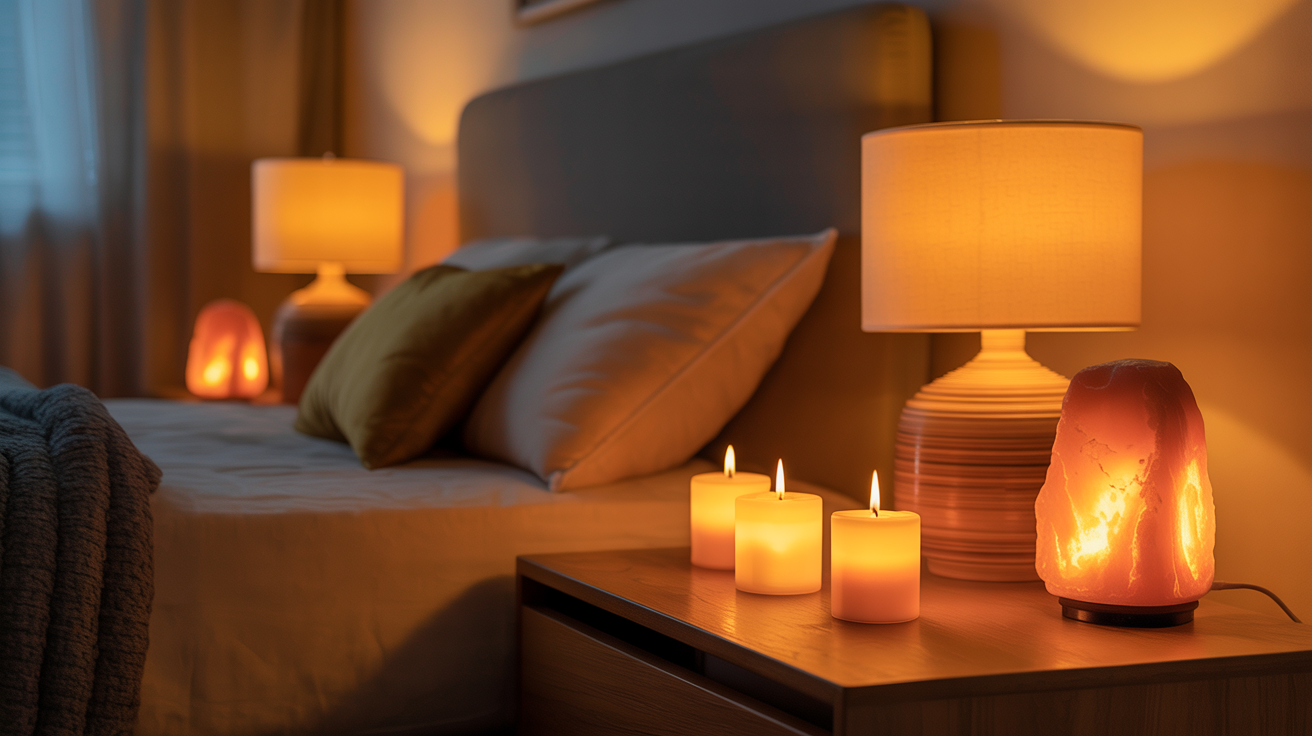
In the evening: this is where the color of light matters enormously. Blue-white spectrum light after sunset tells your suprachiasmatic nucleus that it is still daytime, which suppresses melatonin and keeps your nervous system in an activated state that will make falling asleep and staying asleep much harder. Replace harsh overhead lighting after 7pm with warm amber sources — lamps with bulbs in the 2700K range, candlelight, salt lamps, anything that shifts the spectrum toward what your brain reads as "dusk."
For neurodivergent women especially: the transition from daytime light to evening light is not just a circadian cue, it is a nervous system signal that the sensory demand of the day is ending and the environment is becoming safe to downshift. Make that transition deliberate. Create a ritual around it. The brain learns from repetition, and when you lower the lights at the same time each evening, you are teaching your nervous system that this sequence means rest is coming.
Color as Winter Medicine: The Neuroaesthetic Color Framework
Now let's talk about color — because the walls around you and the tones you live inside in winter are not neutral. They are either contributing to the regulation your nervous system needs or compounding the depletion it is already managing.
This is the clinical application of The Neuroaesthetic Reset Method™ and my Color Archetype framework, and in winter, it works like this.
Warm earthy tones for grounding — for the woman who is anxious and scattered.
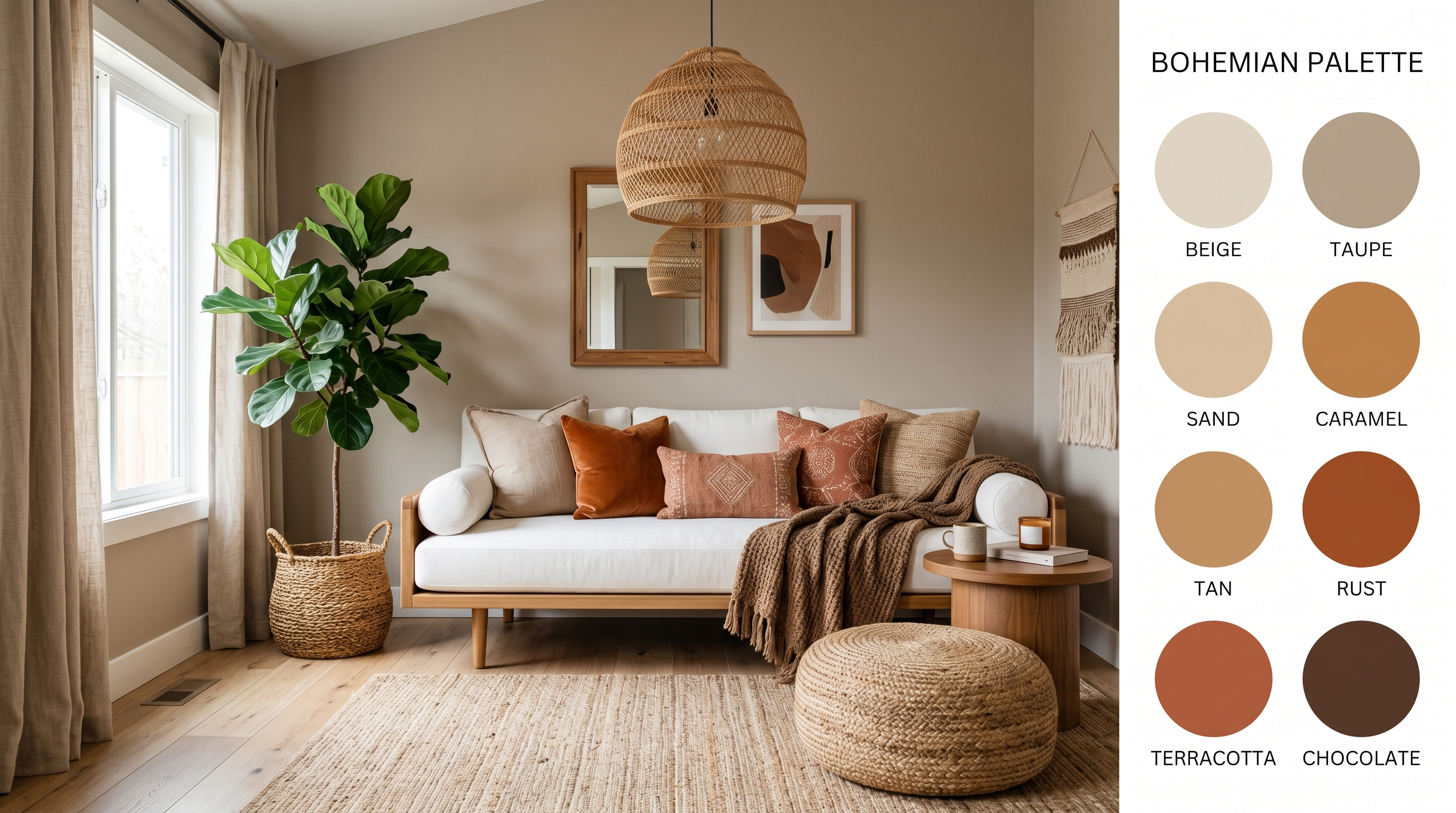
Soft golds, warm terracottas, deep ochres, and burnished ambers provide the nervous system with a visual signal of warmth and enclosure that activates the parasympathetic response — the rest-and-digest state that your winter-depleted, perimenopause-taxed nervous system is desperately reaching toward. If you know your Color Archetype and you are a Blush Empath or a Lavender Oracle — if you trend toward shutdown, masking fatigue, and anxiety that looks quiet from the outside — warm earthy tones are your winter medicine. They tell your amygdala: this environment is safe. You can exhale here.
In practice: a warm amber lamp in the corner of your bedroom, a soft gold throw over the couch you curl into in the evening, a deep terracotta candle you light at the same time each night as your light-transition ritual. These are not decorating choices. They are circadian medicine.
Soft neutrals and cream for mental clarity — for the woman who is heavy and withdrawn.
If winter is bringing a flatness and a heaviness and a withdrawal that looks more like dorsal vagal shutdown than anxiety — if you are oversleeping but waking unrefreshed, if you are going through the motions without any of the aliveness behind them — what your nervous system needs is not more warmth and enclosure, it needs a gentle activation signal. Creamy whites and soft natural linens in the spaces where you work and think expand visual space and amplify whatever light you are getting, which tells your brain that the environment is open, that there is something to orient toward, that there is reason to come forward.
In practice: a creamy linen curtain in your workspace that diffuses winter light rather than blocking it, a light-toned surface where you sit to do your creative work, a white or bone-colored mug for your morning ritual so that the first object you hold in the day is sending a clean, open signal.
Soft blue-green for the woman who is overheated and overloaded.
Some of you do not feel the seasonal flatness as depression — you feel it as an overwhelmed, reactive, can't-slow-down nervous system that winter is making worse because you are confined and the sensory load of indoor environments is unrelenting. For the perimenopausal Pitta woman — the one whose hot flashes are her dominant symptom, who runs hot, who is already at the edge of her window of tolerance — cooling blue-green tones in your rest spaces are regulating in a specific and physiological way. They lower heart rate and blood pressure and cortisol in the research. They are the color equivalent of stepping outside on a cool day and feeling your shoulders drop.
In practice: soft blue-green bedding, a pale sage wall in your bedroom, the visual presence of a plant with broad green leaves in the corner of the room where you rest.
The Sensory Environment Is the Treatment
For neurodivergent women especially, I need to say this plainly: your environment is not background. It is foreground. It is the primary input your nervous system is processing from the moment you open your eyes, and in winter, when you are spending more hours inside, the quality of that environment determines whether your nervous system has any capacity left over for everything else.
What that means practically is this — the textures you touch, the sounds that reach you, the air you breathe, the light you see are all either doing regulation work or adding to the load. And in winter, in perimenopause, in a body that has been code-switching and masking and carrying the weight of systems that were not built for you, you do not have the surplus to waste on an environment that is working against you.
One natural texture in your bedroom. One source of moving water sound — a small fountain, a rain app, the heater turned low — that gives your auditory system something to rest in. One area of your home that is visually quiet, without clutter or competing inputs, that your nervous system can return to when the rest of the day has been too much. These are not luxury choices. They are clinical requirements.
And the safety that your environment provides — the felt sense that this space was designed with you in mind, that it was tended to, that someone considered what your nervous system needs — that is itself medicine. Not metaphor. Medicine.
Because the research on trauma and the nervous system is clear that safety is not just a psychological state, it is a physiological one, and when the body registers safety through the senses — through what it sees and hears and touches and smells — the HPA axis comes down, the amygdala stops firing at full intensity, and the parts of the nervous system that govern sleep and memory and emotional regulation and immune function can do their work.
Your environment is either giving you that signal or it is not.
Make it give you that signal.
Do You Know What Is Keeping You Up?
If what I have shared today is landing, and especially if winter is when your sleep falls apart most reliably — if you are waking at 2 or 3am and cannot get back to sleep, if your brain feels like it is running on low battery all day and then switches on the moment you try to sleep, if you are exhausted but wired and cannot find the floor of either state — I want you to take the Sleep Saboteur Quiz.
Because there are five specific patterns that disrupt sleep in perimenopause, and they are not all the same, and they do not all respond to the same interventions, and knowing which one is running in your body changes everything about what you do next.
The quiz takes a few minutes and gives you something that most of the wellness content out there never gives you — a specific picture of your pattern, not a generic checklist.
Take the Sleep Saboteur Quiz →
And if you want to understand the clinical foundation underneath everything I just said, start here: What Is Neuroaesthetics? The Gentle Science of How Beauty Heals Your Brain →
For the color layer of this work: Your Color Hue Is a Nervous System Signal: The Ayurvedic Approach to Color Therapy for Neurodivergent Women in Perimenopause →
And for the thyroid and cortisol biology of winter that this post builds on: Thyroid, Cortisol, and Estrogen: How Your Labs Connect to Sleep and Weight Especially in Winter →
Sources
Rybakowski J. Forty years of seasonal affective disorder. Psychiatria Polska. 2024. DOI: 10.12740/PP/186721
Wirz-Justice A. Chronobiology and mood disorders. Dialogues in Clinical Neuroscience. 2003. DOI: 10.31887/DCNS.2003.5.4/awirzjustice
NOTE: This post was originally published on Ceyise Studios on January 1, 2025, my design and neuroaesthetics platform, and has been brought here to drstaceydenise.com because it is foundational to the clinical work I now do with neurodivergent women navigating perimenopause and menopause. Some of those original posts have been retired. Others have been expanded into updated companion pieces that go further than the original could. Where a newer version exists, you will find a link to it at the top or bottom of this post.