
The Only Meal Plan That Works If You Eat the Same Things Every Week
The Only Meal Plan That Works If You Eat the Same Things Every Week
You already know exactly what you're eating this week. You knew last week, too. You rely on the same rotation—the same breakfasts, the same lunches, and roughly the same dinners.
Why? Because your nervous system found something that felt safe, and it is not letting go.
You've tried traditional meal plans before. They usually last about four days before the new foods feel wrong, overwhelming, or just demand too much cognitive effort on top of everything else you are managing in perimenopause.
If eating the same safe foods every single week is your reality, this plan was built exactly for you.
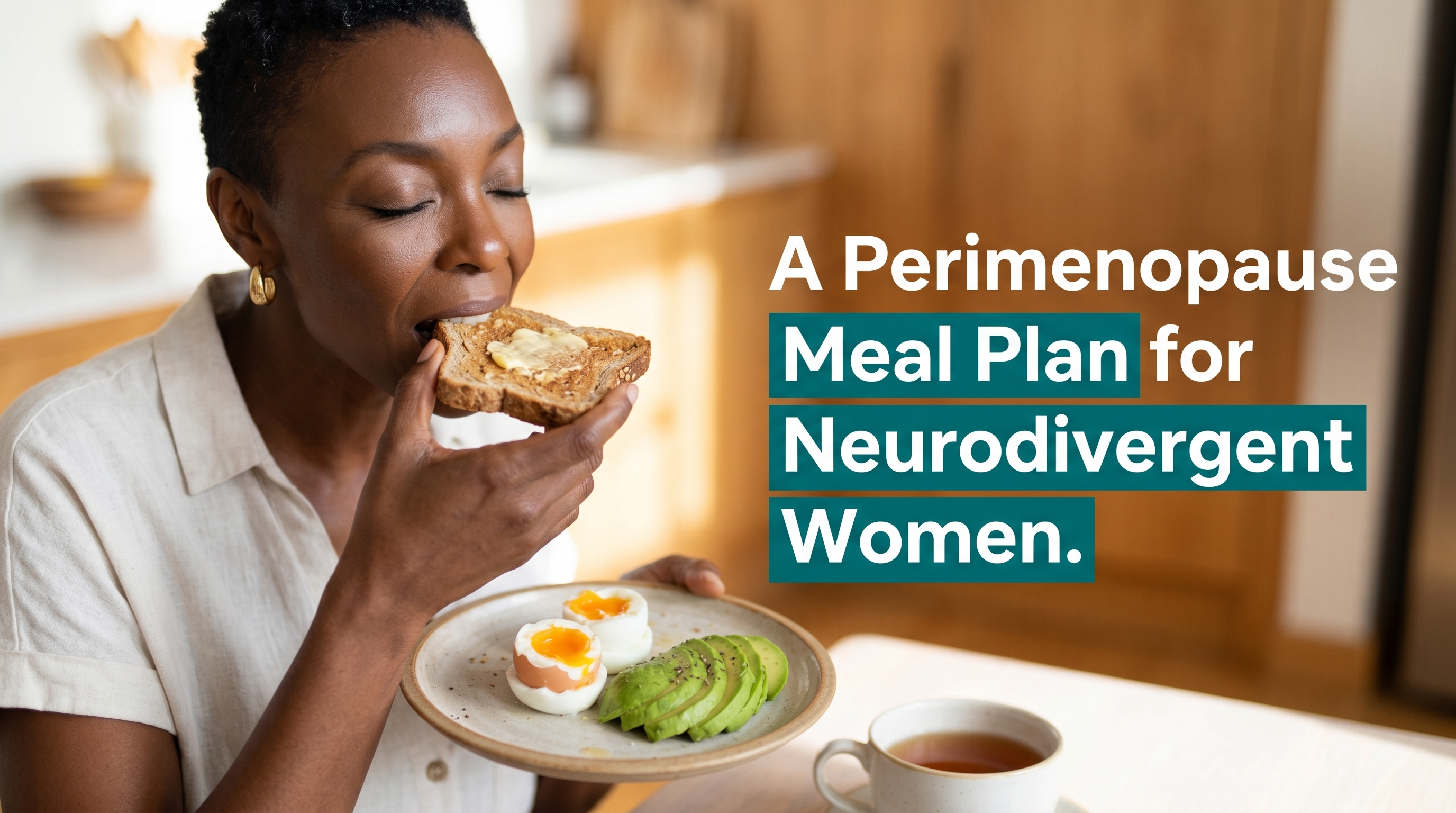
Why Conventional Meal Plans Fail Neurodivergent Women
Most perimenopause meal plans ask you to completely replace your current foods with new, complex recipes.
For a neurodivergent nervous system—one that finds safety in predictability, that goes monotropic around food, or that simply cannot process a 12-step recipe when already depleted—replacement is a threat.
Your nervous system responds to a new meal plan the exact same way it responds to any other threat: by fiercely protecting what's familiar. You try to bulldoze your way through the new diet for a few days, get exhausted, and go right back to what you know.
That is not a failure of willpower. That is your nervous system doing exactly what it is biologically designed to do.
"The intervention isn't replacement. It's addition. Your safe foods stay. One new thing gets added alongside them."
If you are neurodivergent, you probably hate being told what to do without being told why. So below is the exact, scientific reason why these specific foods are worth adding to your safe rotation.
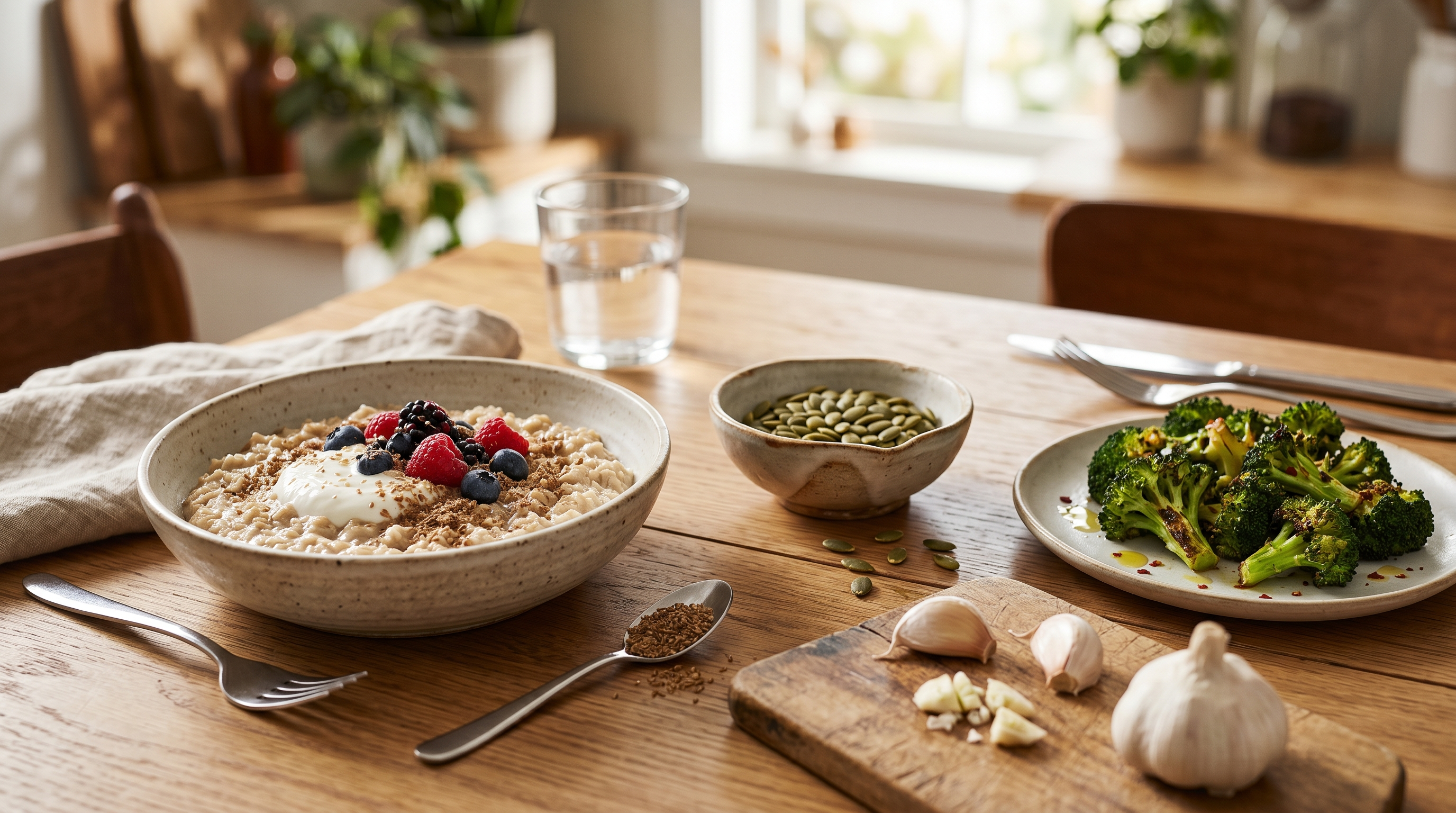
How It Works: 3 Days, 1 Addition Per Meal
You are not changing a single meal. You are simply adding one specific, hormone-supporting ingredient to the plate you were already going to eat.
Day 1
Breakfast (Whatever you always eat): Add 1 tablespoon of ground flaxseed stirred in. It disappears into oatmeal, yogurt, or eggs.
The Why: Flaxseed is packed with lignans that directly feed your estrobolome (your gut bacteria), helping to stabilize the chaotic estrogen fluctuations happening in perimenopause.
Lunch (Whatever you always eat): Add half a cup of roasted broccoli on the side.
The Why: Broccoli contains indole-3-carbinol. This specific compound supports your liver's ability to clear out used estrogen so it doesn't recirculate and cause mood swings.
Dinner (Whatever you always eat): Cook 2 cloves of fresh garlic into whatever you're already making.
The Why: Garlic is pure prebiotic fiber. It acts as fertilizer for the good bacteria in your gut that manage your hormones.
Snack (Whatever you always snack on): Add a small handful of pumpkin seeds.
The Why: This is the ultimate "two birds, one stone" food. Pumpkin seeds provide massive amounts of magnesium to build serotonin (calming your nervous system), and they contain plant lignans that feed your estrobolome.
Day 2
Breakfast: Ground flaxseed again. Same as Day 1. Repetition is exactly how your nervous system learns that a new input is safe.
Lunch: Add plain yogurt on the side. Not flavored, not low-fat. Just plain.
The Why: These specific Lactobacillus strains support GABA production (your brain's "chill out" chemical) through your gut-brain axis to calm sudden perimenopause anxiety.
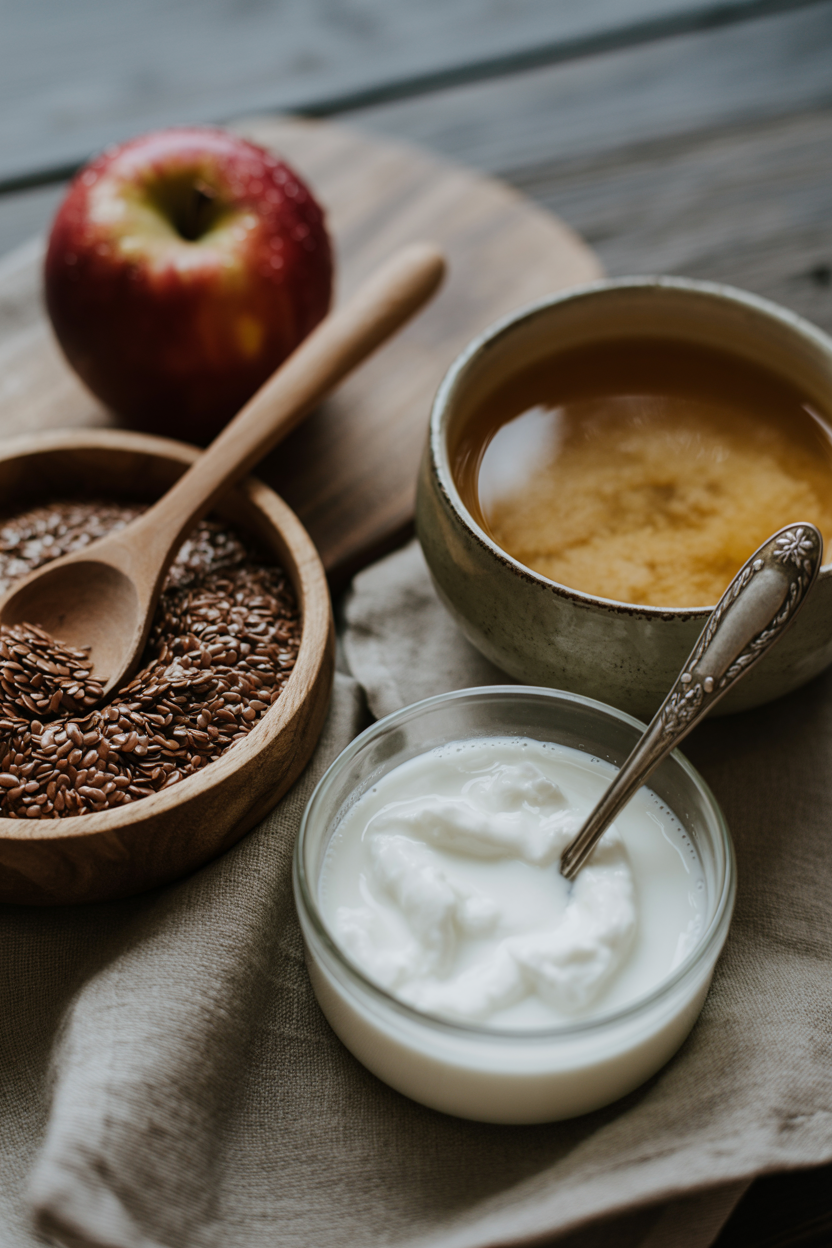
Dinner: A splash of miso stirred into warm broth alongside your meal.
The Why: This provides live cultures for gut diversity but without the high histamine load that comes from long-aged fermented foods (which can trigger hot flashes).
Snack: A fresh apple.
The Why: Apples contain quercetin, which stabilizes mast cells to help your gut manage histamine overload, while the pectin fiber feeds your gut microbiome.
Day 3
Breakfast: Ground flaxseed. Still. Yes, again.
Lunch: A few spears of asparagus on the side—roasted, steamed, or cold.
The Why: Asparagus is high in inulin, a specific prebiotic fiber that your estrogen-metabolizing bacteria absolutely thrive on.
Dinner: Wild salmon (if you eat fish) or 1 tablespoon of ground walnuts stirred into your meal (if you don't).
The Why: These Omega-3 fats act as a fire extinguisher for systemic inflammation. Inflammation is what makes every single perimenopause symptom feel ten times louder.
Snack:Pumpkin seeds. Same as Day 1. Your estrobolome needs a steady supply of these nutrients to keep your estrogen metabolism stable.
[Insert Image 3: A simple, bright flat-lay photo showing just the additions: a spoonful of flaxseed, a handful of pumpkin seeds, and some garlic cloves.]
What Happens After Three Days?
Nothing dramatic. And that is exactly the point.
You just successfully added six new, hormone-supporting plant foods to your week without touching your safe rotation. You started feeding your estrobolome, your serotonin production, and your magnesium levels. And most importantly? Your nervous system didn't trigger a threat response because nothing it recognized got taken away.
Do these three days again next week. Keep the flaxseed. Keep the pumpkin seeds. Let them become your new safe foods. Then, when your system is ready, let one more thing join the rotation.
Want to Know Exactly What Your Gut Microbiome Looks Like?
The GI-MAP at my lab shop shows you the bacterial diversity, the estrobolome health, and the inflammatory markers that tell you specifically what your gut is doing—and exactly what it needs.
Order direct. No appointment required.
Take the Next Step
Find out exactly what your gut needs most right now.
The Gut Saboteur Quiz is an educational tool that identifies which specific gut pattern is making your perimenopause harder than it needs to be—and gives you a personalized, low-demand starting point built specifically for your nervous system.
Take the Free 2-Minute Gut Saboteur Quiz →
Affiliate Disclosure: Dr. Stacey Denise is a participant in the Amazon Services LLC Associates Program. I may earn a small commission if you purchase through my links at no extra cost to you. I only recommend products I personally use or would recommend to my patients.
Disclaimer: This article is for educational purposes only and does not constitute medical advice or establish a doctor-patient relationship.
Published: April 2026 | Dr. Stacey Denise | The Neuroaesthetic MD™