
Why Your Hormones Feel Chaotic Even When Your Labs Look Normal
"My Labs Are Fine, But I Feel Terrible" — What Your Blood Tests Aren't Telling You
Your labs came back. FSH is slightly elevated. Estradiol "low-normal." Everything is technically within range. Your doctor said it looks like early perimenopause and that it's completely normal.
But you feel like your hormones are everywhere. The mood swings, the sleep disruption, the weight shifting—these are symptoms that don't match what "low-normal" should feel like.
If perimenopause symptoms with normal labs are exactly what you typed into Google, you're not imagining it.
By the end of this post, you'll understand the hidden gut reason your lab results don't match your daily experience, and the simple food swaps you can make this week to start fixing it.

What Your Perimenopause Labs Aren't Measuring
Standard perimenopause labs measure what your ovaries are producing. What they don't measure is what happens to that estrogen after your liver processes it.
"Your labs show production. They don't show recycling. Which means your total estrogen exposure can be significantly higher than what your blood test captured."
That is where your gut comes in—specifically a community of gut bacteria called the estrobolome.
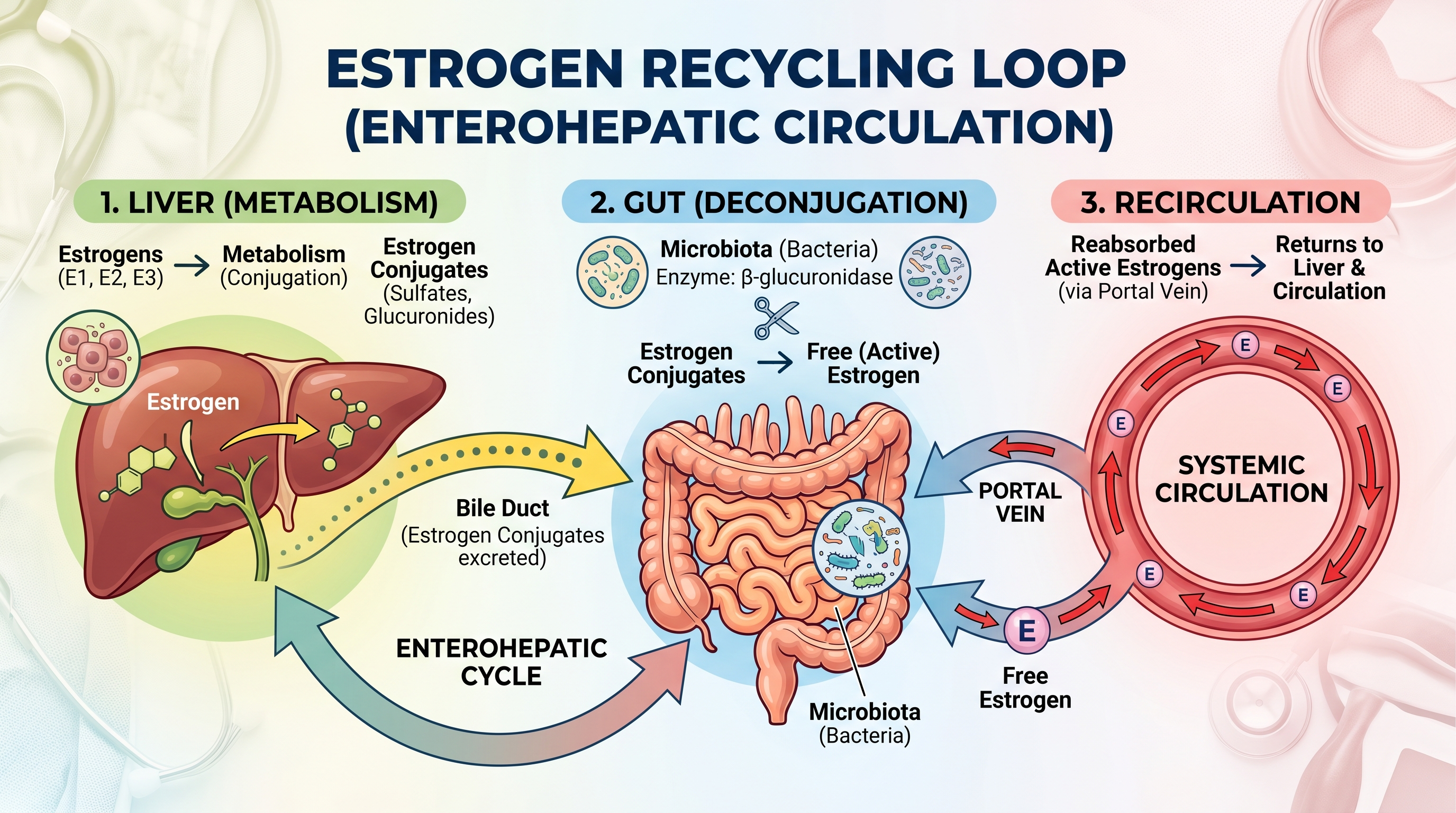
The Estrogen Recycling Loop (In Plain English)
Here is the process your body goes through, and where it usually breaks down during perimenopause:
1. Your liver processes used estrogen and prepares it for elimination.
2. It gets sent to your gut to be flushed out.
3. Gut bacteria in the estrobolome produce an enzyme called beta-glucuronidase.
4. In a healthy gut, that enzyme deactivates estrogen so your body can safely excrete it.
5. In a disrupted gut, that enzyme reactivates the estrogen and sends it right back into circulation.
A disrupted estrobolome means estrogen keeps recirculating instead of clearing. This is exactly why your chaotic symptoms don't match the "normal" numbers on your lab report.
What Disrupts the Estrobolome?
Why does this recycling system suddenly break down in your 40s? Most women in perimenopause have at least one of these underlying disruptors:
·Low bacterial diversity from years of eating a narrow, repetitive diet.
·Antibiotic history that permanently reshaped the microbiome.
·Chronic stress, which directly suppresses gut bacterial diversity.
·Processed food diets that feed inflammatory bacteria over estrogen-metabolizing ones.
·Perimenopause itself. Declining estrogen changes your gut microbiome composition, which disrupts the estrobolome, which disrupts estrogen metabolism. It is a compounding loop.
What to Feed Your Estrobolome Starting This Week
The single most documented intervention for estrobolome health is diverse plant fiber. Not a specific, expensive supplement. Just more variety on your plate.
Here are the easiest additions to make this week:
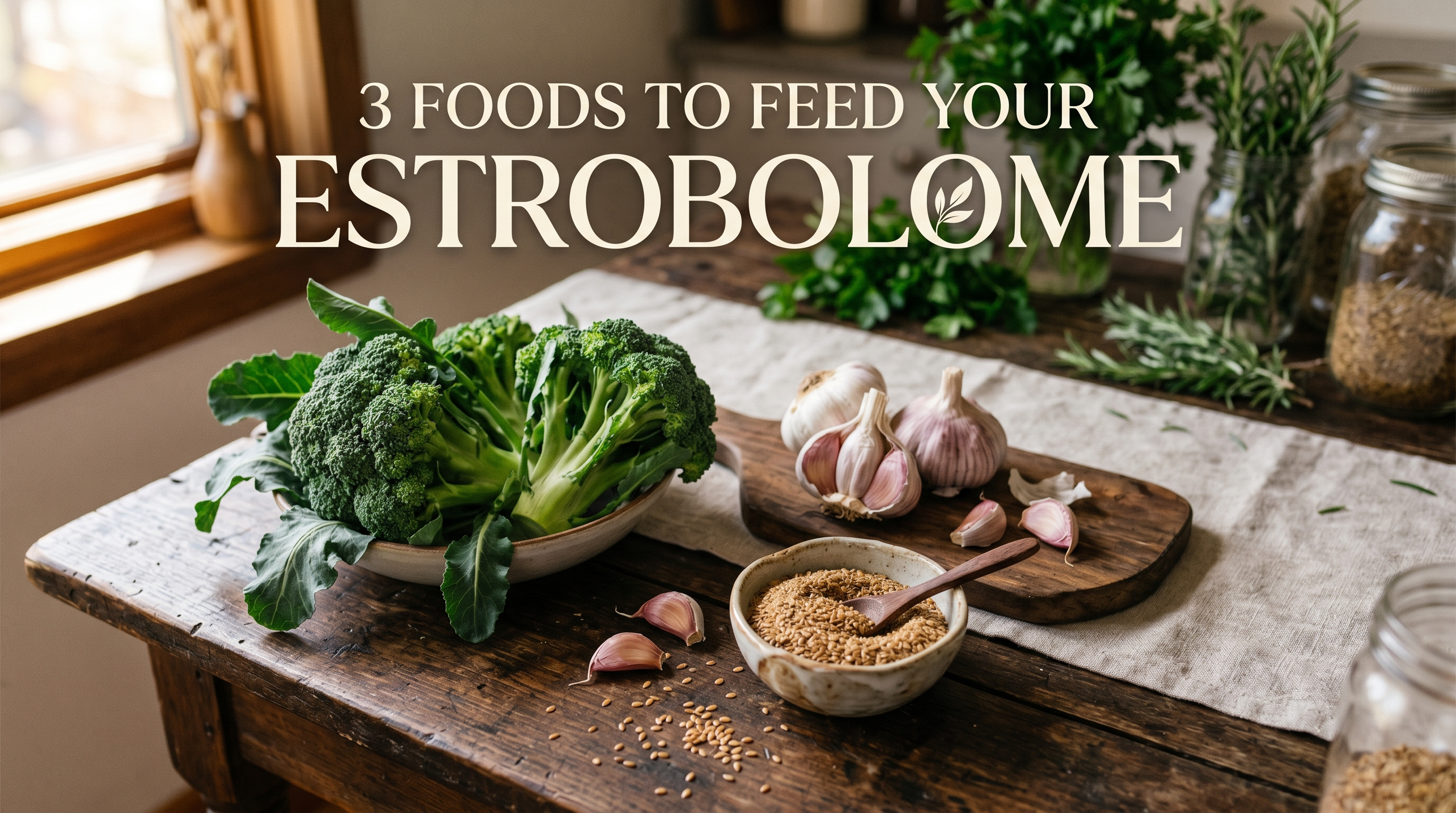
1. Cruciferous Vegetables
Broccoli, cauliflower, and Brussels sprouts contain indole-3-carbinol, a compound that supports your liver's ability to process estrogen into less reactive forms. Goal: Half a cup, three times a week.
2. Garlic and Onions
These feed the prebiotic bacteria that keep your estrogen-metabolizing community thriving. Goal: Add them to whatever you're already cooking.
3. Ground Flaxseed
Flaxseed contains lignans that directly support estrogen metabolism. Goal: One tablespoon stirred into your breakfast. This is the simplest daily estrobolome intervention available.
Dr. Stacey's Clinical Toolkit:
I keep organic ground flaxseed in my pantry permanently—you can find the exact brand I use in my Amazon Storefront.
If you need to rebuild your gut flora, I recommend a multi-strain, professional-grade probiotic to specifically support estrobolome diversity. You can access my clinical recommendations inside my Fullscript Dispensary →
The Key Takeaway
Normal labs only measure estrogen production, not estrogen recycling. If your estrobolome is disrupted, your body may be reactivating and recirculating estrogen, causing chaotic symptoms.
The goal isn't just hitting "30 grams of fiber" as a daily number. It's eating 30 different plant foods across the week—because diversity of input creates diversity of bacteria. Seeds count. Herbs count. Spices count. Feeding your gut diverse plant fibers is the first step to stabilizing this process.
Take the Next Step
Find out exactly which gut pattern is running your hormones. The Gut Saboteur Quiz identifies which specific gut disruption is amplifying your perimenopause symptoms—and gives you a personalized starting point for your first week of changes.
Take the Free 2-Minute Gut Saboteur Quiz →
Source: Hu S et al. Gut microbial beta-glucuronidase: a vital regulator in female estrogen metabolism. Gut Microbes. 2023. DOI: 10.1080/19490976.2023.2236749
Affiliate Disclosure: Dr. Stacey Denise is a participant in the Amazon Services LLC Associates Program. I may earn a small commission if you purchase through my links at no extra cost to you. I only recommend products I personally use or would recommend to my patients.
Published: April 2026 | Dr. Stacey Denise | The Neuroaesthetic MD™