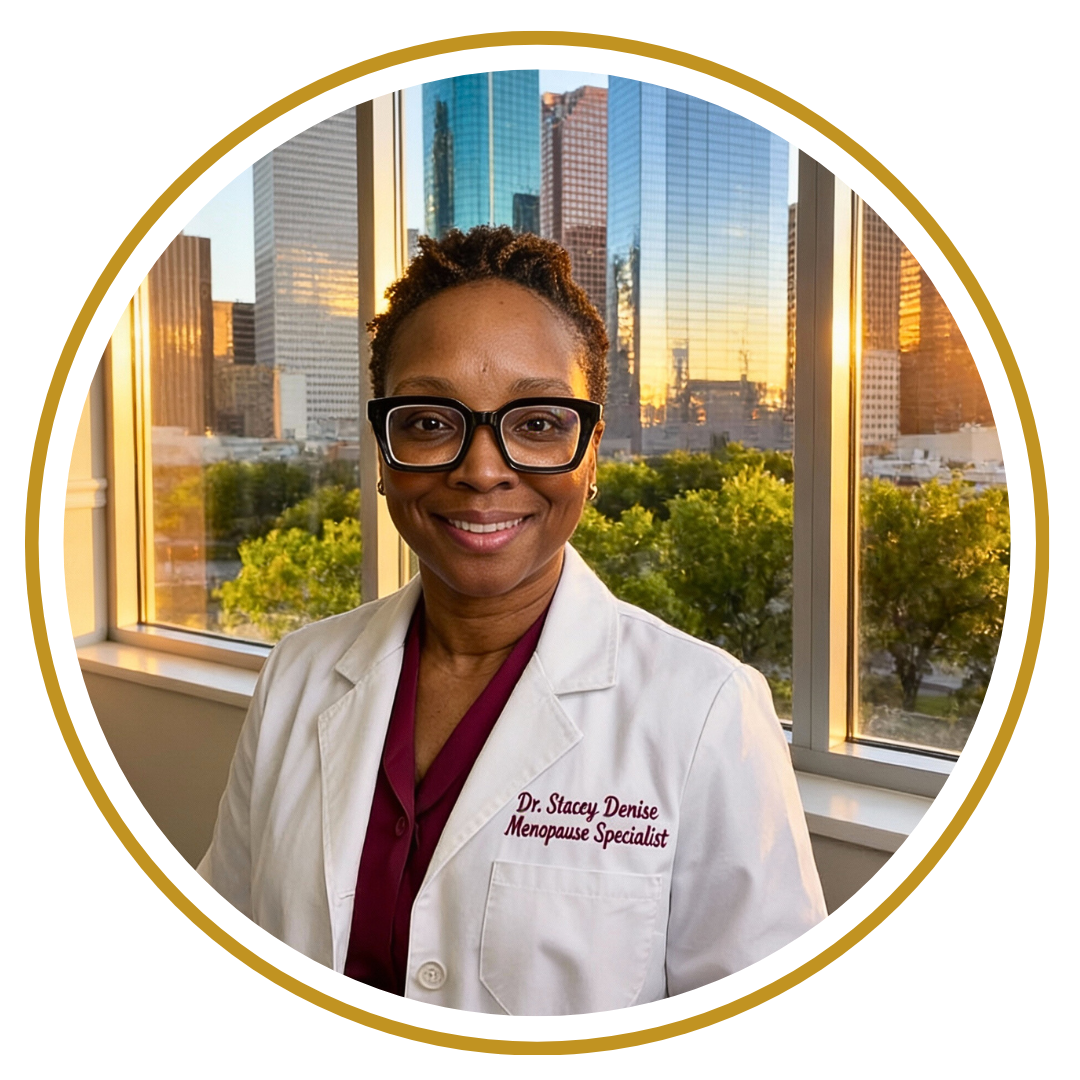
Art Is Medicine — And I Know This Because It Saved Me
Updated: April 2026
Let me tell you what Art Is Medicine actually means.
It's not a tagline. It's not a brand slogan I came up with to make my practice sound interesting. It's a clinical conclusion — the conclusion I arrived at after years of being a physician who could operate on other people's bodies but couldn't access her own emotions, after a pulmonary embolism in 2014 that nearly ended everything, after discovering at midlife that I'm autistic and have alexithymia and C-PTSD, after realizing that what I hadn't healed in myself was landing on my daughters.
Art didn't just help me feel better. It reached me when nothing else could. And understanding why it reached me — the neurobiology of why color and image and creative process bypass the language centers that trauma and neurodivergence put offline — is what built the Neuroaesthetic Reset Method™.
This is that story.

The Wound That Medicine Couldn't See
Trauma leaves marks that don't show up on standard lab panels. They don't appear in a CBC or a metabolic panel. A physician can have perfect clinical skills and a completely dysregulated nervous system — and the medical training she went through will never once name what's happening inside her, because medicine in this country was not built to look there.
I grew up in a household where violence was the norm. Where a child was told at age five or six that she came into this world alone and would die alone. Where being too much — asking too many questions, needing too much, feeling too intensely — was a problem to be managed rather than a child to be met.
What that kind of environment does to a developing nervous system is now well-documented in the science of adverse childhood experiences. The body responds to sustained threat in early life by reorganizing itself around survival — the HPA axis recalibrates, the stress response lowers its threshold, the emotional processing centers of the brain learn to protect rather than feel. And that reorganization doesn't stay in childhood. It travels into every relationship, every professional context, every moment of intimacy or conflict or ordinary stress in adult life.
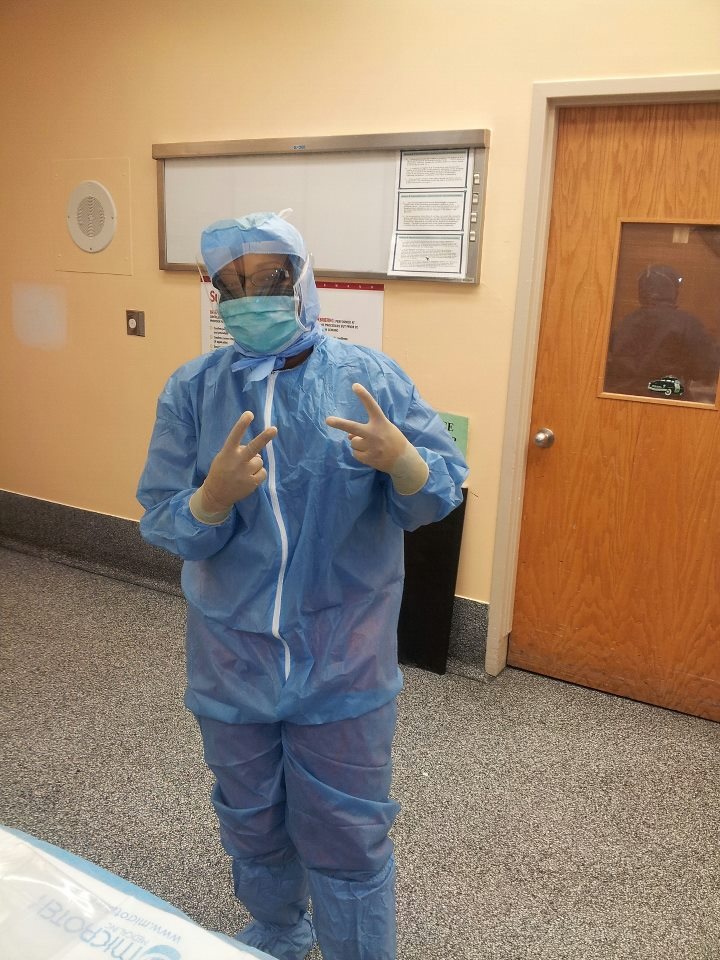
I carried mine into medical training, where the chaos felt familiar. Into surgery, where high-stakes emotional numbing was the professional norm. Into marriages that repeated the same patterns I had learned before I had language for what a pattern was. And into motherhood — where I was doing my absolute best for my daughters materially, practically, professionally, while the emotional wounds I hadn't addressed were transmitting themselves without my knowledge or intention.
Research published in Neuropsychopharmacology — Rachel Yehuda's review of intergenerational stress transmission at Mount Sinai — documents exactly this mechanism: that offspring of trauma-exposed parents show measurable neuroendocrine, epigenetic, and neuroanatomical changes that reflect parental stress, transmitted through multiple pathways including early care, attachment, and biological inheritance. (DOI: 10.1038/npp.2015.247) And research published in the Journal of Affective Disorders confirmed that parental post-traumatic stress symptoms directly affect children's own PTSS outcomes — and critically, that a parent's own healing is one of the most powerful protective factors available to the next generation. (DOI: 10.1016/j.jad.2024.03.067)
When my daughters — grown women by then — sat me down and told me what they had witnessed growing up, I understood something I couldn't have processed before: I hadn't been passing down bad intentions. I had been passing down an unhealed nervous system. And the only way to stop the transmission was to do what I had been avoiding for decades. Go inside. Meet what was there.
That's when I turned to art.
Why Art Got There When Everything Else Couldn't
I want to be precise about this, because this is where the clinical argument lives.
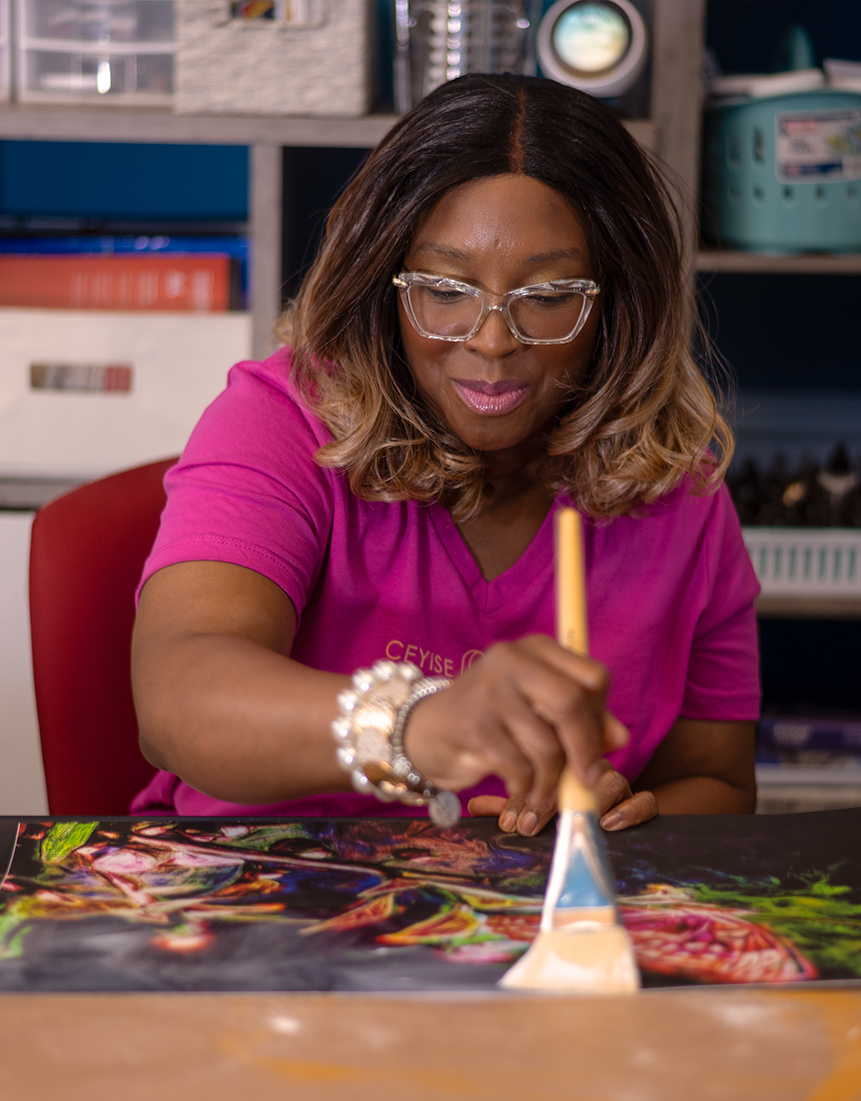
By the time I came seriously to art as a healing practice, I had tried therapy. I had tried the books — Bessel van der Kolk, Carl Jung, every framework I could get my hands on. I had the intellectual understanding. What I didn't have was access. I have alexithymia. My nervous system feels enormously but the bridge between sensation and language is unreliable. I could sit in a therapy session and know something was happening in my body — tension, weight, something without a name — and have absolutely no words for it.
Art doesn't require words. That's not a metaphorical observation. That's the biological mechanism.
When you create art — when you put color on a surface, when you make compositional decisions, when you allow form to emerge from what your hands are doing — you're engaging neural pathways that bypass the prefrontal cortex's demand for language and logic. The right hemisphere, the sensory cortex, the motor system — these are all in motion. And for someone with alexithymia, or in a trauma state where the language centers are offline, this is the difference between having a pathway to the interior and having none.
The JAMA meta-analysis of 69 randomized clinical trials confirmed that visual art therapy is associated with measurable improvements in depression, anxiety, quality of life, and self-esteem — with the non-verbal, experiential quality of art therapy specifically noted as a key clinical advantage. (DOI: 10.1001/jamanetworkopen.2024.28709) The research is catching up to what my body already discovered: art reaches what words can't.
The Inner Child Series — Making the Invisible Visible
The work I made in those years of excavation — the pieces that became the Inner Child Series — was not made to be beautiful. It was made to be honest.
Each piece started with a feeling I couldn't name and ended with something I could look at. The process of getting from the unnamed feeling to the visible image was the therapy. Not the finished piece. The making.
I worked with fairy tales and childhood narratives because those were the stories I had absorbed before I had the cognitive capacity to evaluate them critically — the blueprints for love and partnership and what women were supposed to be and need and sacrifice. I worked with bold color because color reached my nervous system directly, before my analytical mind could intervene and flatten what was coming through.
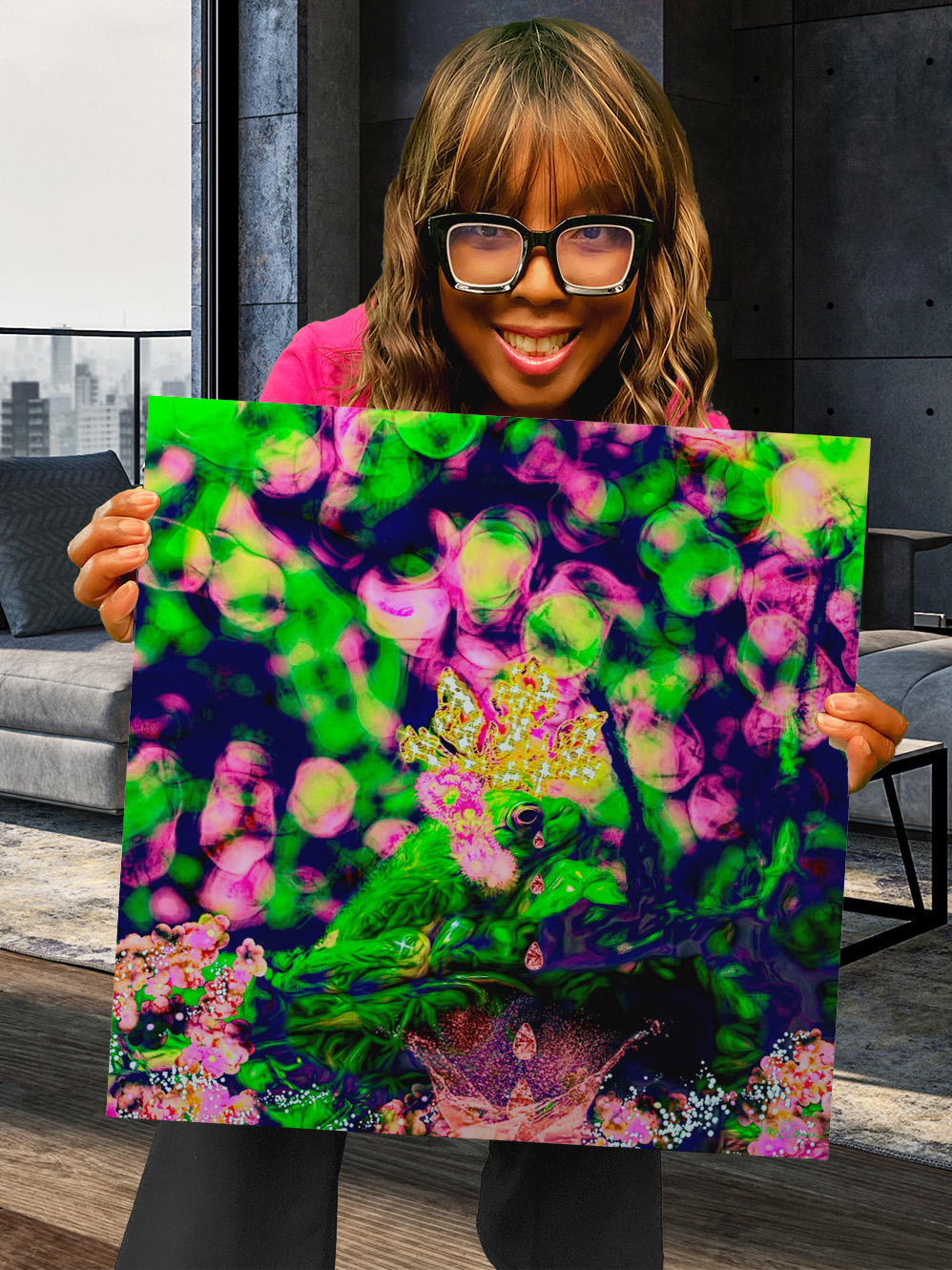
What I found in that process was what Carl Jung called the shadow self — the parts of us we suppress because they conflict with who we think we're supposed to be, or who we were told to be. The rage that had nowhere to go. The grief that had been performing as numbness for decades. The child who was told she was too much and learned to make herself smaller, who had been waiting inside me this entire time to be seen.
Meeting that shadow — giving it form in color and image rather than trying to manage it with language — was the turning point. Not because the shadow disappeared. Because I stopped running from it. You can't integrate what you won't look at. And art gave me a way to look.
See Her. Be Her. Teach Her.
In surgery there's a teaching framework: See One, Do One, Teach One. You watch a procedure. You perform it. You teach it.
I adapted it for my own healing: See Her. Be Her. Teach Her.
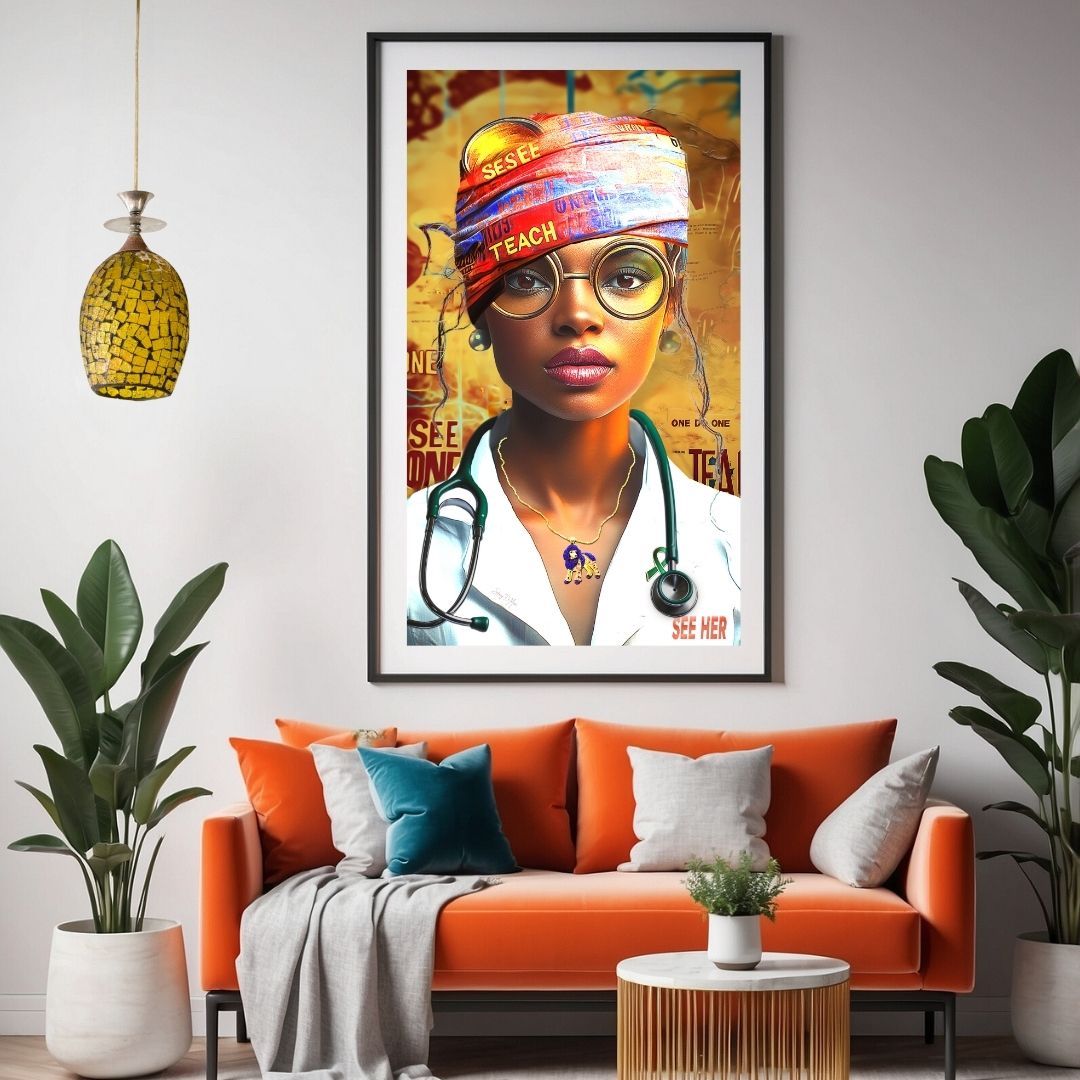
See the little girl who was told she was too much. See her clearly, without flinching, in all the ways the world failed to meet her and all the ways she adapted to survive that failure.
Be the woman who chose to heal her shadow rather than continue managing it. Who chose, at great cost and great effort, to stop the transmission.
Teach the next generation what breaking cycles actually looks like — not just the idea of it, but the embodied practice, the daily choice, the willingness to keep going back inside even when what's there is hard.
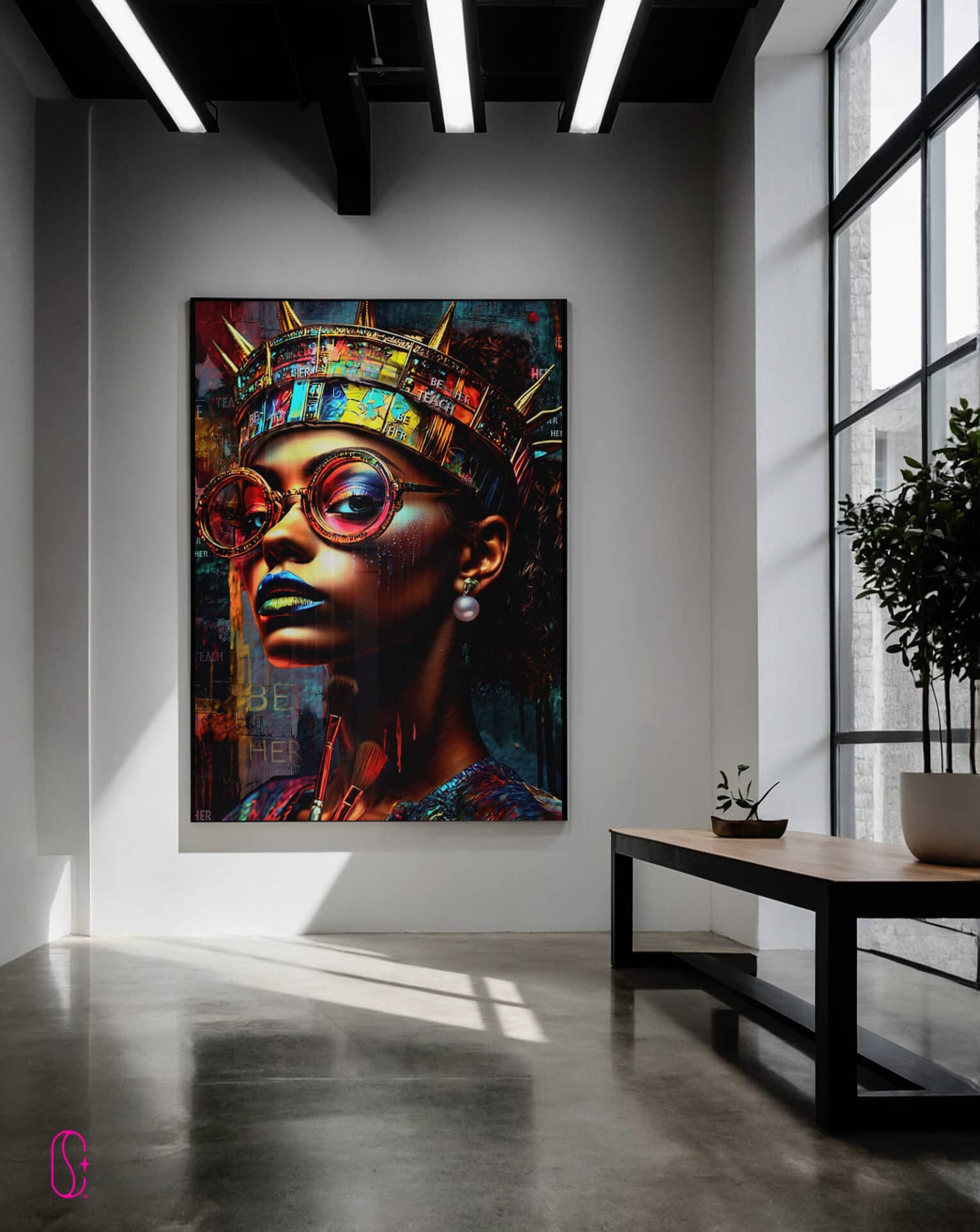
This is the framework underneath everything I do clinically. Before the hormones, before the labs, before the environmental interventions — the nervous system has to feel safe enough to receive them. And creating safety in a nervous system that learned early that safety wasn't available requires going back to where the unsafety began. Not to relive it. To finally finish moving through it.
Fragments to Fusion — Art as Clinical Declaration
The Fragments to Fusion collection, shown at the Modern Muse exhibition in Houston in November 2024, was the public offering of what had been a private excavation.
Each piece in that collection holds a piece of the journey. The fragmentation — the alexithymia, the C-PTSD, the undiagnosed autism, the decades of masking and managing, the pieces of self that had been suppressed in order to survive — meeting the fusion. Not a forced wholeness. Not the erasure of what was hard. The integration of all of it into a self that could finally stand in its own coherence.
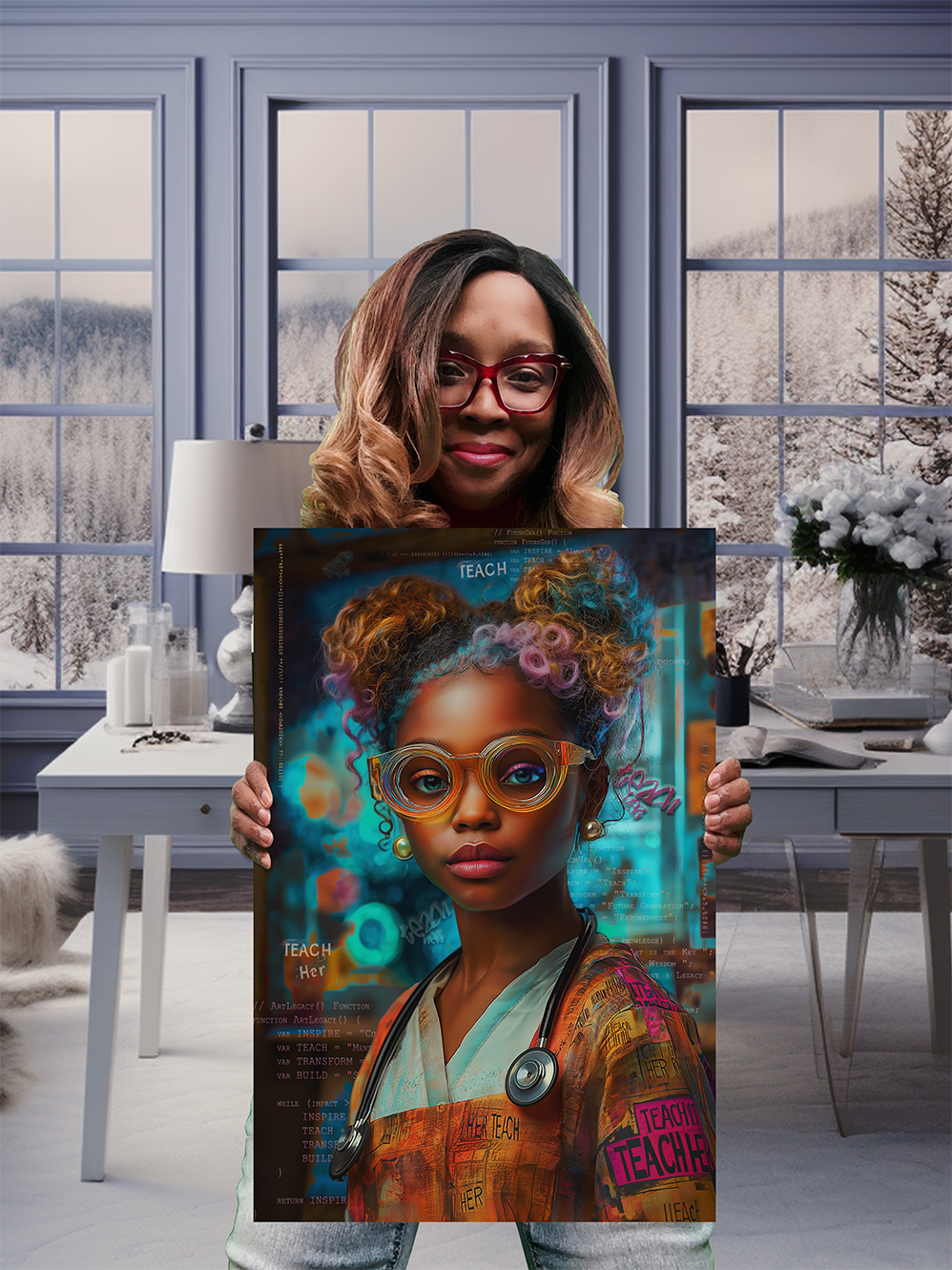
Color was the primary language. Not because color is pretty. Because color is the channel through which my nervous system communicates when words won't come. The reds of suppressed mobilization energy finally given permission to move. The blush and rose of the tenderness that had been surviving underneath the competence. The golds of alchemized pain — the thing that was difficult becoming the thing that is now the core of clinical work that actually helps people.
The pieces aren't just art. They're a clinical record of what it looks like when a woman's nervous system finally gets to tell the truth.
What This Means for You
If you're reading this and you recognize something — in the pattern of performing competence while feeling disconnected inside, in the exhaustion of managing rather than healing, in the sense that perimenopause has removed the last layer of protection you had for a nervous system that was already running close to its limits — I want to say something directly.
You don't have to have been a pediatric surgeon. You don't have to have had a pulmonary embolism. You don't have to have alexithymia or a late autism diagnosis or any specific clinical label for what you've been carrying.
What you have to have is a body that has been holding something for a long time. And a recognition, however faint, that the holding is costing you more than you can afford to keep paying.
Art is one of the most accessible, most immediate, most body-direct healing tools available to any nervous system. You don't have to be an artist. You don't have to produce anything worth showing anyone. You just have to be willing to let color and form carry what language has been struggling to hold.
That's the medicine. And it's available to you right now, in whatever materials you have, in whatever time you can claim for yourself.
Feel what I'm saying?
If you want to understand which color archetype your nervous system is currently working from — and which creative and sensory channels are most likely to reach you — the quiz is where we start.
Take the Color Archetype Quiz → quiz.drstaceydenise.com/color-archetype-quiz
The prequel to this story — before I had the language: What Is Alexithymia — And Why Art Might Be the Only Language That Reaches It →
The origin story with the full clinical framework: I Built a Clinical Framework From What Saved My Life — And I Started With Art →
The nervous system science underneath all of this: Your Space Isn't Just Decorating You — It's Running Your Biology →
Sources
Bowers ME, Yehuda R. Intergenerational transmission of stress in humans. Neuropsychopharmacology. 2016. DOI: 10.1038/npp.2015.247
Allbaugh LJ, et al. Children of trauma survivors: influences of parental posttraumatic stress and child-perceived parenting. Journal of Affective Disorders. 2024. DOI: 10.1016/j.jad.2024.03.067
Joschko R, et al. Active visual art therapy and health outcomes: a systematic review and meta-analysis. JAMA Network Open. 2024. DOI: 10.1001/jamanetworkopen.2024.28709
NOTE: This post originated as an artist statement and advocacy piece on Ceyise Studios introducing the Art Is Medicine framework and the Inner Child Series. It has been fully rewritten here on drstaceydenise.com as the clinical and personal declaration it always was — with the intergenerational trauma science, the See Her/Be Her/Teach Her framework, the Fragments to Fusion collection, and the full nervous-system-first clinical argument that connects the art to the practice.
Originally published on Ceyise Studios. Updated: April 2026.