Color Is Not Decoration: What the Color Reset Method™ Reveals About Your Nervous System and the Colors That Actually Calm It
Updated: April 19, 2026
There is no shortage of articles on the internet telling you which colors are the most calming.
Blue. Green. Lavender. Soft whites. They pop up in every design blog and wellness newsletter with the same confident simplicity, and most of them are not entirely wrong — but they are missing something that changes everything, and that something is you.
Here's what those lists leave out of the conversation, especially for neurodivergent and chronically stressed women in perimenopause: the most calming color is not universal. It is a biological variable, and those nervous systems are reading every visual input as either safe or threatening before the conscious mind has registered anything at all; the difference between a color that regulates you and a color that dysregulates you is not a matter of aesthetic preference.
It is biology.
This is what The Color Reset Method™ is built around, and it is what I want to walk you through today — not a list of supposedly universal calming colors, but the actual neuroscience of how color lands in your specific nervous system, and how The Neuroaesthetic Reset Method™ uses that understanding to give you a personalized color prescription instead of a generic palette recommendation.
What Is Actually Happening When You See a Color
Before we talk about which colors calm which nervous systems, I need you to understand what color actually is at the biological level, because the word "color" is doing a lot of work in a way that most wellness content never unpacks.
When you see a color, what is happening is this — light enters your eye as a specific wavelength, and different wavelengths activate different photoreceptor cells in your retina, and that signal travels through the optic nerve to multiple brain regions simultaneously, including the hypothalamus where your master circadian clock lives, the amygdala where your threat detection system lives, and the visual cortex where conscious perception happens.
The key word in that sentence is simultaneously — because your nervous system has processed the color and begun responding to it before you have made a single conscious decision about how you feel about it. The amygdala response to color is pre-cognitive. It happens below the level of thought. Which means that when you walk into a room and feel immediately unsettled by the lighting without knowing why, or when you look at a particular shade and your shoulders drop before you have decided to relax, that is not a personality trait. That is your brain doing exactly what brains do — reading light wavelengths as safety information.
This caused me to want to dig deeper into what was actually going on, and when I did, I came across a study published in the Journal of Research in Health Sciences that examined two decades of research on light, cognition, and physiological response and confirmed that wavelength, color temperature, and light intensity all modulate brain responses in measurable ways — affecting melatonin, arousal, attention, and reaction time — and that these responses operate through multiple parallel mechanisms, not a single channel. (DOI: 10.34172/jrhs.2021.66)
What that means in plain language: color is information your nervous system is processing constantly through multiple pathways at once, and the output of that processing is not just a feeling — it is a physiological state.
Why the "Universal Calming Colors" Lists Are Incomplete
Now here is the part the standard wellness color lists skip entirely, and it matters most for neurodivergent women in perimenopause.
There is no single color that calms every nervous system, because nervous systems are not all running from the same state and they are not all processing sensory input the same way.
A nervous system in freeze — the dorsal vagal shutdown state, the quiet collapse that looks like depression from the outside — does not need more softness. It needs activation. Warm, vivid tones that say come back, something is still here. Giving that nervous system more muted lavender and pale sage is not medicine. It is more of the same emptiness it is already drowning in.
A nervous system in hyperarousal — the sympathetic overdrive state, the wired-but-tired, the fight response that is running hot and cannot slow down — does not need red and orange and the dopamine spike of bright yellow. It needs cooling, muting, the visual equivalent of a long exhale. Surrounding that nervous system with energizing warm tones that conventional interior design loves is adding fuel to a fire that is already burning.
And a nervous system in freeze-or-flight — alternating between the two, which is how many autistic and ADHD women in perimenopause actually live — needs something more precise than any generic palette recommendation can provide, because what it needs changes depending on which state is dominant at that moment.
Based on articles retrieved from PubMed, a 2025 systematic review in Neuroscience and Biobehavioral Reviews examined noradrenergic dysregulation across neuropsychiatric conditions including autism spectrum disorder, ADHD, and PTSD, and confirmed that altered sensory processing is a shared feature of the dysregulated nervous system — specifically, that the locus coeruleus, the brain's primary noradrenergic nucleus, modulates sensory sensitivity, arousal, and threat detection, and that dysfunction in this system produces heightened reactivity to environmental inputs including visual stimuli. (DOI: 10.1016/j.neubiorev.2025.106442)
That is the neuroscience of why neurodivergent women respond more intensely to color than conventional interior design accounts for, and why the same paint color that feels serene to a neurotypical person can feel oppressive or activating or just wrong to a woman with ADHD or autism, especially in perimenopause when the estrogen that was helping buffer her sensory responses is no longer there to do that work.
This is the gap The Color Reset Method™ was built to fill.
The Color Reset Method™ — Color as a Nervous System Prescription
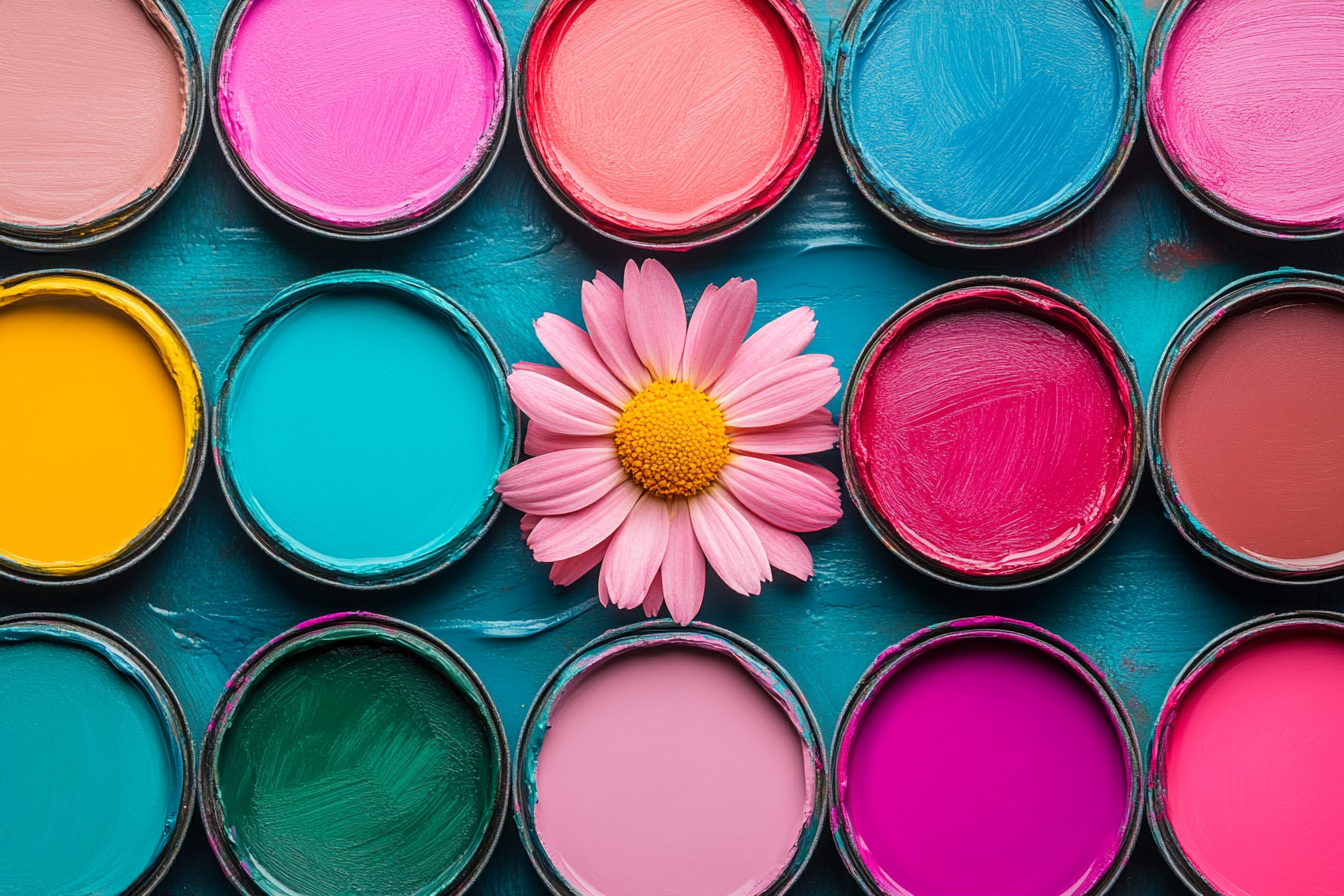
The Color Reset Method™ is the clinical color framework inside The Neuroaesthetic Reset Method™, and it is built on a single principle that separates it from every other color psychology approach: the most regulating color is the one that provides the opposite signal of what your nervous system is currently stuck in.
Not your favorite color. Not the color that trends in interior design. Not even the color that calmed you at 35 — because perimenopause changes things, and the nervous system state you are operating from now may be different from the one you were in before estrogen started pulling back.
The Color Reset Method™ maps nine nervous system profiles — the nine Color Archetypes — each describing a specific pattern of dysregulation and the specific color, texture, scent, sound, and movement cues that help that particular nervous system find its way back to regulation.
Here is how that mapping works across the color spectrum:
Blush and soft rose — for the nervous system in freeze.
Blush is not the color of femininity. It is the color of warmth without demand, of softness that does not collapse, of containment without correction. For the Blush Empath — the woman in freeze states, masking fatigue, and alexithymia who shuts down before she can explode, who craves safety but fears being too much — soft blush tones in her environment are providing a specific nervous system signal: this space is soft enough that you do not have to stay armored here.
Sage and deep green — for the nervous system in performance calm.
Sage is not minimalism for its own sake. It is the color your nervous system reaches for when it needs permission to exhale into stillness after years of over-functioning. For the Sage Grounded — the woman running on functional calm while quietly depleted, giving more than she receives, whose caretaker fatigue is invisible because her exterior is so steady — sage green provides the visual rhythm of something living, growing, unhurried. It says: you have been sustaining others. Here is something that will sustain you.
Navy and steel blue — for the nervous system in cognitive overdrive.
Navy gives sensitivity a shape — it is the color that says your precision is valid, your need for structure is not rigidity, and there is a way to feel without falling apart. For the Navy Conductor — the woman whose nervous system retreats into logic when emotions get too large, who is performing composure while running on functional burnout — the deep, structured tones of navy and pewter provide something her hyperactive analytical brain can actually rest inside, because the color itself has order.
Teal and dusty blue — for the nervous system in emotional flatness.
Teal is not calm for show. It is the color of emotional safety through aesthetic coherence — the sky-tone that your nervous system opens toward when it is seeking resonance without noise. For the Teal Harmonizer — the woman who appears placid to everyone around her and is quietly starving for depth and connection — cool blue-green tones in her environment are telling her nervous system that coherence is possible, that something can make sense without demanding that she perform.
Gold and amber — for the nervous system in creative shutdown.
Gold is not decoration. It is your nervous system's memory of wholeness, threading coherence through a fragmented internal landscape. For the Gold Alchemist — the woman whose creative fire has gone flat, who designs beauty for everyone else while struggling to locate her own spark, who moves through life as a role rather than as a whole person — warm amber and gold tones are an activation signal that does not demand performance. They say: something here is still luminous. So are you.
Red and deep terracotta — for the nervous system in fight and scatter.
Red, in the Color Reset Method™, is not aggression. It is grounded power — steady fire, not scatter fire. For the Red Liberator — the woman whose nervous system runs hot, quick to ignite, who craves stimulation but burns out fast, who is wired and tired in equal measure — the deeper earth tones of crimson, garnet, and terracotta provide the weight and warmth that channels that fire into something sustaining rather than something consuming.
Yellow and coral — for the nervous system in crash cycles.
Yellow is permission, not performance. For the Yellow Radiant — the woman in hyper-arousal and crash cycles, who shines when others shrink but cannot sustain the brightness because nothing underneath is feeding it — warm yellow and coral tones provide a dopamine signal without the demand of maintaining it. They say: your joy is real. You are allowed to let it out slowly.
Lavender and soft silver — for the nervous system in intuitive overwhelm.
Lavender does not wake you up. It walks you back. For the Lavender Oracle — the woman who processes the world in layers and symbols and often senses before she speaks, who retreats into dreamstates when reality feels too harsh — cool lavender tones are a filter, not an escape. They soften the sensory edges of the environment just enough that her nervous system can return to the present without being assaulted by it.
Black and deep charcoal — for the nervous system in deep masking.
Black is not emptiness. It is containment through clarity — the depth that holds, the silence that speaks, the boundary that does not need explanation. For the Black Mystic — the woman who dissociates as a shield, who checks out while performing presence, who is done explaining the complexity of who she is to spaces that were never built for her — deep black and oxblood tones are the visual equivalent of a boundary. They say: this space does not require you to translate yourself.
What This Means for Your Home During Perimenopause
Here is the practical piece, because I know some of you are reading this and thinking about the paint colors on your walls and the throw pillows on your couch and wondering what to actually do with this.
The most important thing I can tell you is this: the goal is not to redecorate. The goal is to give your nervous system one clear, consistent signal in the spaces where you most need to regulate — particularly your bedroom, your reset corner, and the space where your eyes land first thing in the morning.
And the signal needs to match the state your nervous system is stuck in, not the state you want it to be in — because that is how regulation works. You meet the nervous system where it is, provide the opposite signal, and let the shift happen gradually. You do not override a freeze state with forcibly bright and activating colors and expect that to feel like healing. You bring warmth in slowly, in one piece, and let the nervous system begin to trust it.
For women in perimenopause specifically, this matters more than it did before because the estrogen that was buffering your sensory processing is pulling back, which means the colors that felt manageable at 35 may now feel either too loud or too flat, and your environment needs to work harder to compensate for what your hormonal system can no longer buffer.
Find Your Color Archetype
The nine archetypes I described here are not personality types and they are not your favorite colors. They are descriptions of your nervous system's current state — and they shift over time, especially during the hormonal transition of perimenopause.
The woman who was a Yellow Radiant at 38 may be moving through a Blush Empath phase at 48, and the colors that supported her then will not support her now, because what her nervous system needs has changed.
The Color Archetype Quiz maps your current state — not who you used to be, but who your nervous system is right now, in this transition — and returns a personalized result that tells you your archetype, your nervous system profile, your reset prescription, and the color cues that are most likely to help you regulate during perimenopause.
Because knowing which color is most calming in the abstract does not help you. Knowing which color is most calming for your nervous system, in your current state, during this transition — that is what changes your environment from something you live inside into something that is actively working with you.
Take the Color Archetype Quiz →
Start here if you haven't already — this is the science that holds all of it together: What Is Neuroaesthetics? The Gentle Science of How Beauty Heals Your Brain →
And for the Ayurvedic lens on this same framework: Your Color Hue Is a Nervous System Signal: The Ayurvedic Approach to Color Therapy for Neurodivergent Women in Perimenopause →
For the art layer of this work: Boosting Brain Power: How Art Soothes the Perimenopausal and Menopausal Brain →
Sources
Golmohammadi R et al. Effects of Light on Attention and Reaction Time: A Systematic Review. Journal of Research in Health Sciences. 2021. DOI: 10.34172/jrhs.2021.66
Mir FA, Jha SK, Nehs CJ. Noradrenergic dysregulation in the locus coeruleus: Implications for neuropsychiatric disease pathophysiology. Neuroscience and Biobehavioral Reviews. 2025. DOI: 10.1016/j.neubiorev.2025.106442
NOTE: This post was originally published on Ceyise Studios, my design and neuroaesthetics platform, and has been brought here to drstaceydenise.com because it is foundational to the clinical work I now do with neurodivergent women navigating perimenopause and menopause. Some of those original posts have been retired. Others have been expanded into updated companion pieces that go further than the original could. Where a newer version exists, you will find a link to it at the top or bottom of this post.