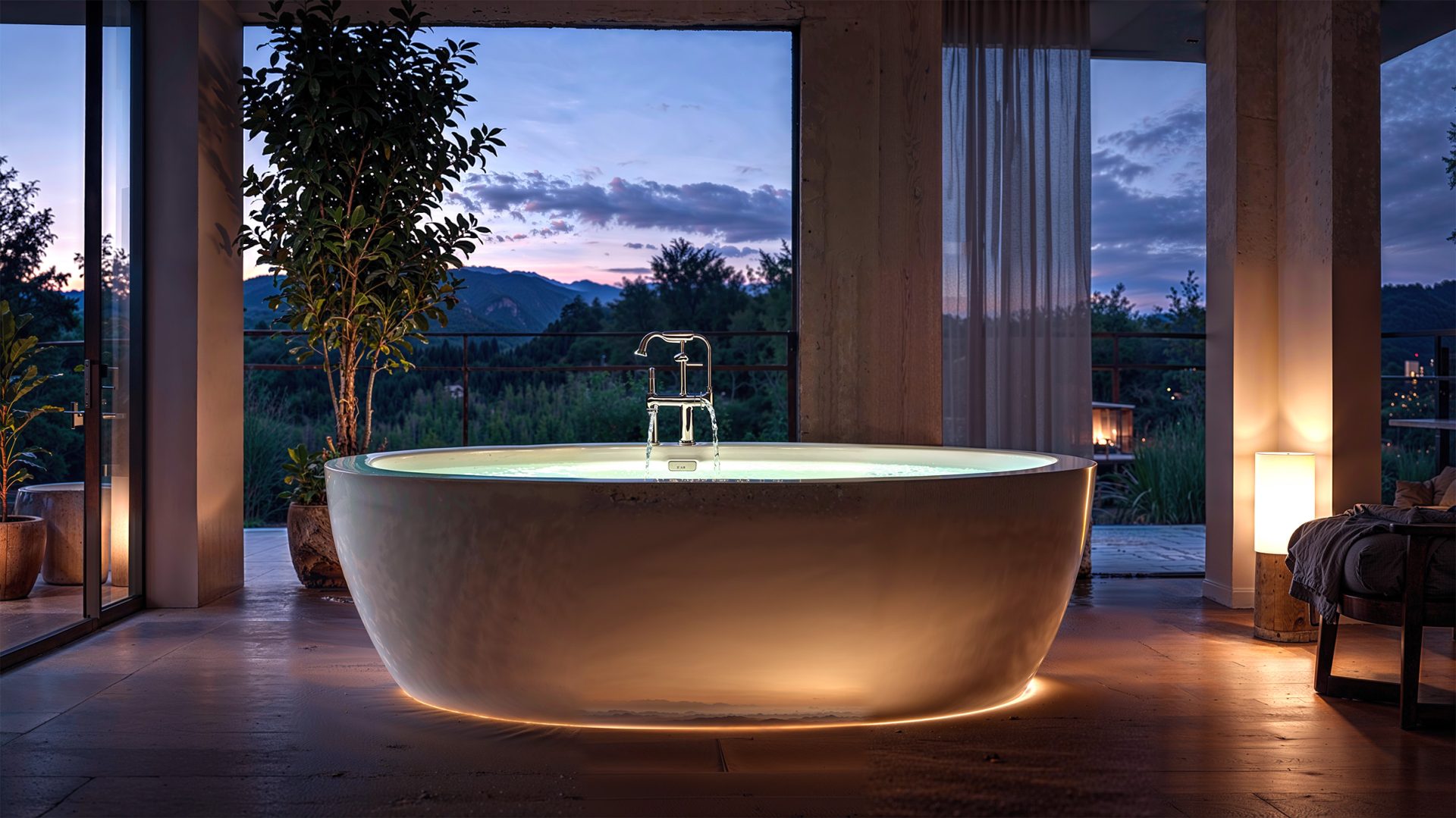
Designing Your Bathroom Sanctuary: A Neuroaesthetic Guide for Women in Perimenopause
Updated: April 2026
The Silver Goddess starts and ends her day in the bathroom.
Before the rest of the house wakes up, before the first meeting, before the demands begin—she is in that room. Standing at the mirror. Starting her nervous system's first conversation with the day.
And then at night, after everything—the work, the family, the masking, the performing—she returns to that same room. Trying to signal to her body that it is finally safe to wind down.
What most women in perimenopause do not realize is that the bathroom is not a neutral space. The color on the walls, the temperature of the light above the mirror, the materials underfoot—every one of those elements is sending information to her nervous system before she has consciously registered a single thing.
That information either supports her hormonal transition or works against it.
This is not interior design philosophy. This is circadian biology. And it is the foundation of The Neuroaesthetic Reset Method™.
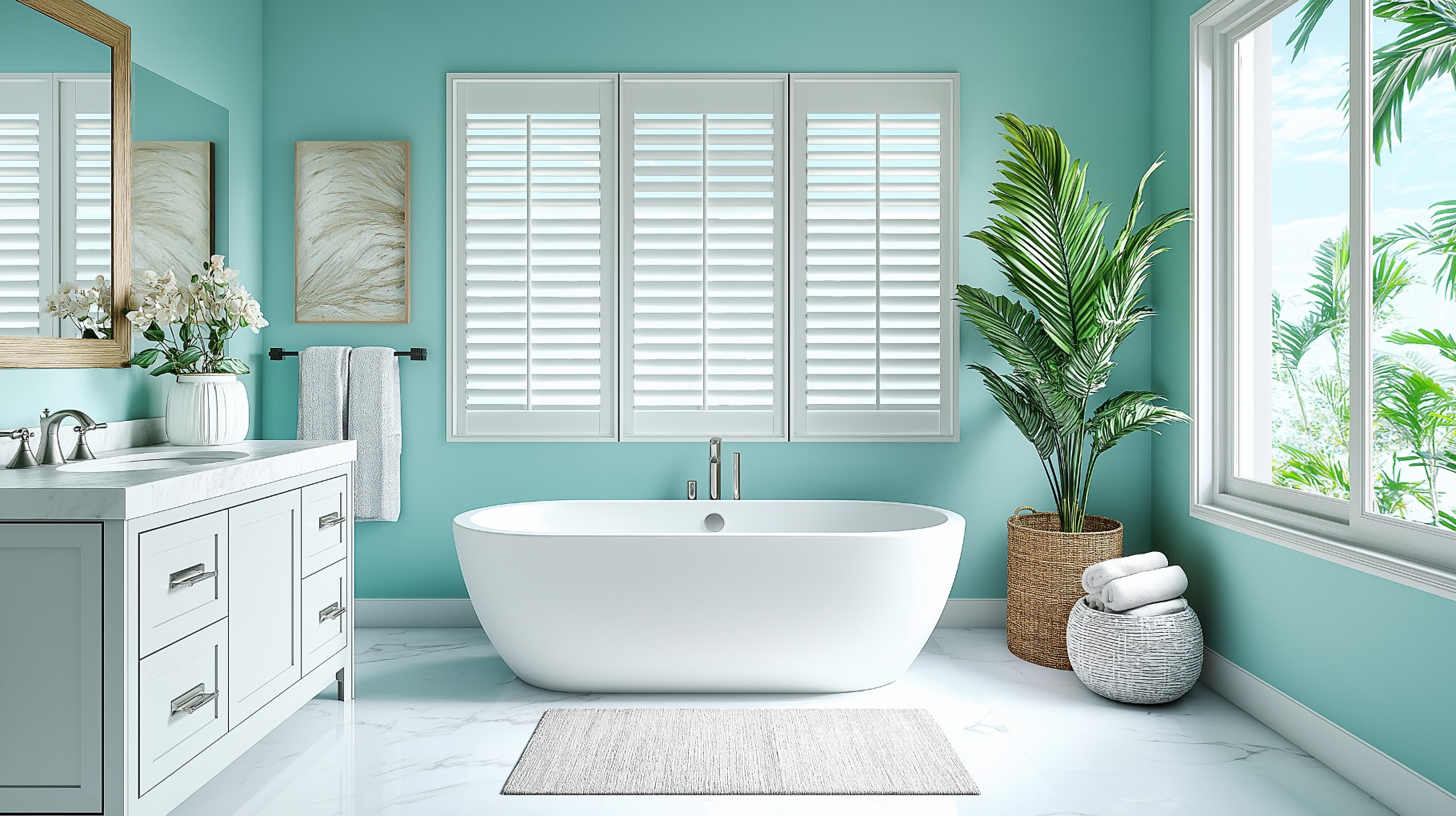
The Bathroom as a Circadian Anchor
Most people think of the bedroom as the sleep environment. And it is. But the bathroom is the room where you prepare for sleep—and where you prepare to wake.
That makes it a circadian anchor point. A space that sends the first and last light signals of your day directly to the suprachiasmatic nucleus—your brain's master clock—which then regulates your melatonin curve, your cortisol rhythm, and your core body temperature.
During perimenopause, all three of those systems are already under hormonal pressure. Estrogen's decline disrupts the thermoneutral zone, making your body more reactive to environmental temperature cues. Progesterone's drop affects GABA receptors, making the nervous system harder to quiet at night. The result is a woman whose biological clock is more vulnerable to disruption—and more responsive to the environmental signals that support regulation.
Your bathroom light at 10pm is one of those signals. And most bathroom lighting is sending exactly the wrong message.
What the Research Confirms
While researching the topic on PubMed, I came across the following: a 2023 study published in ACS Omega found that standard LED lighting—the cool-white bulbs in most modern bathrooms—suppressed melatonin production by 21.9% compared to specially designed human-centric LEDs in the evening. The same study found that switching to lower melanopic light at night increased nocturnal melatonin secretion by up to 12.2%. (DOI: 10.1021/acsomega.3c05620)
A study published in Psychiatry Investigation confirmed that evening exposure to standard LED lighting—even at the same color temperature as warmer alternatives—resulted in significantly lower slow wave sleep (the deep, restorative sleep that repairs the brain and body) compared to organic LED alternatives that emit less blue-spectrum light. (DOI: 10.30773/pi.2020.0348)
And research published in the Journal of Biological Rhythms confirmed that high color temperature light (5000K—the cool daylight spectrum common in bathroom vanity lighting) suppressed melatonin by 56% during a one-hour evening exposure, compared to 24% suppression from warm 2700K lighting. (DOI: 10.1177/07487304241311652)
Let me translate what those numbers mean for the woman standing at her bathroom mirror at 10pm.
If her overhead light is a standard cool-white LED, which most are—she is sending a "it is noon" signal to her brain's clock at the exact moment her body should be receiving a "it is almost time to rest" signal. Her melatonin is suppressed. Her nervous system stays alert. Her hot flash threshold drops. Her 2am wakeup becomes more likely.
All from the light above her mirror.
The Redfin Feature - Where This Started
I contributed to Redfin's feature on bathroom color design from my perspective as The Neuroaesthetic MD -- sharing how color psychology, rooted in neuroaesthetic science, can transform bathrooms from purely functional spaces into mood-regulating environments.
What I shared with Redfin is true: color sets the emotional foundation of a space. But for women in perimenopause, I want to go deeper than color psychology. Because the lighting that illuminates those colors is doing something even more clinically significant—it is directly modulating your hormonal environment every time you walk into that room.
Read the full Redfin feature here →
Designing the Perimenopause Bathroom Sanctuary
Here is how to redesign your bathroom through the lens of The Neuroaesthetic Reset Method™—with circadian science as the clinical foundation and sensory regulation as the design philosophy.
Morning: Activate Without Assaulting
Morning light is supposed to be activating. Bright, cool-spectrum light in the morning suppresses lingering melatonin, raises cortisol appropriately, and signals the start of the biological day.
For the morning bathroom:
Light: Bright, cool-white light (4000-5000K) is clinically appropriate in the morning. This is one of the only times cool-spectrum overhead lighting serves you. If you can, choose a vanity light with a color temperature selector so you can shift from morning activation mode to evening wind-down mode with the same fixture.
Color: Warm whites, soft creams, and gentle earth tones on the walls provide a grounding visual foundation without the visual chaos that can spike cortisol before you have even had your coffee. Avoid stark white walls paired with bright overhead lighting—that combination can be visually overwhelming for sensory-sensitive women.
Materials: Natural materials like wood, stone, and cotton signal safety and organic rhythm. A wooden bath mat, a stone soap dish, a cotton robe on a hook—these textures ground the nervous system before the day has made its first demand.
Evening: Wind Down Without Compromise
The evening bathroom ritual is where most women in perimenopause are unknowingly sabotaging their sleep—not through behavior, but through light.
The single most important change you can make:
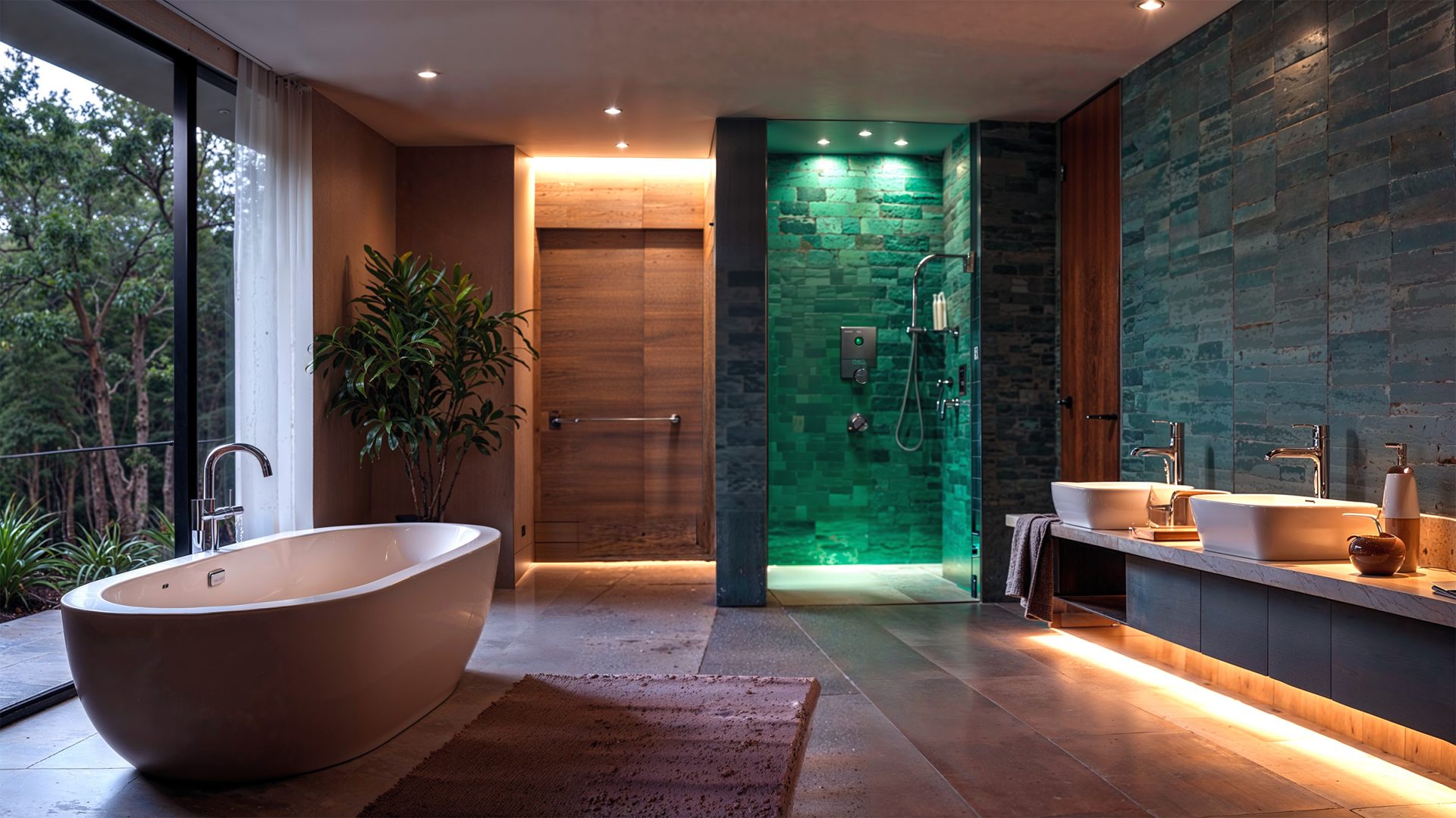
Replace or supplement your overhead bathroom lighting with warm amber light at 2700K or lower for evening use. This means:
A separate lamp with a warm bulb placed at counter height rather than overhead
Smart bulbs like Philips Hue set to a warm amber scene for evening mode
A salt lamp or warm-toned nightlight as your only light source for late evening bathroom visits
Dimmer switches on existing fixtures so you can reduce intensity significantly after 8pm
Why this matters clinically: Based on the research above, cool overhead light at 10pm can suppress your melatonin by more than half. For a woman in perimenopause already struggling with sleep fragmentation and hot flashes, that suppression is not a minor inconvenience—it is a clinical problem with a simple environmental solution.
Color for the evening bathroom:
Soft blues and muted greens support parasympathetic tone—they are colors the nervous system reads as calm and safe. Soft violets and dusty lavenders support the emotional transition from the demands of the day to the restoration of night.
Avoid bright red accents in the evening bathroom—despite the original article's finding that red light promotes relaxation, red's stimulating associations can activate the sympathetic nervous system in women who are already running hot. If you love warm tones, opt for dusty terracotta or muted rust rather than saturated red.
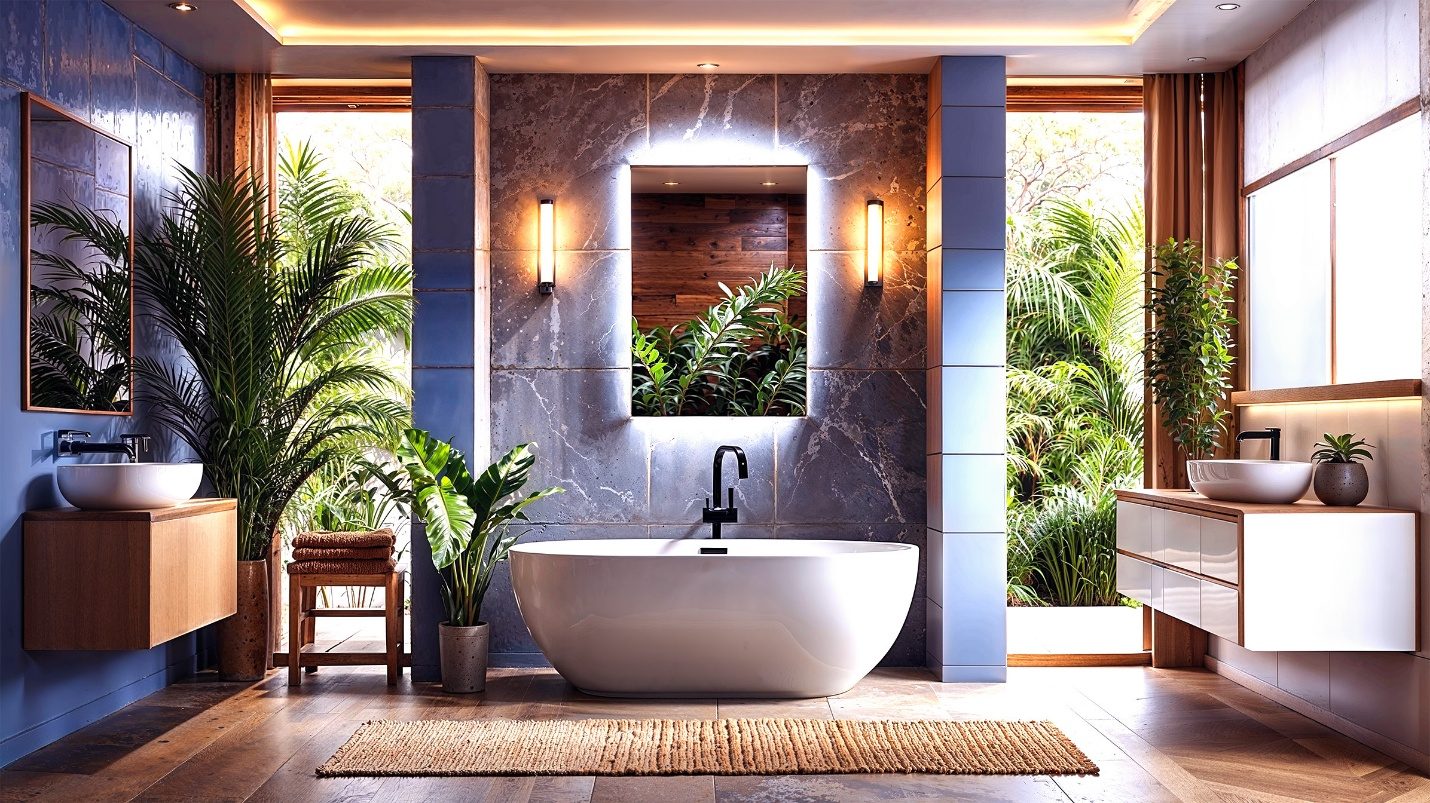
The Sensory-Safe Bathroom for Neurodivergent Women in Perimenopause
For neurodivergent women—autistic, ADHD, or sensory-sensitive—the bathroom can be a particular nervous system flashpoint.
Harsh overhead lighting combined with the echoing acoustics of hard tile surfaces creates a high-stimulation environment that many sensory-sensitive women find activating rather than calming. Add the temperature fluctuations of perimenopause—stepping out of a warm shower into a cool bathroom, or vice versa—and you have a space that regularly triggers sympathetic activation when it should be supporting parasympathetic recovery.
Sensory-safe bathroom design for the neurodivergent woman:
Sound: A small Bluetooth speaker with soft instrumental music or nature sounds creates acoustic softness in a hard-surface space
Texture: A thick bath mat, a plush towel warmer, cotton or bamboo textiles—grounding tactile inputs that signal safety
Scent: Clinical aromatherapy principles apply here—lavender, clary sage, or Roman chamomile in a diffuser at low concentration for evening. Eucalyptus or peppermint at low concentration for morning activation. Never overwhelming—always less than you think you need
Temperature: A small space heater in the bathroom for winter months removes one of the most common sensory disruption triggers—the cold shock of stepping onto tile

The Silver Goddess Knows This
In my webinar, I introduced the concept of the Silver Goddess—the midlife woman who has moved through the performance and the proving and is now ready to inhabit herself fully. The one who has earned the right to design her life around what her body actually needs rather than what is expected of her.
Her bathroom is not a utilitarian space. It is the first and last room of her day. It is where she meets herself in the mirror—not as a younger version she is trying to maintain, but as the woman she is becoming.
That woman deserves a space that works with her nervous system. That tells her body, from the first light of morning to the last amber glow of night: you are safe here. You can rest now. You are allowed to begin again.
That is not a luxury. That is medicine.
Start With One Change
You do not need to renovate your bathroom. You need to make one change this week.
If you do nothing else -- change your evening bathroom light.
A warm amber bulb costs less than a supplement. It takes five minutes to install. And based on the research, it may improve your melatonin production more reliably than many of the "sleep support" products in your medicine cabinet.
Your nervous system is asking for a different signal. The light in your bathroom is one of the simplest places to give it one.
If you want to understand how your home environment is affecting your hormones, your sleep, and your nervous system during perimenopause -- the Auntie Menopause Circle is where we go deeper every week.
Come join us.
Join the Auntie Menopause Circle →
Want to understand the full science of how your environment shapes your nervous system during menopause? Start here: What Is Neuroaesthetics? The Gentle Science of How Beauty Heals Your Brain →
And for the complete guide to designing your home for nervous system regulation during perimenopause: 10 Meditation Room Ideas Every Menopausal Woman Should Know →
Sources (via PubMed)
Eo YJ et al. Development and Verification of a 480 nm Blue Light Enhanced/Reduced Human-Centric LED. ACS Omega. 2023. DOI: 10.1021/acsomega.3c05620
Jo H et al. Effects of Organic Light-Emitting Diodes on Circadian Rhythm and Sleep. Psychiatry Investig. 2021. DOI: 10.30773/pi.2020.0348
Hartstein LE et al. The Circadian Response to Evening Light Spectra in Early Childhood. J Biol Rhythms. 2025. DOI: 10.1177/07487304241311652
NOTE: This post was originally published on Ceyise Studios on March 28, 2025, my design and neuroaesthetics platform, and has been brought here to drstaceydenise.com because it is foundational to the clinical work I now do with neurodivergent women navigating perimenopause and menopause. Some of those original posts have been retired. Others have been expanded into updated companion pieces that go further than the original could. Where a newer version exists, you will find a link to it at the top or bottom of this post.