Why Anxiety Gets Worse in Perimenopause — The Gut Connection
Why You Suddenly Can't Handle Stress Like You Used To
You've never been an anxious person. Or maybe you had your anxiety under control for years. And then somewhere in your early to mid-40s it came back—or showed up for the very first time—and nothing you've tried has touched it.
Your doctor says it's just stress. Maybe it's "your hormones." Maybe they even suggested you need an antidepressant.
What nobody told you is that anxiety in perimenopause often starts in your gut, not your mind. And the clinical reason why is a lot more specific than just "hormones affect your mood."
Where Your Serotonin Is Actually Made
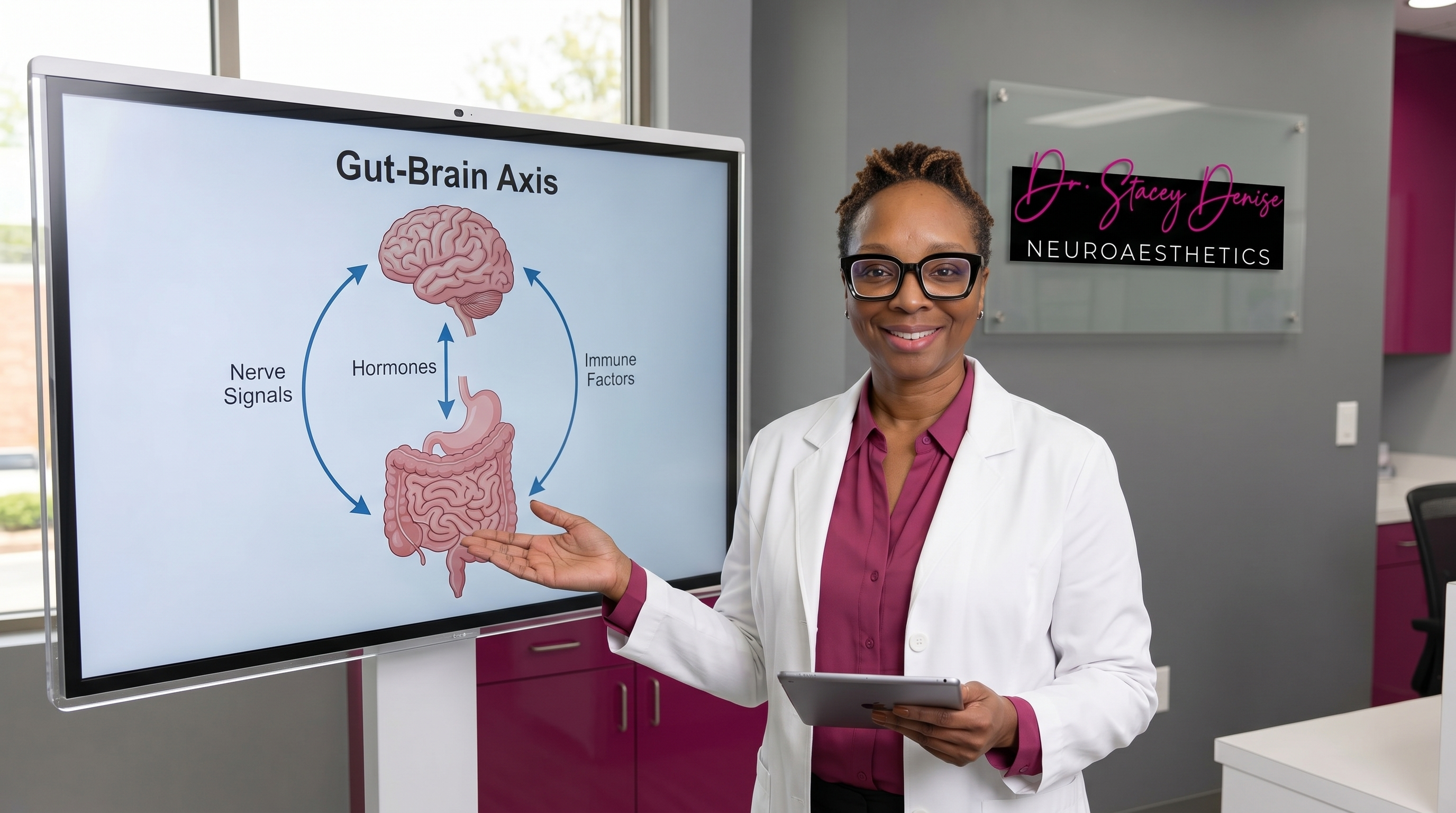
Here is the biological fact that changes everything: approximately 95% of your body's serotonin is produced in your gut. Not in your brain.
It is produced in your intestinal tract by specialized cells that are in constant communication with the bacteria living alongside them.
Serotonin is the master regulator for your mood, emotional resilience, sleep timing, and your nervous system's ability to stand down from "threat mode."
When your gut microbiome is disrupted—as perimenopause naturally tends to disrupt it—serotonin production and receptor sensitivity both shift. The result shows up as sudden anxiety, emotional instability, and that overwhelming feeling of not being able to cope with things that used to be easily manageable.
"This isn't a character issue. It's a gut issue. A hormonal and gut shift that changed the chemistry your nervous system runs on."
Why Perimenopause Makes Your Anxiety Worse
Estrogen directly modulates your serotonin receptor sensitivity. As estrogen declines and fluctuates during perimenopause, two massive changes happen simultaneously:
Your gut microbiome diversity decreases, which reduces the exact bacterial populations responsible for producing serotonin precursors.
Your serotonin receptors become less sensitive to the serotonin that is still being produced.
The anxiety that appears in perimenopause for the first time—or the anxiety that was perfectly managed and suddenly isn't—is often caused by this exact mechanism.
It is not a new mental health condition. It is a hormonal and gut shift that changed the foundational chemistry your nervous system runs on.
What Feeds Serotonin Production in the Gut
To fix this, your gut needs tryptophan (the amino acid precursor to serotonin) alongside the right bacteria to convert it.
But here is the catch: it also needs complex carbohydrates to help that tryptophan cross the blood-brain barrier, where it completes the conversion. The tryptophan-carb pairing is not optional. Tryptophan eaten alone doesn't cross the barrier efficiently. The carbohydrates create the transport mechanism.
Here are the foods that do this most effectively when eaten together:
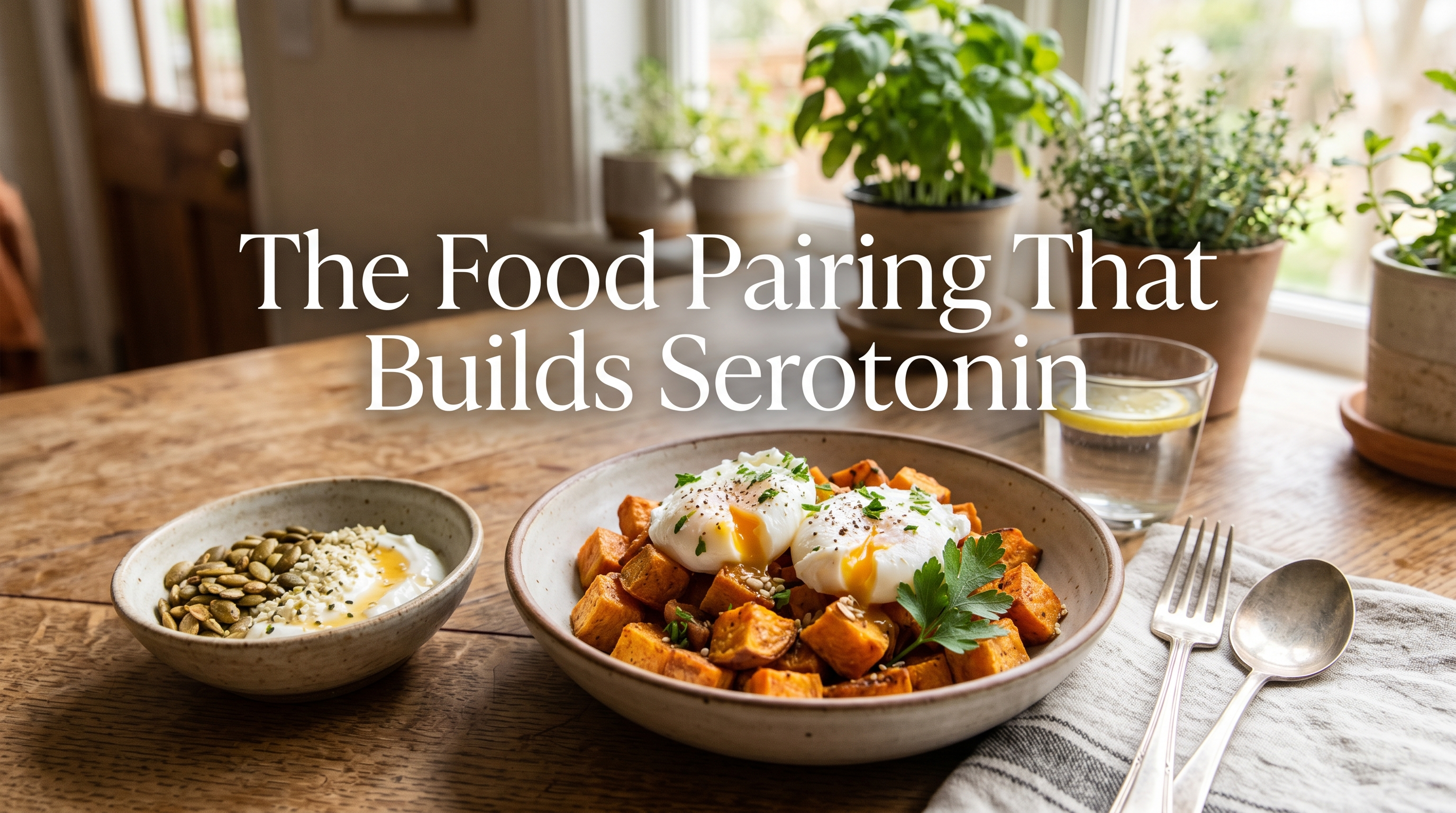
Eggs or turkey paired with sweet potato or oats. This gives you tryptophan and complex carbs at the exact same meal.
Pumpkin seeds. These are some of the highest magnesium foods available, and magnesium is the crucial cofactor that serotonin synthesis requires.
Plain yogurt. The Lactobacillus strains in yogurt directly influence GABA receptors through the gut-brain axis.
Dr. Stacey's Clinical Toolkit:
I keep organic pumpkin seeds on my desk as a daily nervous system snack. You can find the exact brand I eat in my Amazon Storefront.If you need therapeutic magnesium glycinate supplementation to support this pathway, I recommend the Pure Encapsulations formulation available inside my Fullscript Dispensary →
What to Try This Week
Pick one meal this week and swap it to eggs or turkey with sweet potato or oats.
That's the entire intervention for Day 1.
Add pumpkin seeds as your afternoon snack. Do both of these consistently for two weeks and pay attention to your evening anxiety pattern specifically—because that is exactly where serotonin depletion tends to show up first.
The Key Takeaway
New or worsening anxiety in perimenopause is often driven by a drop in gut-produced serotonin, not a mental health failure. Pairing tryptophan-rich foods with complex carbohydrates provides your body with the exact building blocks it needs to restore neurochemical balance.
Take the Next Step
Find out if the Serotonin Sinker is your core gut pattern.
The Gut Saboteur Quiz identifies your specific gut disruption pattern—including whether the Serotonin Sinker is what's secretly driving your anxiety and sleep issues right now.
Take the Free 2-Minute Gut Saboteur Quiz →
Source: Khan MT et al. From Gut to Brain: The roles of intestinal microbiota, immune system, and hormones in intestinal physiology and gut-brain-axis. Mol Cell Endocrinol. 2025. DOI: 10.1016/j.mce.2025.112599
Affiliate Disclosure: Dr. Stacey Denise is a participant in the Amazon Services LLC Associates Program. I may earn a small commission if you purchase through my links at no extra cost to you. I only recommend products I personally use or would recommend to my patients.
Published: April 2026 | Dr. Stacey Denise | The Neuroaesthetic MD™